About 150 kilometres west of Gwadar, the port city often described as the heart of the China-Pakistan Economic Corridor (CPEC), lies Kuntani Hor, a small creek near the Iranian border on Balochistan’s remote and picturesque Makran coast.
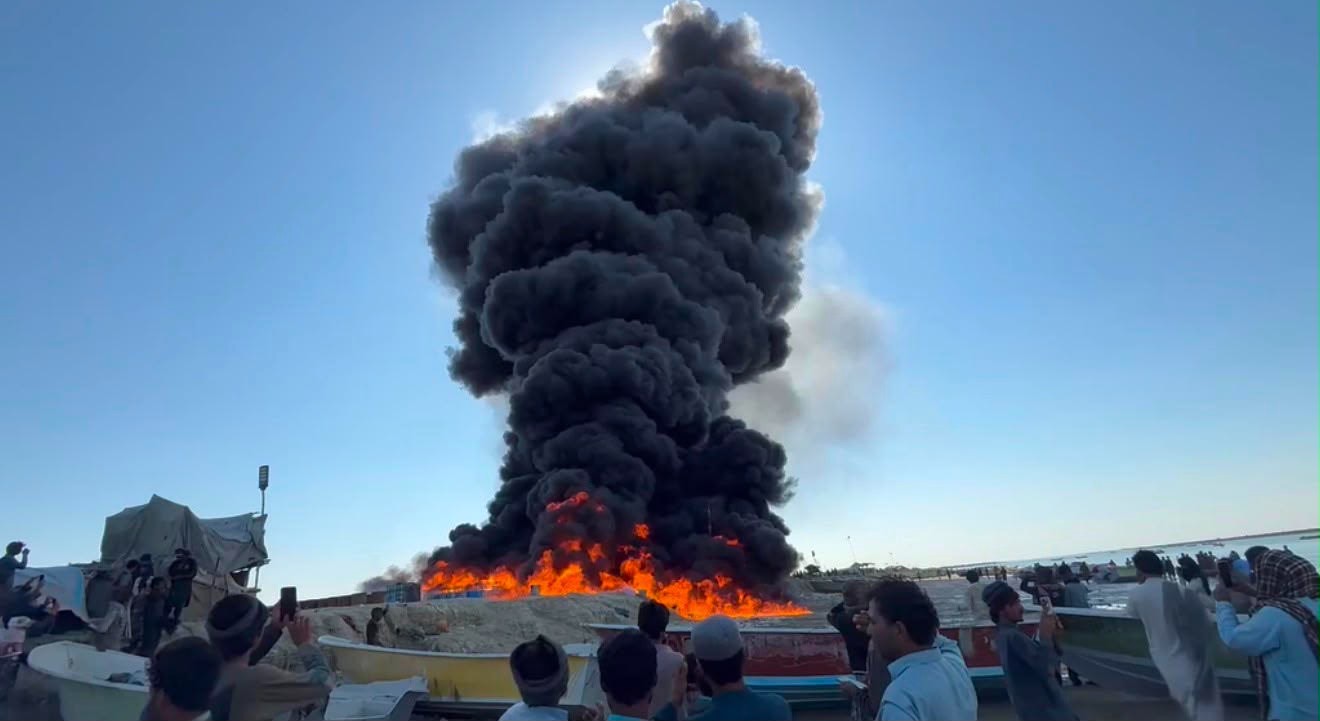
The creek is one of the spots along the border where "informal" trade between Iran and Pakistan takes place, with boats bringing Iranian petrol, diesel and other goods into Pakistan.
The trade is, for all intents and purposes, smuggling. But it has become so foundational to the local economy that, in April of this year, Balochistan’s provincial government even set the price per litre at which fuel from this trade could be sold. The policy set a price below that of government-imported fuel and outlawed it from being sold outside the province.
When the trade is active, thousands of labourers, drivers, boat crews, and depot workers from Balochistan and other parts of Pakistan depend on Kuntani for their livelihoods.
Workers, boats, and vehicles gather at Kuntani Hor, one of the sides of the creek where Iranian fuel is unloaded into Pakistan’s informal network (Hazaran/Changeez Nazir/MEE)