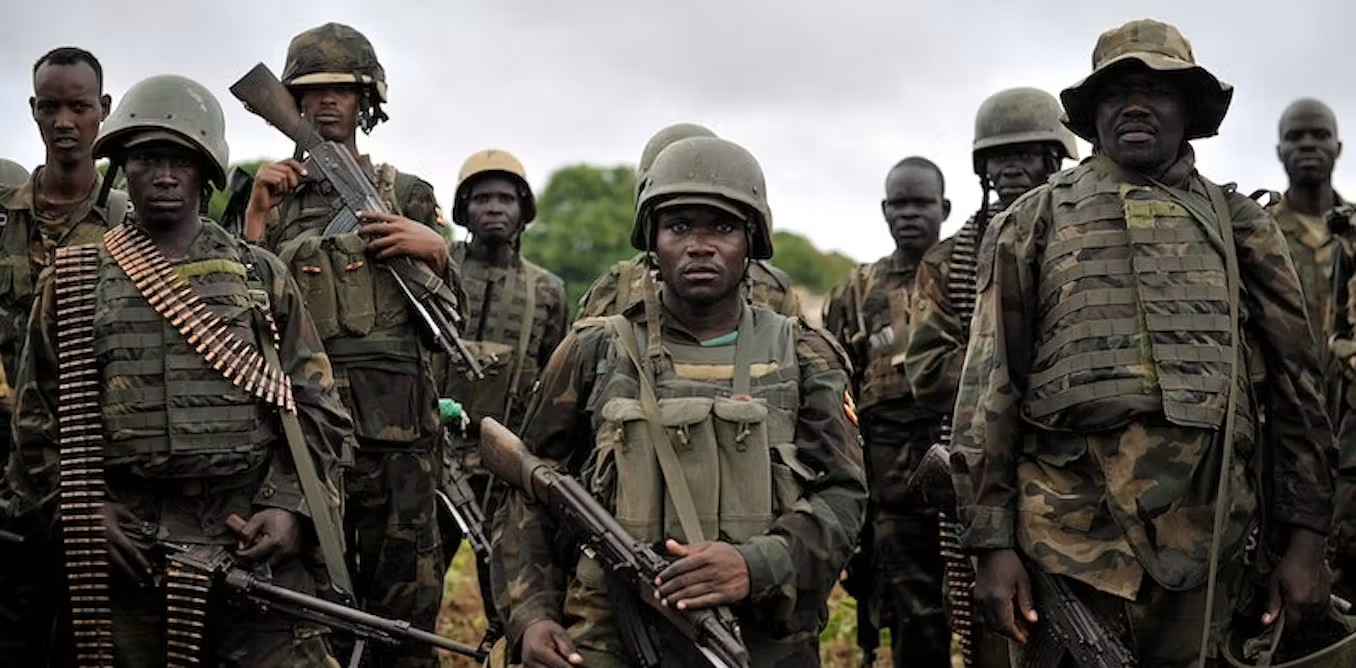
Conflicts in Africa vary in scope and intensity. They range from large-scale civil wars to territorial disputes, localised insurgencies, inter-communal violence, political instability, armed conflict and terrorism. The continent has earned the reputation of being the world’s bloodiest.
These conflicts can be felt across country borders. I am an economist whose research has focused on inclusive growth, debt sustainability, geopolitical risk, economic policy and climate-related uncertainties. In a recent paper I looked at whether conflict had an effect on government debt among countries sharing geographical borders in regions of Africa.
The research sampled 38 countries from western, central, eastern and southern Africa using data from 2000 to 2022. I applied the Spatial Durbin model, which looks at how local and nearby factors affect an outcome in one place.
The study examined how conflict is linked to government debt across neighbouring African countries. Instead of looking at each country on its own, it considered how events in one country can affect its neighbours. This made it possible to identify both the effects within a country and the effects across borders.
The findings show that debt is shaped not only by domestic conditions but by developments in nearby countries. Conflict generates cross-border spillovers, raising the debt level in geographically proximate countries. Military spending by neighbouring countries amplifies the spillovers.