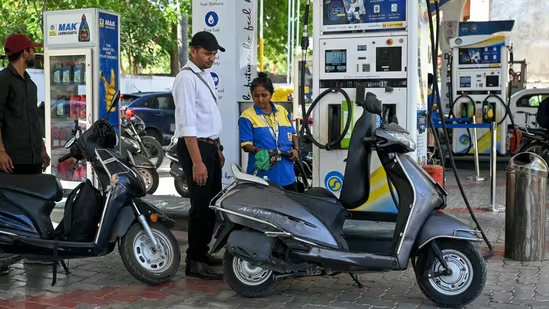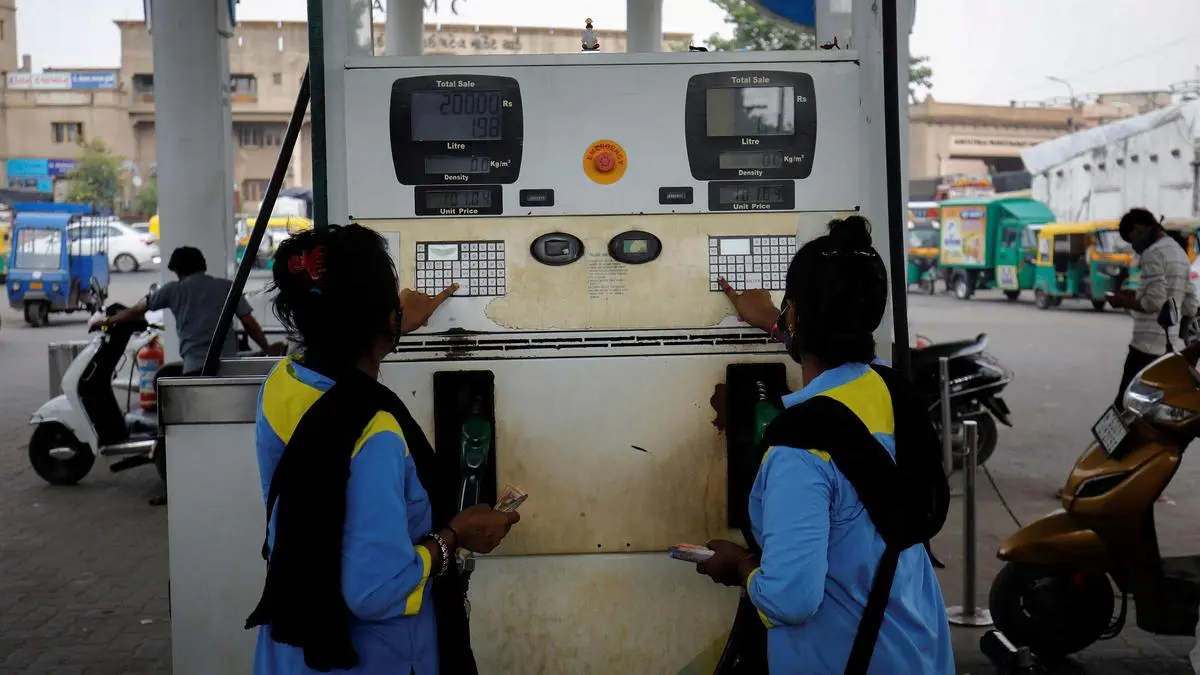
The national spokesperson of the Federation of All India Petroleum Traders said the move addresses a long-standing demand of retail outlet dealers facing subdued sales and financial pressures
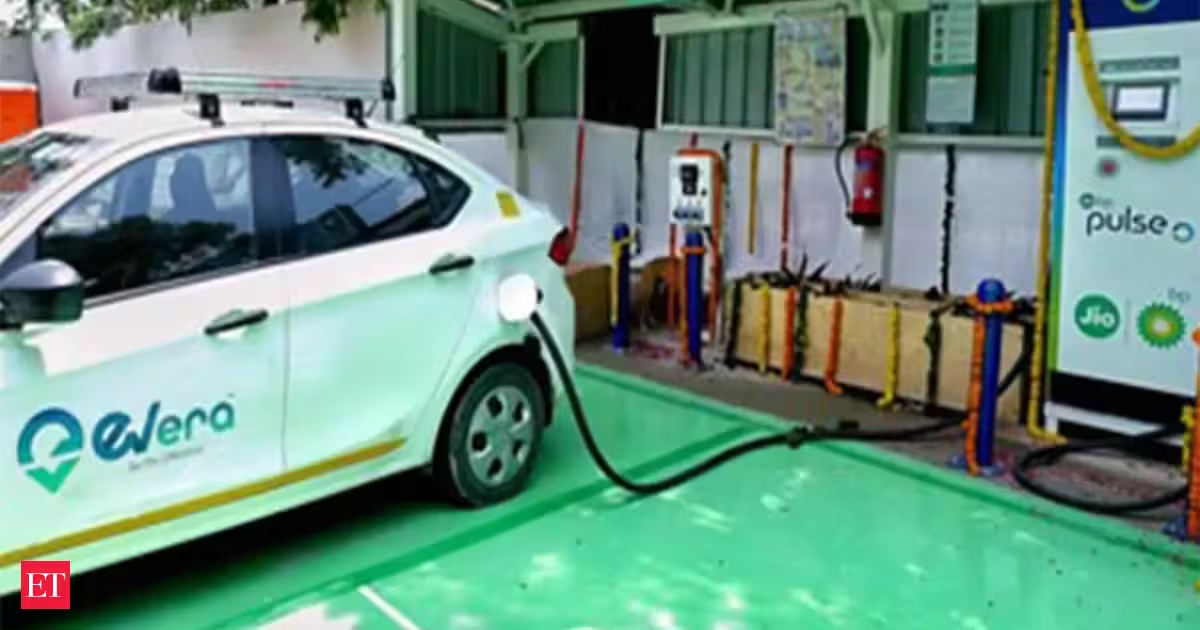
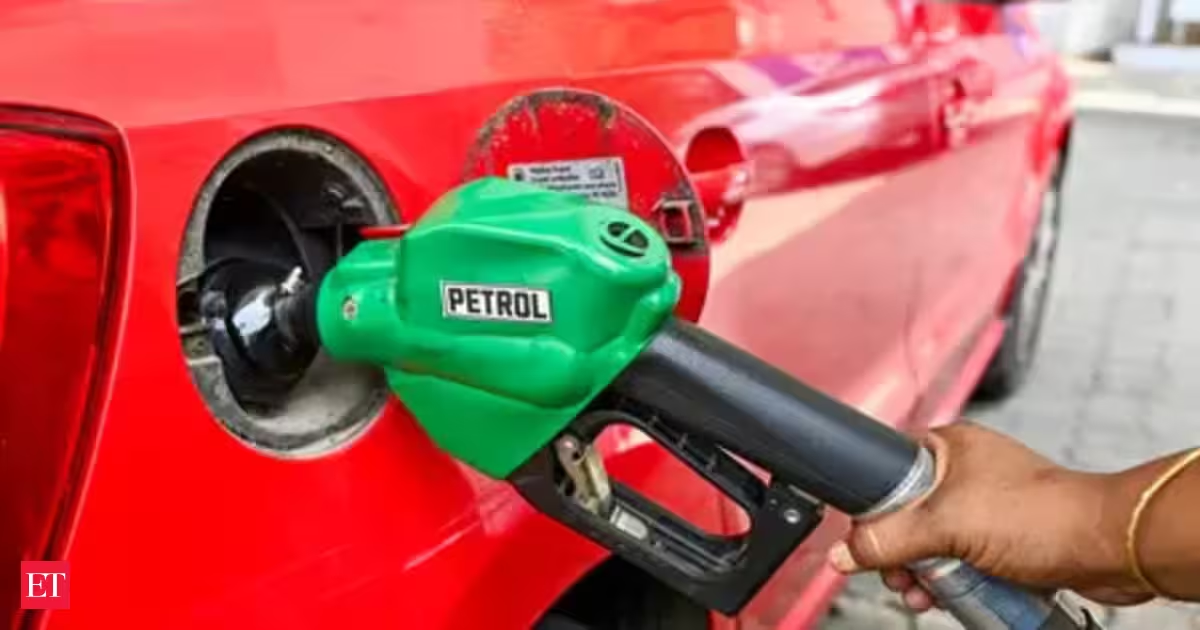
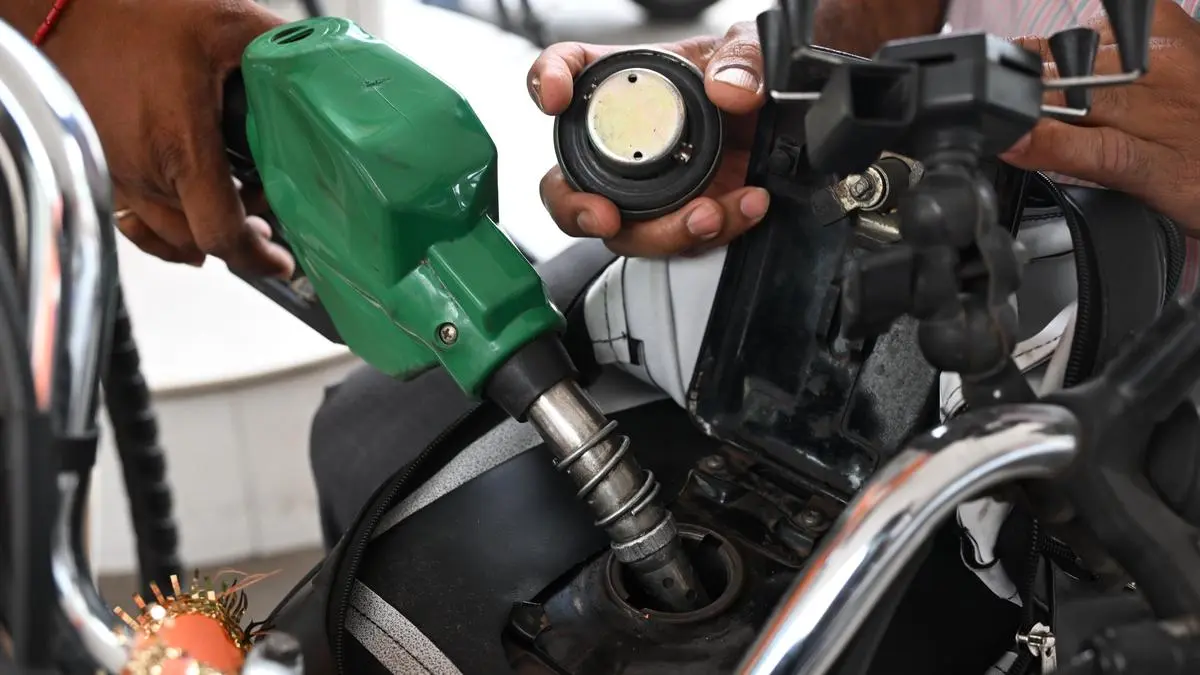
The government has mandated that at least every third retail outlet (RO) of fuel marketing entities must offer a “new generation alternative fuel”, including CNG, LNG, biofuels or electric vehicle (EV) charging and battery-swapping facilities, within three years of their commissioning.The move, notified in the Gazette on August 10, seeks to accelerate the adoption of cleaner fuels, reduce dependence on imported crude, curb pollution and promote energy security and farmers’ income while attracting private investment into fuel retailing.to slap penaltyThe Centre will also have the power to prescribe additional “new generation alternative fuels” from time to time. For ROs commissioned between November 8, 2019, and August 10, 2026, fuel marketing entities have been given one month to report the number of outlets commissioned and operational for more than three years and details of outlets that are already offering alternative fuels and any shortfall in this area. They will have another six months to bridge the shortfall. Failure to do so will attract a one-time penalty of 10 lakh for every deficient outlet.Entities will also have to submit an annual statement by June 30, backed by audited accounts and an affidavit, confirming compliance with the prescribed minimum net worth requirement.Monty Sehgal, national spokesperson of the Federation of All India Petroleum Traders, said the move addresses a long-standing demand of retail outlet dealers facing subdued sales and financial pressures.“Having one-third ROs with clean fuel options is welcome and quite achievable,” he said, adding that demand mapping would be needed to identify outlets where clean-fuel infrastructure would be commercially viable. Large outlets on highways and in industrial zones could particularly benefit, he said. He explained that ROs with space constraints are less than 10 per cent of the total strength, and the newer ROs are being allocated larger areas, especially on highways and industrial zones.entry requirementsThe revised policy also tightens entry requirements for new fuel retailers. An entity seeking authorisation for retail fuel marketing will have to establish at least 100 ROs, including at least 5 per cent in notified remote areas, within five years of receiving authorisation.The government will review the requirement every three years to assess the share of outlets offering at least one new-generation alternate fuel. The latest revision follows a review of the 2019 policy governing fuel retailing, undertaken to align the sector with decarbonisation, electric mobility and alternative fuel priorities. The government had constituted an expert committee in July, 2025.Published on August 13, 2026