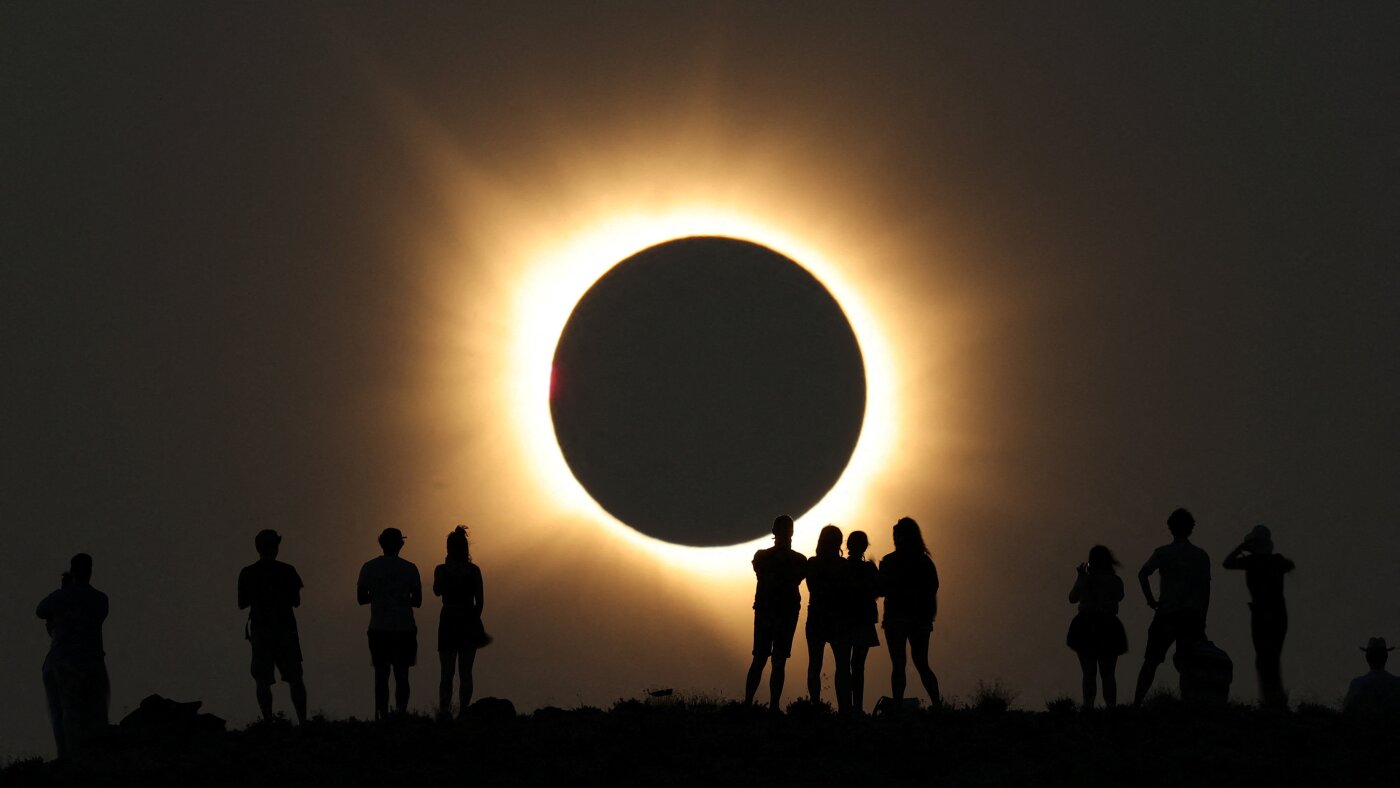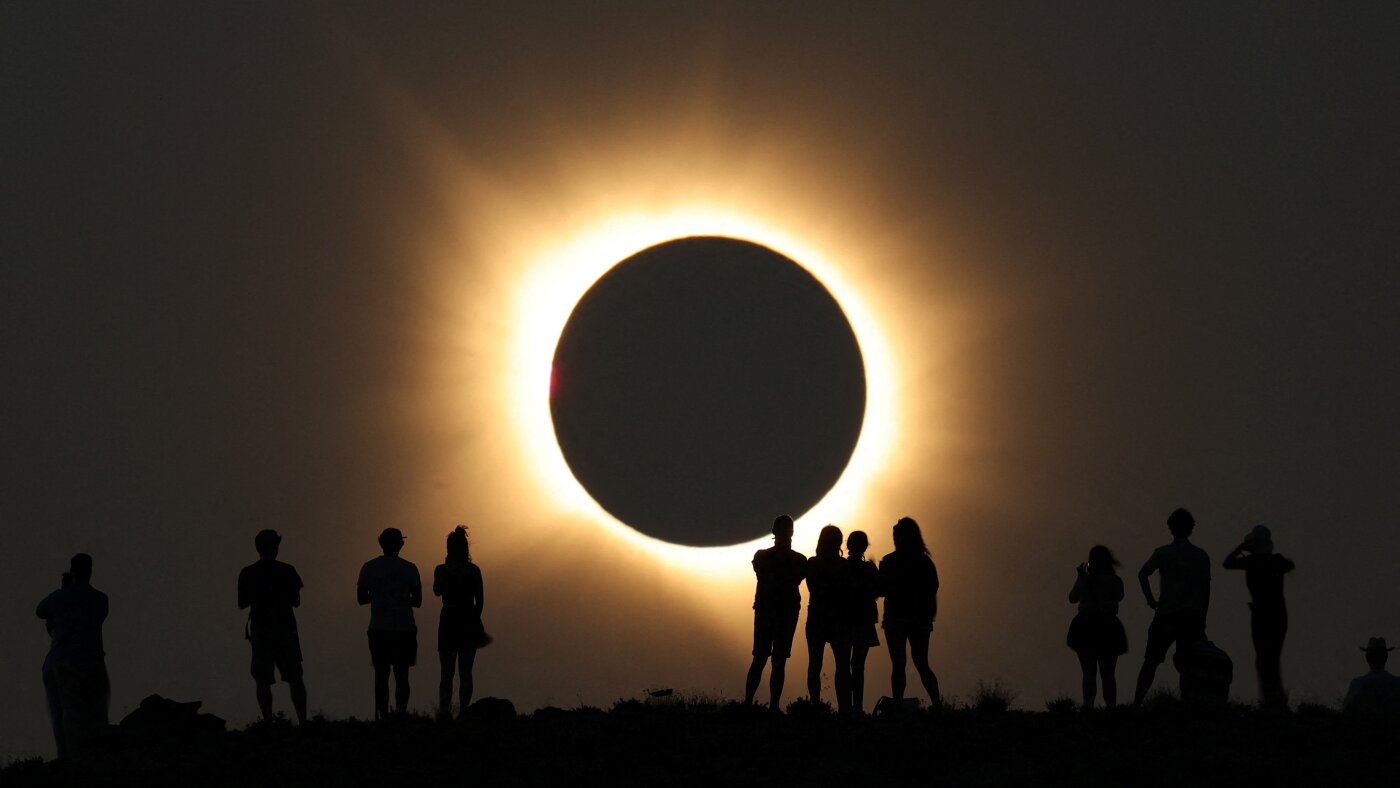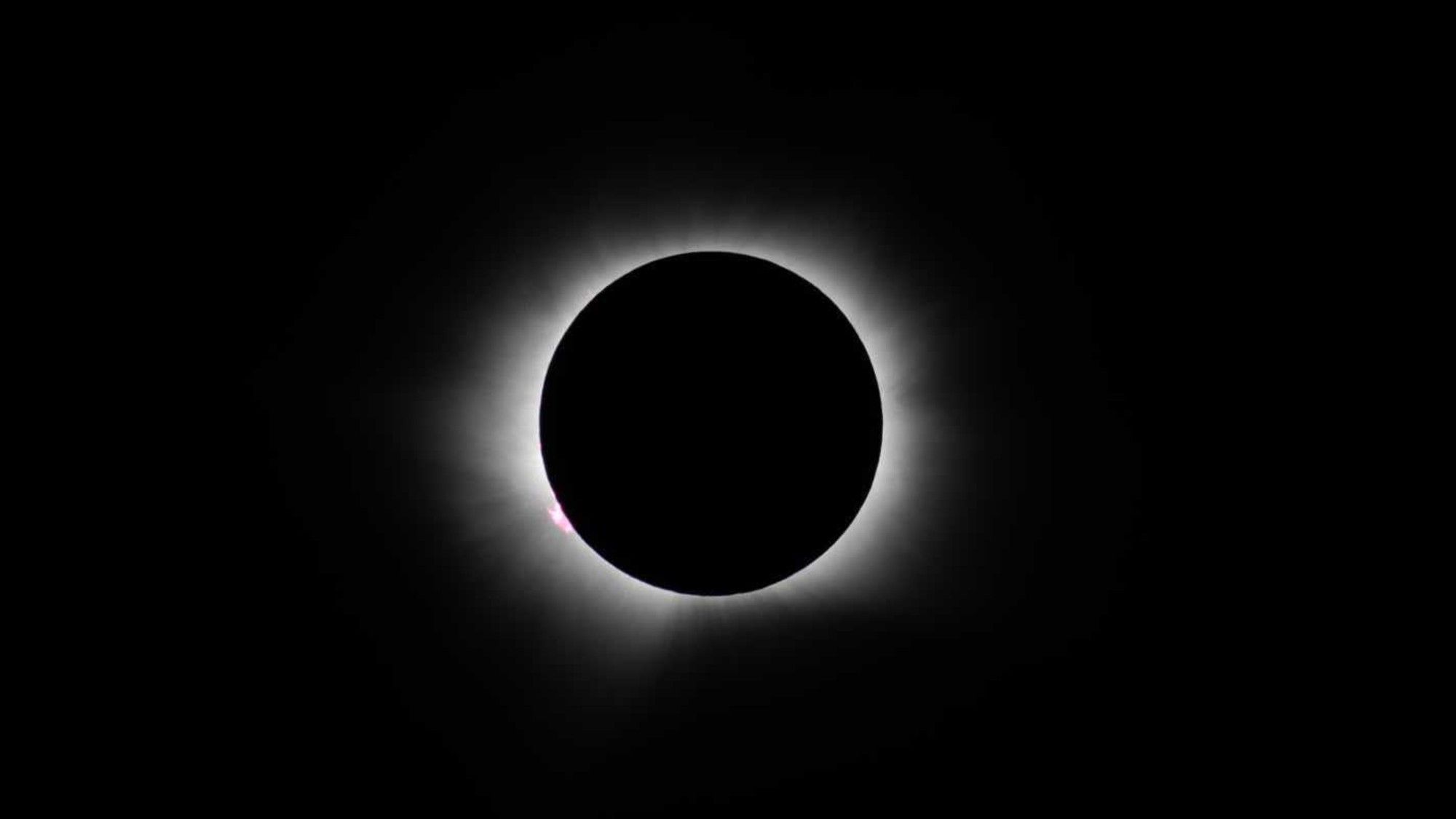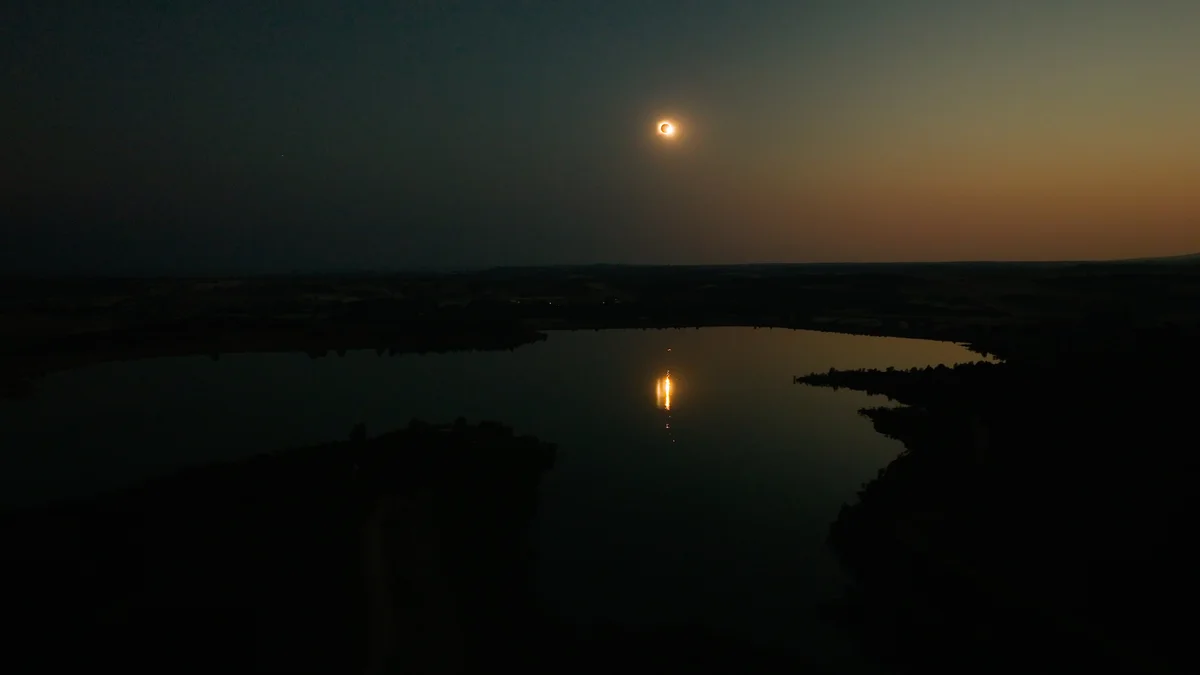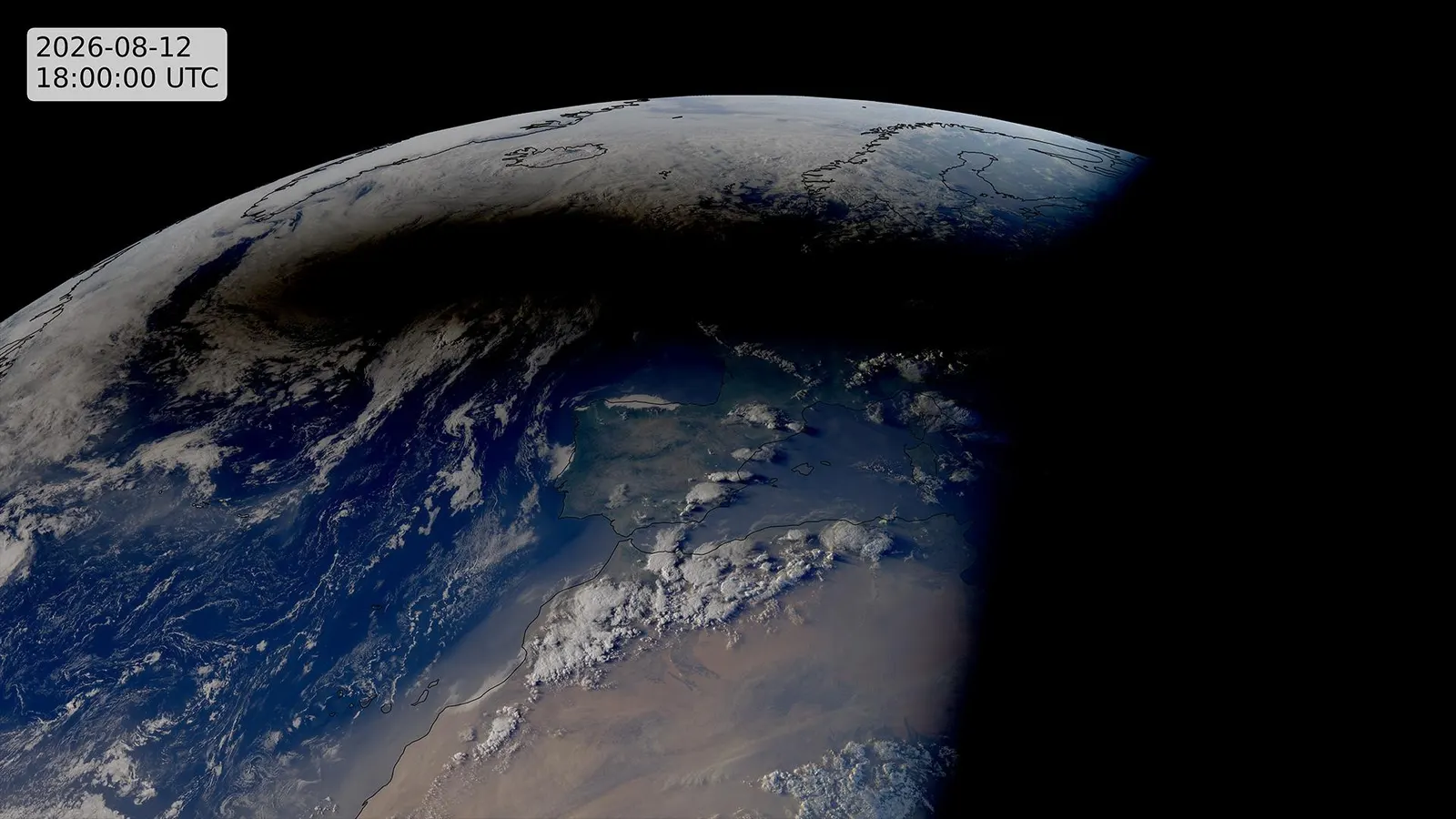
ToplineIn the wake of photos of the 2026 total solar eclipse from the path of totality through Greenland, Iceland and Spain on Aug. 12, satellite images are emerging that show the track of the moon’s dark central shadow across the planet. They reveal just how small — and fast-moving — the path of totality really was. Here’s every satellite image of the eclipse publicly available, who took them, how they were captured and why they’re scientifically significant. It’s an entirely new way of looking at one of 2026’s skywatching highlights. The image was captured by the Meteosat-12 satellite in geostationary orbit, 36,000km above the Earth on 12 Aug. 2026.EumetsatKey FactsTotality lasted up to 2 minutes 18 seconds on Aug. 12, but only from a narrow path of totality stretching from Arctic Russia, Greenland, Iceland, Spain and a sliver of Portugal.The moon’s darkest central shadow, known as the umbra, was only about 180 miles (290 kilometers) wide on Aug. 12. Outside it lies the much larger penumbra, where observers experienced only a partial eclipse.The moon’s shadow crossed Earth at speeds of well over 1,000 mph, depending on location. From space, it was viewed as a dark shadow moving gradually across the planet.Europe Watches From SpaceWhile DSCOVR provides the iconic global portrait, Europe’s Meteosat weather satellites reveal something equally remarkable — motion. Positioned in geostationary orbit 22,236 miles (35,786 kilometers) above the equator, Meteosat continuously observes Europe and Africa. During Wednesday’s eclipse, it watched the moon’s shadow sweep across Greenland before reaching Iceland and northern Spain, producing a time-lapse sequence that makes the umbra appear to glide rapidly across the landscape.Why The Moon’s Shadow Looks So SmallOne of the biggest surprises in these satellite photographs is how tiny the moon’s shadow appears. The dark central umbra is typically only around 180 miles (290 kilometers) wide, despite the Moon itself measuring 2,159 miles (3,475 kilometers) across. The narrow beam forms because the Moon’s conical shadow tapers as it reaches Earth. Everywhere outside that small circle lies the penumbra, where observers see only a partial eclipse.Why The Shadow Moves So QuicklyTo observers on the ground, totality often seems to pass in an instant. From orbit, it becomes obvious why. The moon travels around Earth at roughly 2,300 mph (3,700 km/h), while Earth rotates beneath it. Combined with the geometry of the eclipse, the shadow races across Earth’s surface at speeds that can exceed 1,000 mph (1,600 km/h), although the exact speed varies along the eclipse path — it’s fastest as it obliquely glances Earth at sunrise and sunset, and moves slowest in the middle of the path.Eclipses From SpaceThe combination of geostationary weather satellites and a deep-space observatory gives scientists an unprecedented overview of one of nature’s most precisely timed astronomical events. Together, GOES, Meteosat and DSCOVR created a nearly continuous record of the eclipse from three very different orbital perspectives. Unlike ground-based photographs, these images reveal the eclipse as a planetary-scale event, showing how the shadow crossed mountains, oceans and coastlines in little more than an hour and a half. They also show how small the path of totality really is compared with the size of Earth.Further readingForbesYour Ultimate Guide To Stargazing And Astronomy In 2026By Jamie CarterForbes7 Spectacular Stargazing Events To See This SummerBy Jamie CarterForbesThe Perseid Meteor Shower Begins Today: When To WatchBy Jamie Carter
In Photos: Satellites Capture Total Solar Eclipse 2026 From Space
Some of the most extraordinary images of Wednesday’s total solar eclipse were taken from space, where weather satellites captured the moon’s shadow race across Earth.
554 words~3 min read