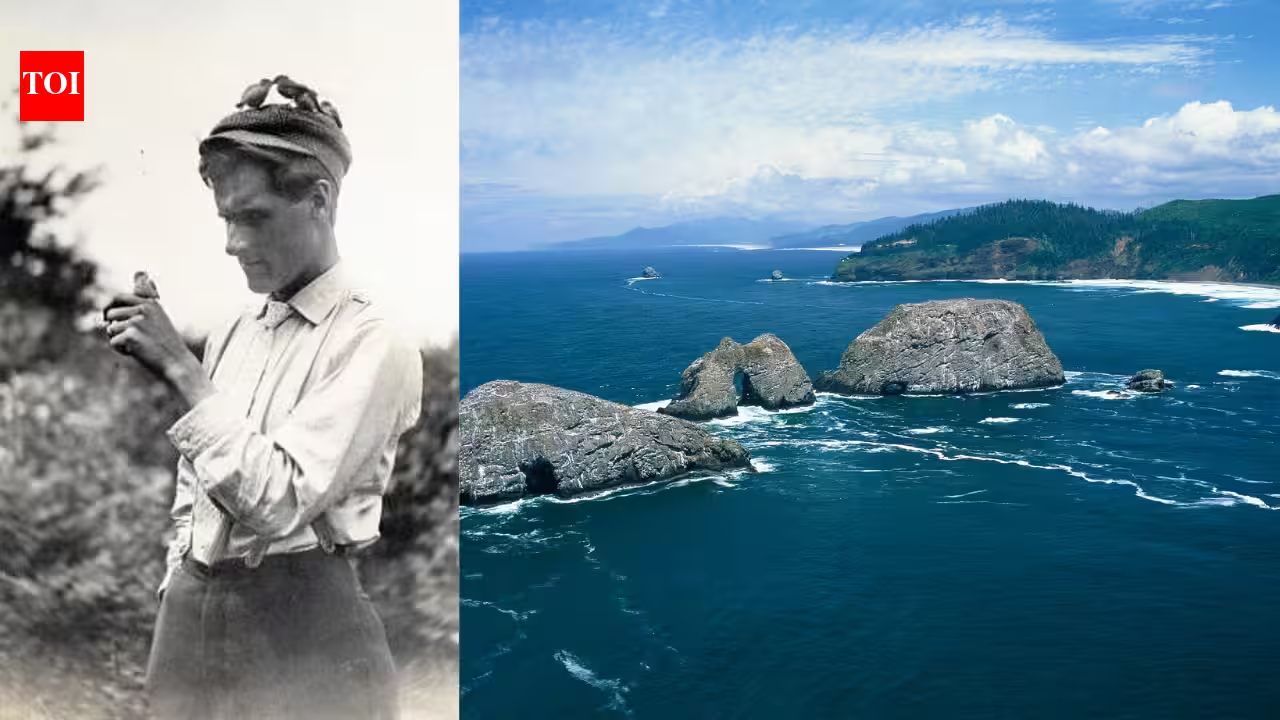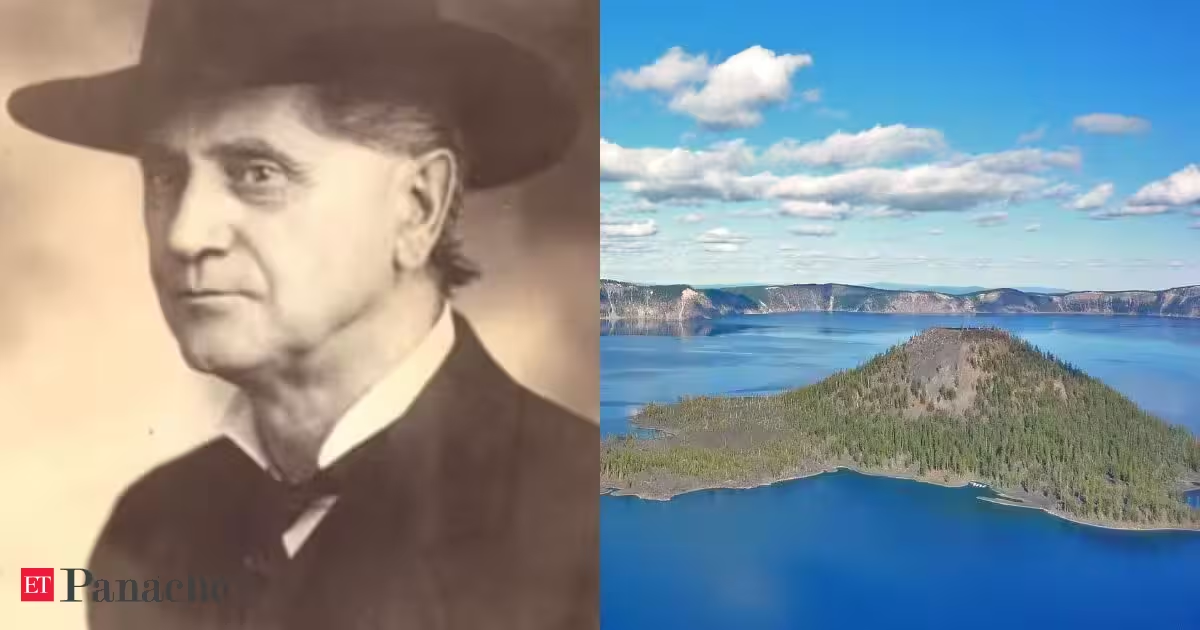
Crater Lake in Oregon is now known for its striking blue water, great depth and volcanic setting, but its journey to becoming a protected national park was not a quick one. More than a century ago, a young William Gladstone Steel first learned about the lake in a rather ordinary way, by reading about it in a newspaper that had been used to wrap his lunch.That small moment in 1870 stayed with him for years. Eventually, Steel would spend 17 years pushing for the lake to receive permanent protection, a campaign that ended with the creation of Crater Lake National Park on May 22, 1902. The National Park Service describes his effort as a 17-year quest to see the lake protected as a national park.The newspaper that started it allSteel was born in Stafford, Ohio, in 1854. His family later moved to southeastern Kansas, where he was living as a teenager when he first came across the story of Crater Lake.According to the Crater Lake Institute, the newspaper was reportedly a copy of the Oregonian that had been sent to the family by Steel's brother, who was living in Portland. The paper happened to be holding his lunch when he read about the remarkable lake in Oregon.The story made such an impression that Steel later recalled: “This article took a great hold upon me,” and said, “So great that I determined then and there to go to Oregon to descend to the water to climb (Wizard Island) and to take my lunch there.”His family moved to Portland in 1872, but it still took another 13 years before Steel finally reached the lake.His first look changed the planSteel arrived at Crater Lake on August 15, 1885. Two days later, he gave the name Wizard Island to the volcanic island rising from the water. What he saw convinced him that simply visiting the place was not enough.Steel later described his reaction after seeing the lake for the first time:“Not a foot of the land about the lake had been touched or claimed. An overmastering conviction came to me that this wonderful spot must be saved, wild and beautiful, just as it was, for all future generations, and that it was up to me to do something. I then and there had the impression that in some way, I didn’t know how, the lake ought to become a National Park.”He returned to Portland and began working on the idea. He circulated a petition, sought political support and pushed for legislation. In 1886, President Grover Cleveland reserved 10 townships around the lake from settlement, giving the area some protection, but Steel wanted something stronger.Seventeen years of pushing for protectionThe campaign was not easy. Steel faced opposition from people connected to sheep grazing and mining interests, while the broader American conservation movement was still developing. Even when Crater Lake received protection as part of the Cascade Range Forest Reserve in 1893, Steel continued his campaign because he believed the lake needed national park status.His work also helped bring greater attention to the lake. Scientific expeditions studied its depth and geology, while Steel continued promoting the area and gathering support for permanent protection.Finally, on May 22, 1902, Crater Lake became a national park. The date marked the end of the 17-year campaign that had begun after Steel's first visit in 1885.The lake Steel fought to protectToday, the reason for Steel's determination is easier to understand. Crater Lake sits inside the caldera left after Mount Mazama collapsed following a massive eruption about 7,700 years ago. Rain and snow gradually filled the basin, creating the lake seen today.At 1,943 feet deep, it remains the deepest lake in the United States. It has no rivers or streams flowing into it, with its water coming mainly from rain and snow. The National Park Service also describes it as one of the world's clearest and most pristine lakes.For Steel, however, the important part came much earlier. He had read about an unusual lake while eating lunch as a teenager, finally saw it 15 years later, and then spent another 17 years trying to make sure it would remain protected for generations to come.
In 1870, he read about Crater Lake in Oregon in a newspaper containing his lunch. After 17 years of his tireless efforts to save America's deepest lake, it became a National Park
In 1870, William Gladstone Steel came across a newspaper story about Crater Lake in Oregon while the paper was being used to wrap his lunch. The unusual discovery stayed with him for years, and after finally seeing the lake in 1885, he became determined to protect it from development. Steel spent the next 17 years petitioning, lobbying and building support for its preservation. His long campaign finally paid off in 1902, when Crater Lake was officially established as a national park, protecting one of America's deepest and most remarkable lakes for future generations.
692 words~3 min read