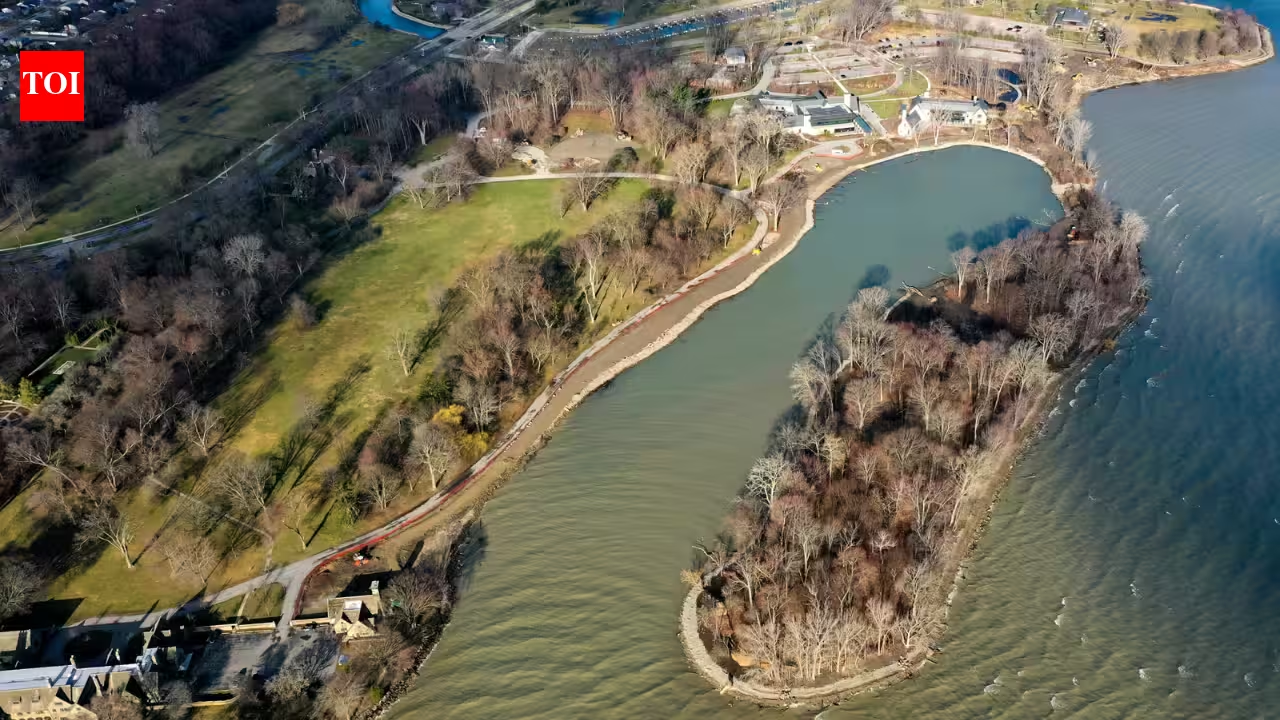
View of Ford Cove where shoreline restoration is underway. Credit: InSite Design Studios, Inc.A major environmental restoration project is removing decades of artificial concrete shoreline defences along Michigan’s Lake St. Clair and replacing them with natural wetlands, living shorelines and fish habitat.The $7 million project at the historic Edsel and Eleanor Ford Estate is transforming more than a mile of hardened waterfront into a working ecosystem. Funded by the National Oceanic and Atmospheric Administration (NOAA) Fisheries, the project will restore 17.5 acres of coastal marsh, nearshore waters and forested wetland.According to a report from NOAA Fisheries’ Office of Habitat Conservation, about 99.9 percent of Michigan’s Lake St. Clair coastline has been hardened with concrete slabs, seawalls and rock barriers. While these structures help protect the shore from erosion, they remove the shallow coastal areas that native aquatic species need.Removing concrete barriers to bring back native speciesArtificial seawalls create steep drop-offs and strong wave reflections. This removes the shallow areas where fish spawn and young animals find shelter.“The hardened shoreline essentially eliminates that nearshore habitat that’s important for fish spawning, breeding, and nursery areas,” said NOAA Marine Habitat Resource Specialist Terry Heatlie in the NOAA Fisheries report. “It’s also tough on turtles and other species that need to move between the land and water.”The difference is especially clear when comparing the U.S. and Canadian sides of Lake St. Clair. Much less shoreline development has taken place on the Canadian side.“On the Canadian side, where there’s much less shoreline hardening, monitoring shows a huge difference in the number and diversity of fish,” Heatlie said. “It’s largely attributed to how developed the U.S. shoreline is.”To help correct this imbalance, contractors are removing tons of broken concrete from the Ford House estate. They are replacing it with nature-based features such as “lunkers”—wooden shelters that extend out over the water and create protected areas where fish can rest away from predators.Large timber logs are also being placed underwater to create complex shelters. Gentle slopes are being built along the shoreline so turtles and amphibians can move safely between the water and land.Shoreline hardening at Ford House prior to construction. Credit: NOAA Fisheries/Terry HeatlieRebuilding a layered ecosystemThe 17.5-acre restoration covers several different habitat types across the estate. According to NOAA Fisheries’ technical plans, the project includes:1 mile of shoreline redesigned with living, natural features.5.5 acres of coastal marsh planted with native wetland plants.8 acres of nearshore open water improved with underwater structures.4 acres of forested wetland cleared of invasive brush.These changes are designed to support important Great Lakes fish, including northern pike, muskellunge, yellow perch, smallmouth bass and largemouth bass.The project also includes special habitat for rare aquatic species. On Bird Island, a small island within the estate’s waters, workers are creating isolated vernal pools. Because these seasonal ponds are not directly connected to Lake St. Clair, fish cannot enter them. This gives frog eggs and tadpoles a safer place to grow without being eaten.“This property has had almost no frog sightings in its recorded history,” said Kevin Drotos, Ford House landscape and natural areas manager. “After a small wetland project, we started seeing frogs return within a year.”Crews are also placing ledgestone rock formations underwater to attract mudpuppies, foot-long aquatic salamanders with frilly red external gills. Mudpuppies play an important role in the life cycle of the endangered salamander mussel. During their larval stage, the mussels attach harmlessly to the salamander’s gills, where they feed and develop before settling onto the lakebed.The estate also lies beneath a major North American bird migration route.“We’re located on a major migratory bird pathway, and we’ve documented more than 200 species here,” said Ford House President and CEO Mark Heppner. “With more habitat and more food sources, we expect even more activity.”Drotos said visitors may see herons resting on fallen trees, osprey and bald eagles hunting over the cove, and migrating shorebirds feeding on the new mudflats.Excavator installing a fish lunker on Ford Cove. Credit: Ford HouseProtecting the historic landscapeCombining a large restoration project with historic preservation has created a special challenge. The estate is a National Historic Landmark and must maintain the original landscape vision of its 1920s designer, Jens Jensen.Historical research showed that Jensen preferred native Michigan plants and natural-looking landforms. That approach fits closely with modern ecological restoration.“Looking at Jensen’s original designs, they almost mimic modern ecological restoration drawings,” Drotos said. “He used almost exclusively native Michigan plants, a lot of which we are reincorporating into the landscape through this project.”To reshape the shoreline, arborists had to remove 136 trees. The estate will replace them with 290 trees representing 43 native species, increasing local plant diversity.Special attention was also given to several 100-year-old willow trees that had reached the end of their lives. Instead of losing the historic trees completely, gardeners took genetic cuttings and are growing cloned saplings to plant in their original locations.“The level of detail they’re putting into maintaining the historic landscape is incredible,” Heatlie said.Expanding public access and educationThe estate receives about 150,000 visitors each year, including thousands of Detroit public school students who visit through grants funded by the Ford Foundation.Full construction is expected to finish in 2027, but some public features are already open. Workers recently completed a 400-foot elevated, wheelchair-accessible boardwalk through a restored wetland near the visitor centre. The area includes 15,000 native perennial plants and 500 trees. More boardwalks are planned for Bird Island.“Once the shoreline is in a more natural state, it’s going to offer so much more for school groups,” Drotos said. “They’ll be able to see what nature is supposed to look like, and how it’s been changed over time. That contrast is really powerful.”Heppner said the project also aligns with the original goals of the Ford family.“Eleanor Ford really wanted to preserve the estate but also ensure that it was there for future generations to enjoy,” he said. “This project gives us a whole new way of engaging current and future generations of visitors. I think Eleanor would be thrilled.”
Michigan's historic Ford House is replacing concrete shoreline with natural habitat; the $7 million project will restore 1 mile of shore and 17.5 acres of aquatic and wetland habitat
A major environmental restoration project is removing decades of artificial concrete shoreline defences along Michigan’s Lake St. Clair and replacing them with natural wetlands, living shorelines and fish habitat.
997 words~5 min read