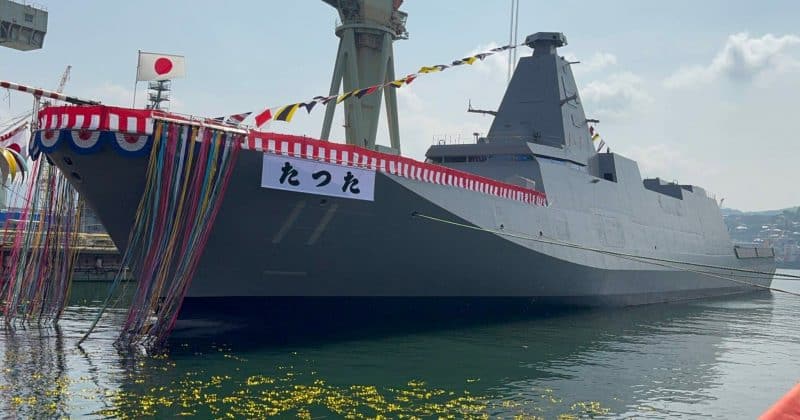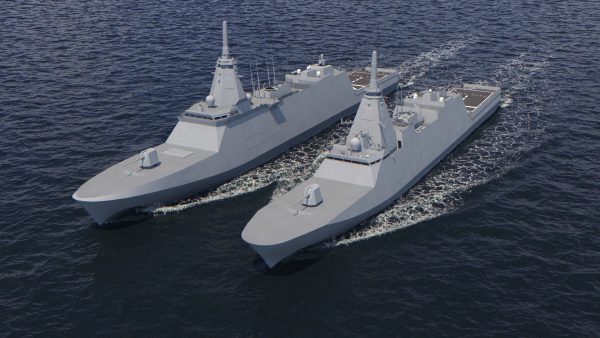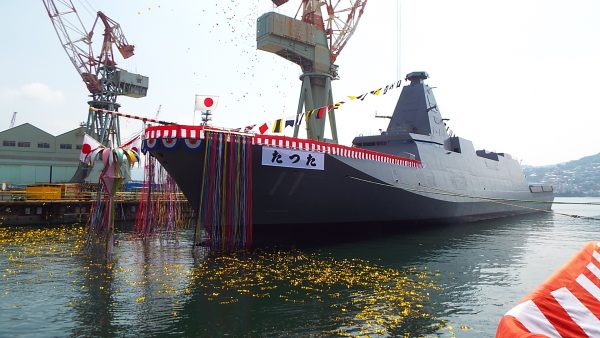
MHI launched Tatsuta, the eleventh Mogami-class frigate on order for the Japan Maritime Self-Defense Force, in a ceremony held at its facilities in Nagasaki, Japan, July 2, 2025.
On August 4, the Japanese Ministry of Defense published its annual 2026 Defense White Paper, which outlines Japan’s defense policies and activities. While the report extensively covers the increasingly severe security environment surrounding Japan, notable highlights include an emphasis on one of Japan’s core concepts, “new ways of defense,” and its defense production.
Notably, the White Paper follows Japanese Defense Minister Koizumi Shinjiro’s comment at the Farnborough International Airshow: “Defense production is deterrence itself. No matter how advanced a defense system may be, it means little if it cannot be produced.” His statement suggests a fundamental shift in how Japan views deterrence: rather than mere possession of defense materiel, Japan increasingly recognizes the importance of the defense industrial base as a source of strategic capability.
Japan, like other countries around the world, is learning from Russia’s full-scale invasion of Ukraine. Some of the takeaways include the decisive role played by unmanned assets, renewed appreciation for strong air defense, and the importance of sustaining a defense industrial base that can keep up with a protracted war. Furthermore, recent conflict in the Middle East and concerns about diminishing U.S. stockpiles have sparked concern among U.S. allies about the reliability of the United States as a supplier of advanced munitions for their militaries. These conflicts have served as critical turning points in Japan’s defense posture, prompting the Japanese government to rethink its defense policies to invest more in developing indigenous capabilities and partner with other U.S. allies that share similar concerns.