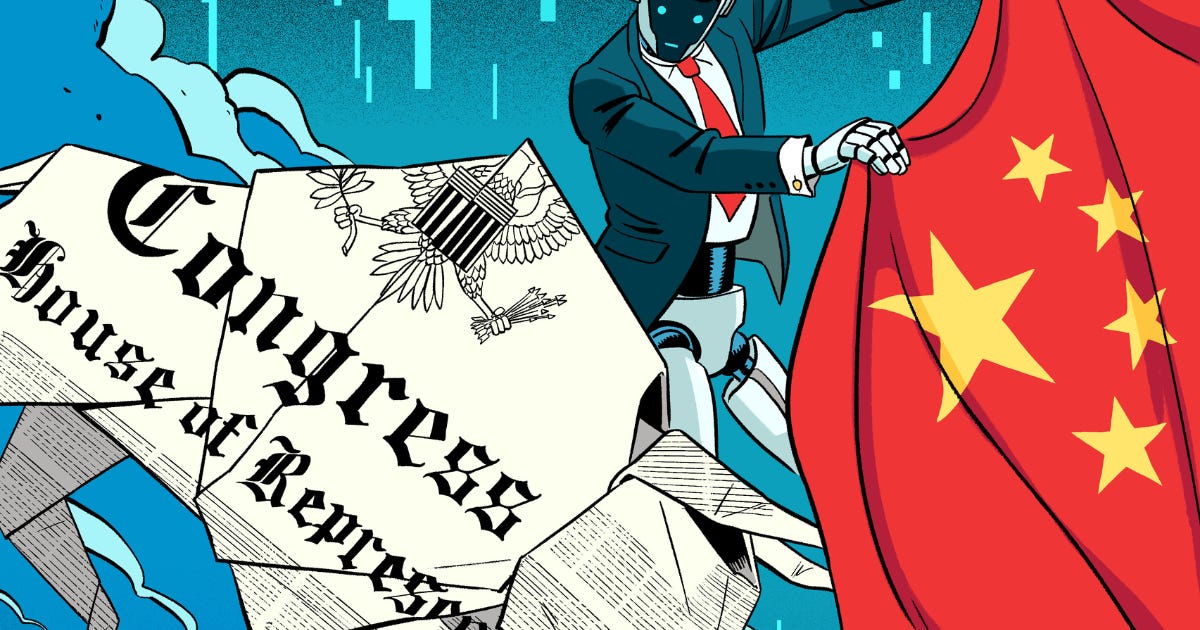
A recent Wall Street Journal article warned that the “[c]lampdown on top U.S. artificial intelligence is fueling concern that Washington is handing Beijing a cyberwarfare advantage.” It went on to note that China’s release of Z.ai by Zhipu AI is on par with Anthropic’s Mythos model in detecting software vulnerabilities. The article, along with a growing body of recent commentary, taps into the prevailing China-U.S. AI race narrative at a time when the United States is deliberating a unified AI policy and reportedly considering banning Chinese open weight models.
The AI race narrative holds that the United States and China are engaged in a zero-sum contest to develop and deploy frontier AI so as to accrue lasting geoeconomic advantage. In a May 2026 article for the Transformer newsletter, Yi-Ling Liu outlined how Silicon Valley’s major companies have themselves pushed this AI race narrative, potentially overstating the extent of the competition. However, the interests of these companies are not uniform, nor are the policies that they advocate. Different firms across the AI value chain have continued to invoke the AI race narrative to advance policy preferences that align with their commercial interests.