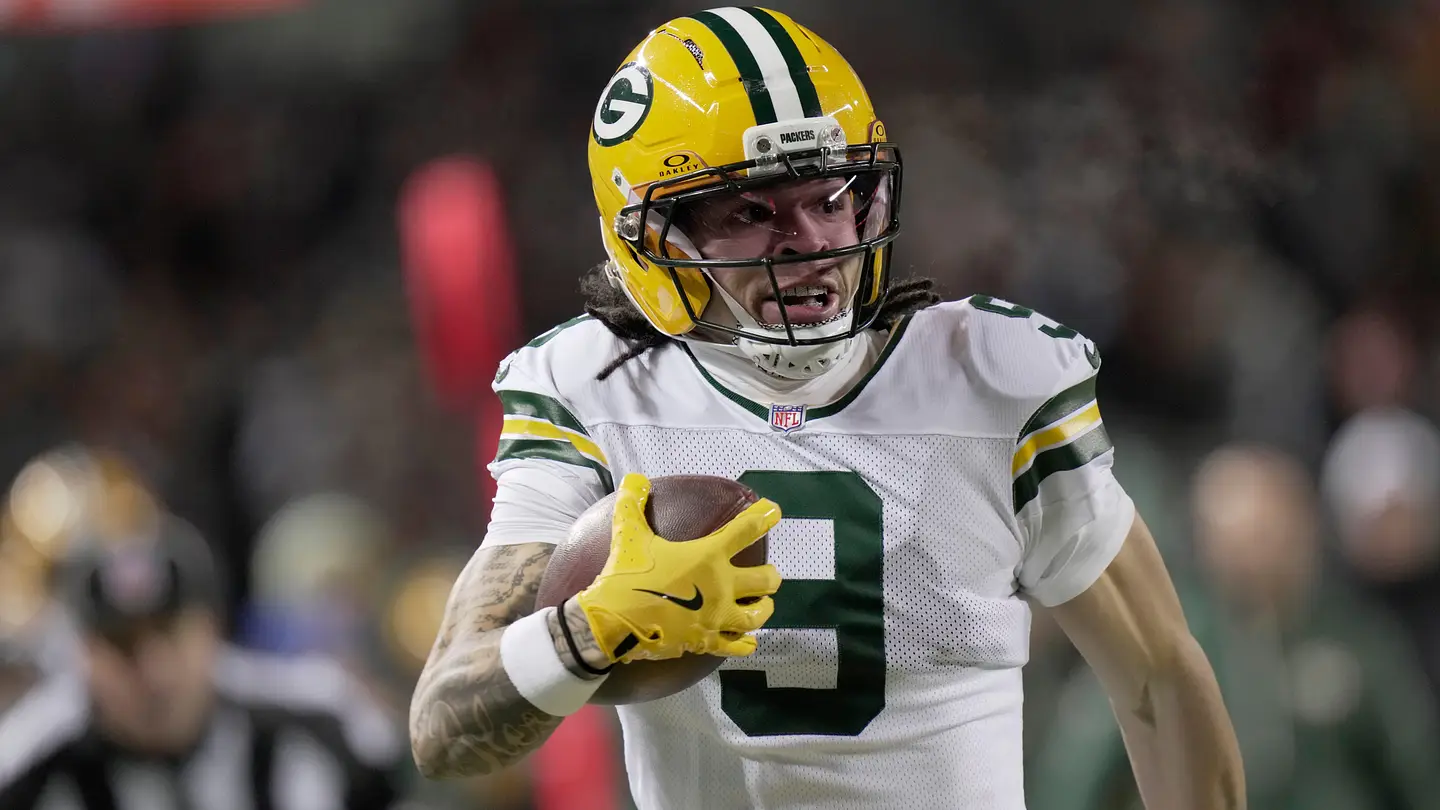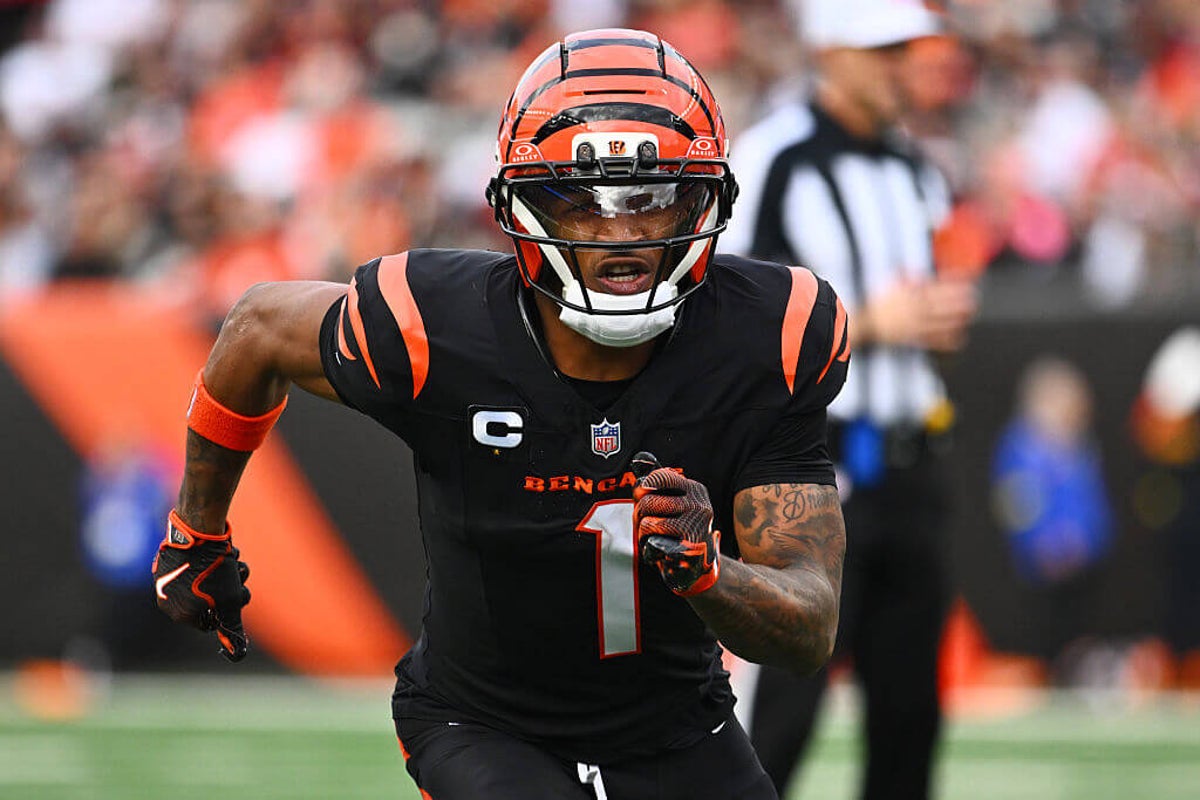
By the second week of September, I had always ruined my scribblers.Just two weeks prior, I’d gleefully strolled through the aisles of Staples, securing the year’s notebook supply (green for science, blue for history, red for math, yellow for english) and promising that this would be the year I’d take notes in a consistent and neat fashion — and finally refrain from doodling all over the front covers. Despite my honest conviction, this was a promise to myself which was never kept.It’s been a long time now since August and September represented a familiar cycle of scribbler-based promise and failure. But it’s around this same time period I do an annual inventory of my dynasty rosters, which is the closest remaining parallel in my life to that back-to-school rush.Whether you’re in one league, 10 leagues, or 100 leagues, your dynasty portfolio will be better-served if you enter the season with a surgical plan of action, rather than simply doodling on the front cover until it’s time to cram for final exams. This article will provide the tools to properly assess your dynasty teams, organize your portfolio and optimize your teams for success in 2026 and beyond.I author a Substack, Thinking About Thinking, which covers seasonal and dynasty fantasy football, and I’ll be a contributing dynasty writer this year for The Athletic. Consider this piece both a guide for how you can improve your dynasty teams today, and an introduction to my perspective on dynasty, which will serve as a basis for the rest of my work at The Athletic throughout this season.Two markets and three currenciesSometimes the simplest games are the most endlessly challenging. Dynasty is a dynamic strategic format because it is one of the few competitive peer-to-peer games that is not zero-sum.If you play Monopoly or CATAN, it’s possible for two players to make a mutually-beneficial trade based on the properties or resources you each have. A good trade may increase both players’ win equity at the expense of those you’re playing with. But no matter what you do, the total win equity of all players must add up to 100%, and when the game ends, it doesn’t matter what properties or settlements you have. It’s time to pack up the pieces and call it a night.Only one manager can win a dynasty league each year, but unlike DFS or Redraft or Best Ball, you can have a wildly successful year without winning the league — or even winning very many games at all — if you finish the year with a far more “valuable” roster than you began it with.That’s because dynasty is a game defined by two concurrent markets. The first is a “points” market — driven by projected current-year production, in which value is assigned based on the likelihood that a player can help you win the league this season. The second is a “future” market — which is formulated based on a projection of future production and/or “trade value.”This is a good time to establish that I typically avoid using the word “value” when discussing players’ trade worth. Value should really be defined as a player’s projected contribution to your win equity, both in the current season and in future seasons. I prefer to use the term “buying power” to refer to a player’s “market value.” This delineates between the entirety of what a player can do for you — their “value” — and what you can exchange a player for on the trade market — their “buying power.”Dynasty managers know, of course, that these two markets are not separate and distinct. Ideally, you can build a team that competes in both at the same time. But we also know that different assets are more attractive in one market or another.Dynasty leagues operate with three forms of currency. The first is projected current-year production from players (production value), the second is draft picks, and the third is projected future-year production from players. To adopt a term from the great dynasty writer Adam Harstad, I call that third category “EYR value” (Expected Years Remaining).Picks are self-explanatory. But players are composites of production value and EYR value. Depending on which player, that balance can vary widely. Further, we cannot ascertain with certainty how much value any player has within those two categories. But the more information we have on a player, and the fewer projected years remaining in a player’s career, the more narrow our range of outcomes can be.For instance, we can be reasonably confident that Derrick Henry will score a lot of points this year if healthy, and we can be equally confident that Henry is not likely to be a significant fantasy factor for a large number of years after this one. Because we can plot out Henry’s range of outcomes with more certainty than most players in the market, I consider him a “tight-band” player.On the contrary, it’s incredibly difficult to place a precise value on Parker Washington. On one hand, he could be a 24-year-old fringe-WR1. On the other, if he’s unable to sustain the upside he showed late last season, he could fade from dynasty relevance entirely — long before he reaches the natural end of the aging curve. His current buying power in the market is a collective aggregation of his range of outcomes, and depending on how you evaluate his outlook compared to the market, you can decide whether he’s over- or under-priced. In any case, Washington is a “wide-band player” with significant error bars in both his current-year production value, and his EYR value.Whether a player has a “wide” or “tight” band, we also know intuitively that players’ ranges of outcomes are not normally distributed.Ja’Marr Chase, for example, is a “tight-band” player if you were projecting his range of outcomes to, roughly speaking, an 80% confidence interval. What I mean by that is in the majority of scenarios, Chase will score a lot of points this year, and score a lot of points for several years to come. When you combine that level of production with that level of perceived stability, you get a (rightfully) expensive dynasty asset.
Dynasty football market principles: How to build the best roster for sustained success
Jakob Sanderson provides a comprehensive plan of action for all dynasty league football managers, be they contenders or rebuilders.
3,040 words~14 min read