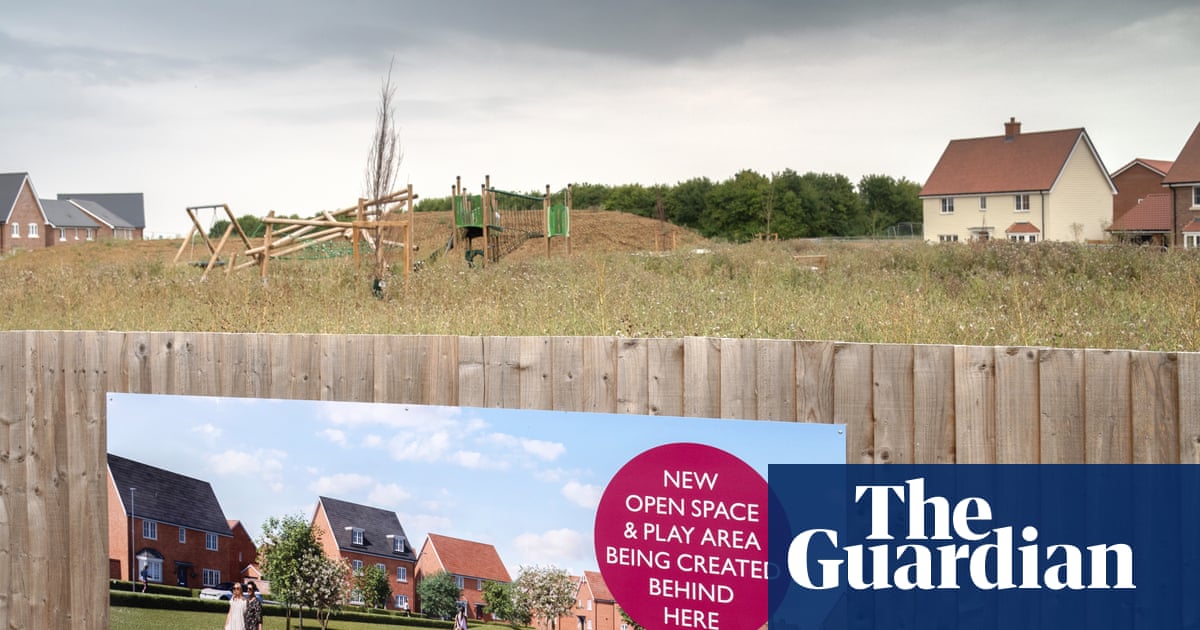
Sir, – The issue of young people’s fitness levels topic came up at work while chatting to a colleague about young kids on various football teams – training once or twice a week isn’t enough if there’s nowhere for them to simply play in between. And that points to a bigger issue: the near-total disappearance of simple, open green spaces where children can play in modern housing developments.Walk through almost any housing estate or apartment complex, particularly those built in the last decade, and you will struggle to find a plain patch of flat grass where kids can have a football match, or even a stretch of concrete where children (and their parents!) could kick a ball and play chasing or whatever their favourite game is. Developers and, I suspect, councils seem to favour “landscaping” – ornamental grass areas, raised beds, decorative planting – that looks well in a brochure but is useless for free play. Many developments have no green space at all. Ideally there should be somewhere kids could go to play games within a five-minute walk of wherever they live, with a few benches nearby so parents could keep an eye on younger ones or just take a break.Where open space does survive in a private complex, it is too often accompanied by a sign reading “No Ball Games”, despite ample room for younger kids to have a kickabout. Some even have signs saying “Keep off the grass”.It is often the older social housing complexes – particularly those closer to Dublin city centre – that get this right, with caged ball courts or hard-surface play areas built in from the outset. Higher-value private estates, ostensibly designed for families, frequently offer nothing comparable. The recent campaign to save the Strand pitch on Portland Row, backed by Troy Parrott and Kellie Harrington, shows just how vital these spaces are to a community, and how hard local people have to fight to hold on to them in the face of development. Well done to those who successfully objected. They should not have had to object in the first place.Estates built in the 1960s and 1970s, whatever their shortcomings by today’s planning standards, generally included a green or a patch of waste ground where kids could play unsupervised for hours. That casual, unstructured space has vanished from modern planning in favour of tidiness and fancy landscaping.Kids deserve better than that. − Yours, etc, Colm Ahern,Clonsilla, Dublin 15.
Children deserve better than fancy landscaping – they need places to play
Many new housing developments have no useful green space for kids
406 words~2 min read