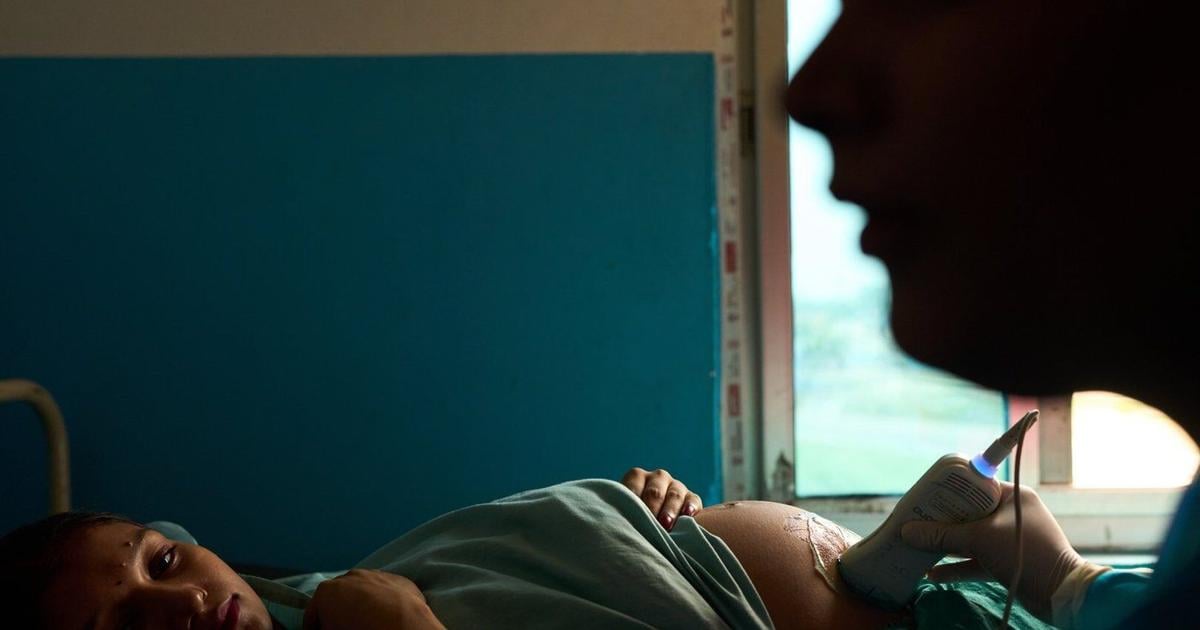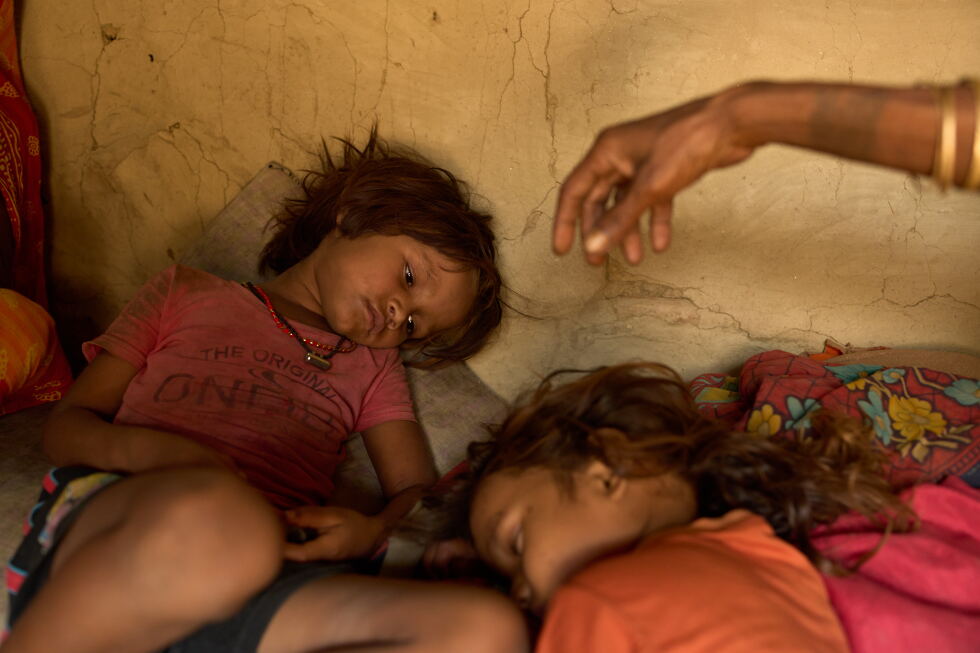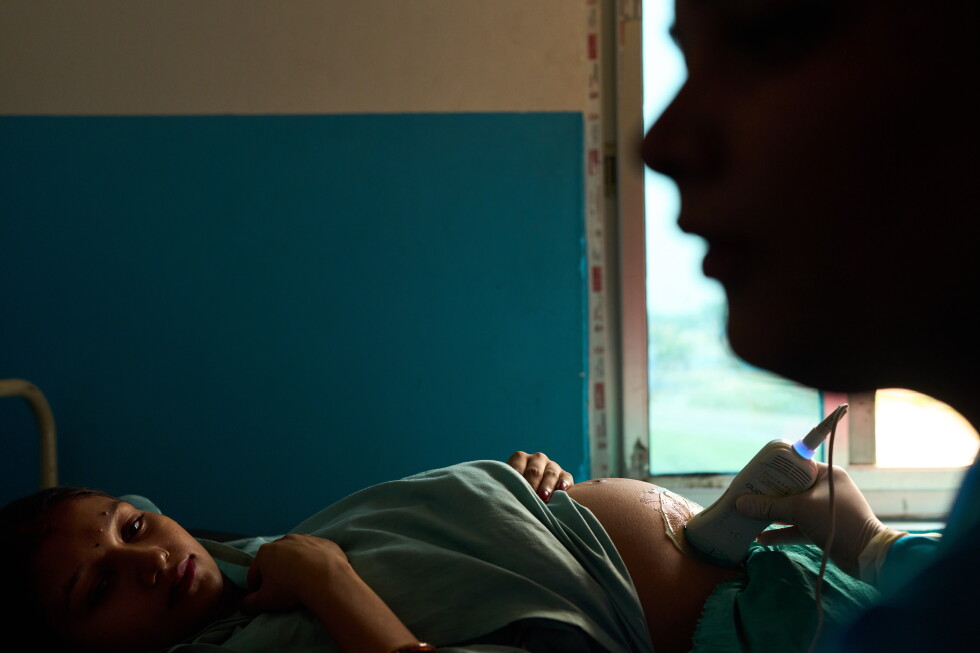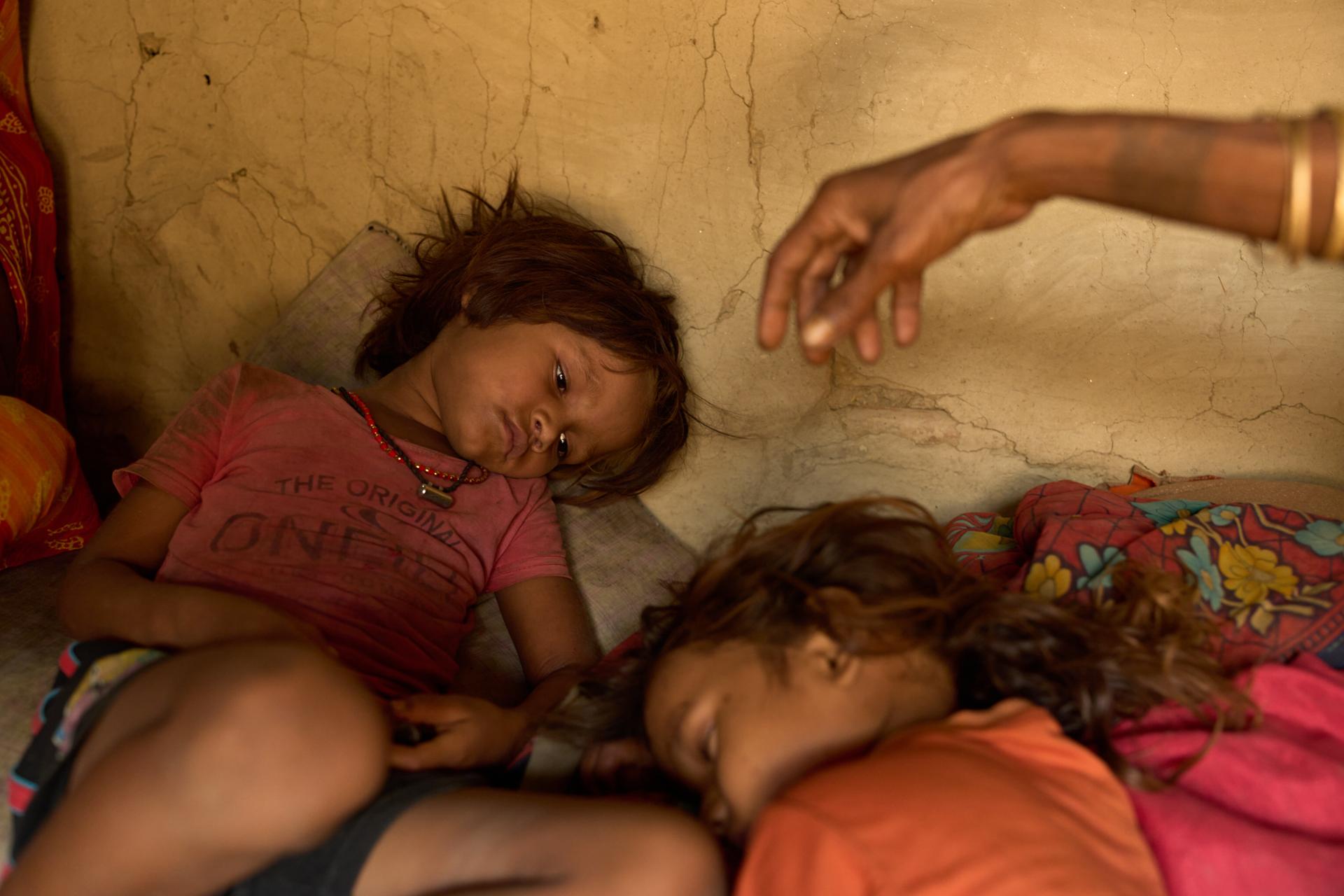
Sonam Mukhiya, left, lies next to her 3-year-old brother, Yubraj Mukhiya, and their grandmother in their home in Gaur, Nepal, May 19. Their mother, Kabita Mukhiya, died in December while 28-weeks pregnant amid disruptions to nutrition programs and reproductive outreach services following last year's foreign aid cuts by the United States. AP-Yonhap
GAUR, Nepal — The young mother’s breath had grown ragged. Inside her mud home in rural Nepal, she hunched over in agony, pain pummeling her pregnant belly, her swollen legs scarcely able to support her.
Kabita Mukhiya was in the midst of an emergency, but didn’t know it. For weeks, she’d suffered at home, because there was nobody around to tell her to rush to a hospital. The aid workers who once regularly visited her village to help pregnant women had stopped coming, after foreign aid cuts by the United States shuttered a program aimed at saving mothers’ and babies’ lives.
Kabita was uneducated and impoverished, and she did not know what was happening to her body. In desperation, she turned at last to her aunt for help, who hauled her off to the hospital, where both women wept as the doctors said things neither could understand.
Which is why Kabita — confused and confined to her hospital bed — turned to something she could understand: prayer.