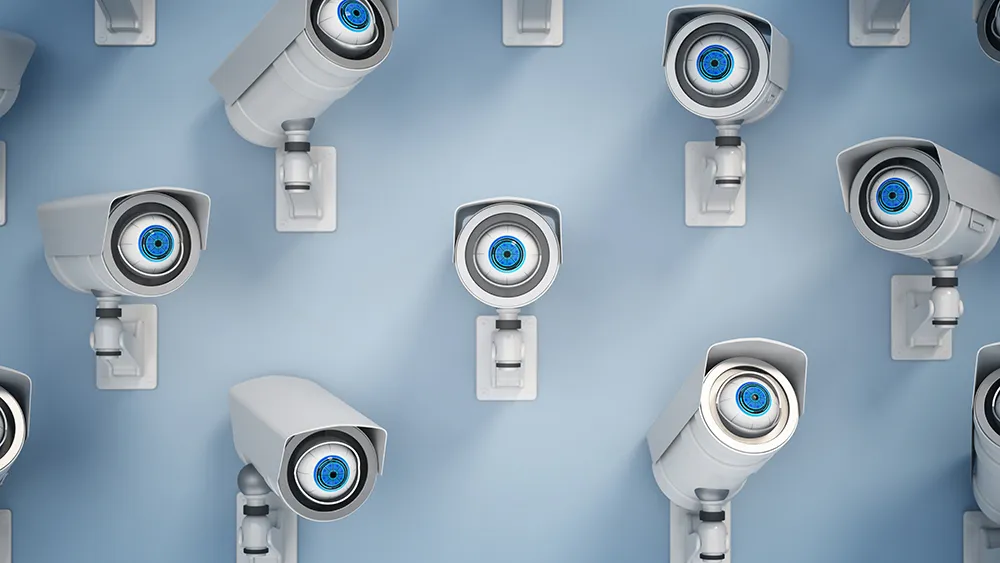
Some people think that the United Kingdom ranks as an unusually surveillance-heavy society, what with all the CCTV installations, doorbell cameras and automatic number plate recognition systems that have proliferated in the public sphere – but they would be wrong. In fact, according to Ruben Andersson’s Age of Security, the whole world is sliding towards a state of perpetual surveillance, where everybody is spied on all the time, by cameras and communications interceptions and data capture, without debate or accountability or even much public reflection on what is happening.
Do we actually want to live in this state of heightened supervision, looked over by what we are told are ‘machines of loving grace’ (as the novelist Richard Brautigan once wrote)? Does it matter? And who cares? Those are the questions tackled in this book about the global shift towards a security culture and the possible cost of that shift.
Of course there is surveillance and there is surveillance. The total of surveillance cameras in London, for example, is high, at more than 60 cameras per 1,000 of population. But if you only count government-linked cameras, then Washington DC has more spycams per head than anywhere else in the world; Dubai has the densest population of cameras accessible to the government (2,072 per square mile); and Stockholm is per capita the most intensely remote-monitored city in Europe.