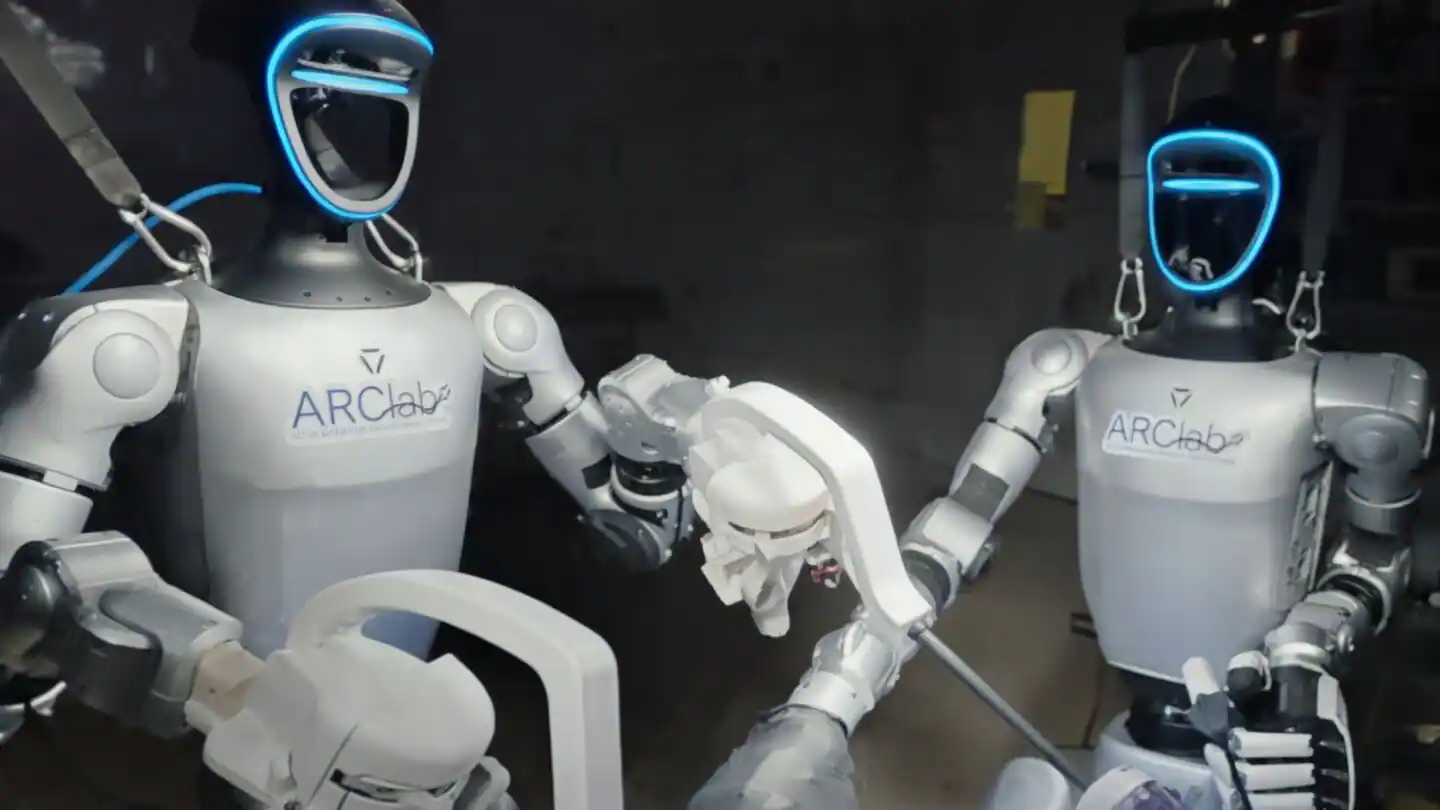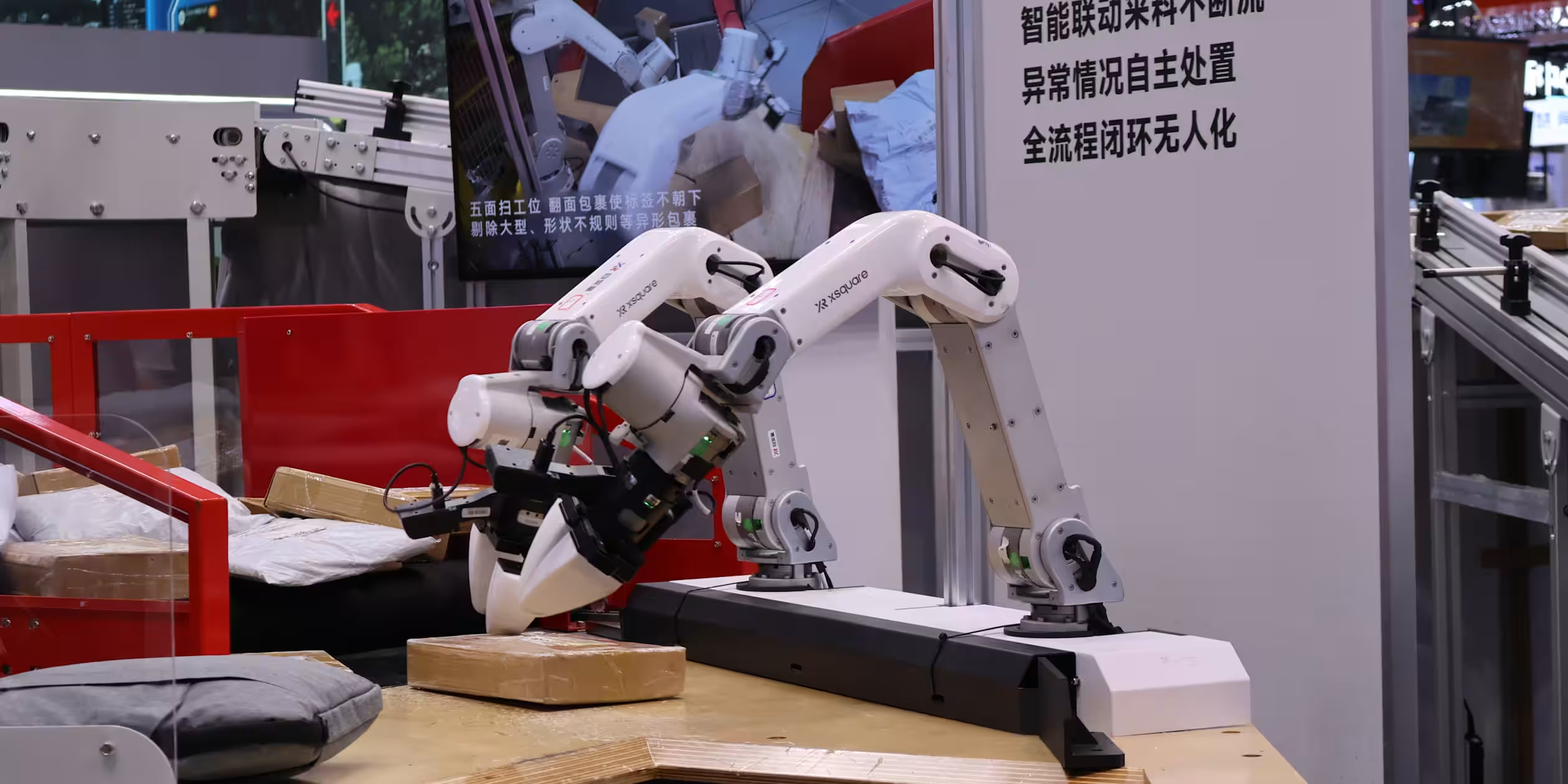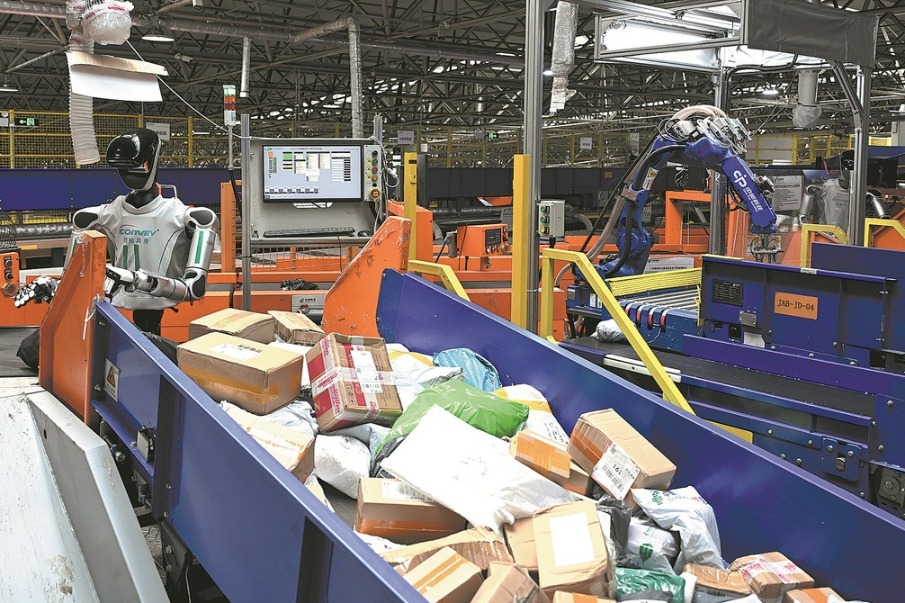
A humanoid robot sorts parcels at the Jianggao site of China Post in Guangzhou, Guangdong province, on May 29. The robots can accurately perform tasks including parcel feeding and the identification of irregular items, with a maximum processing capacity of 1,200 parcels per hour. DENG HUA/XINHUA
China's parcel industry is accelerating the use of artificial intelligence, robotics and other technologies to improve efficiency, as automation expands from sorting lines to warehousing, internal transport and other parts of the logistics chain.
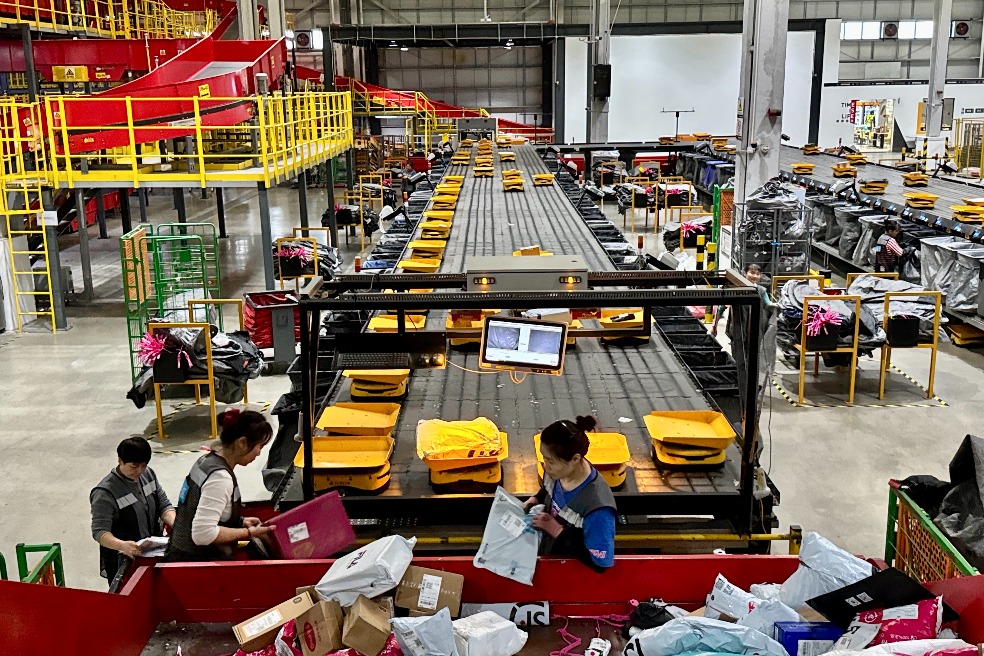
A major China Post processing hub in Guangzhou offers a glimpse of that shift. Much of the sorting and internal movement of parcels has already been automated, while humanoid robots are being tested for some of the remaining labor-intensive tasks.
At the Guangzhou postal processing center, workers still play a major role in tasks such as loading and unloading trucks, while most sorting and internal parcel movement is automated, according to Li Shan, manager of the center's operations and maintenance unit.
At its Jianggao site, eight humanoid robots have been tested on a small parcel feeding line since March, with another five planned. The robots currently sustain a feeding rate of about 800 parcels an hour and have reached a peak of 1,200 after repeated training and adjustments.