Eli Ben-Sasson, CEO and co-founder of StarkWare, is making a straightforward case that sounds radical mostly because the industry has ignored it for so long: privacy and post-quantum security should be standard features, not luxury upgrades.
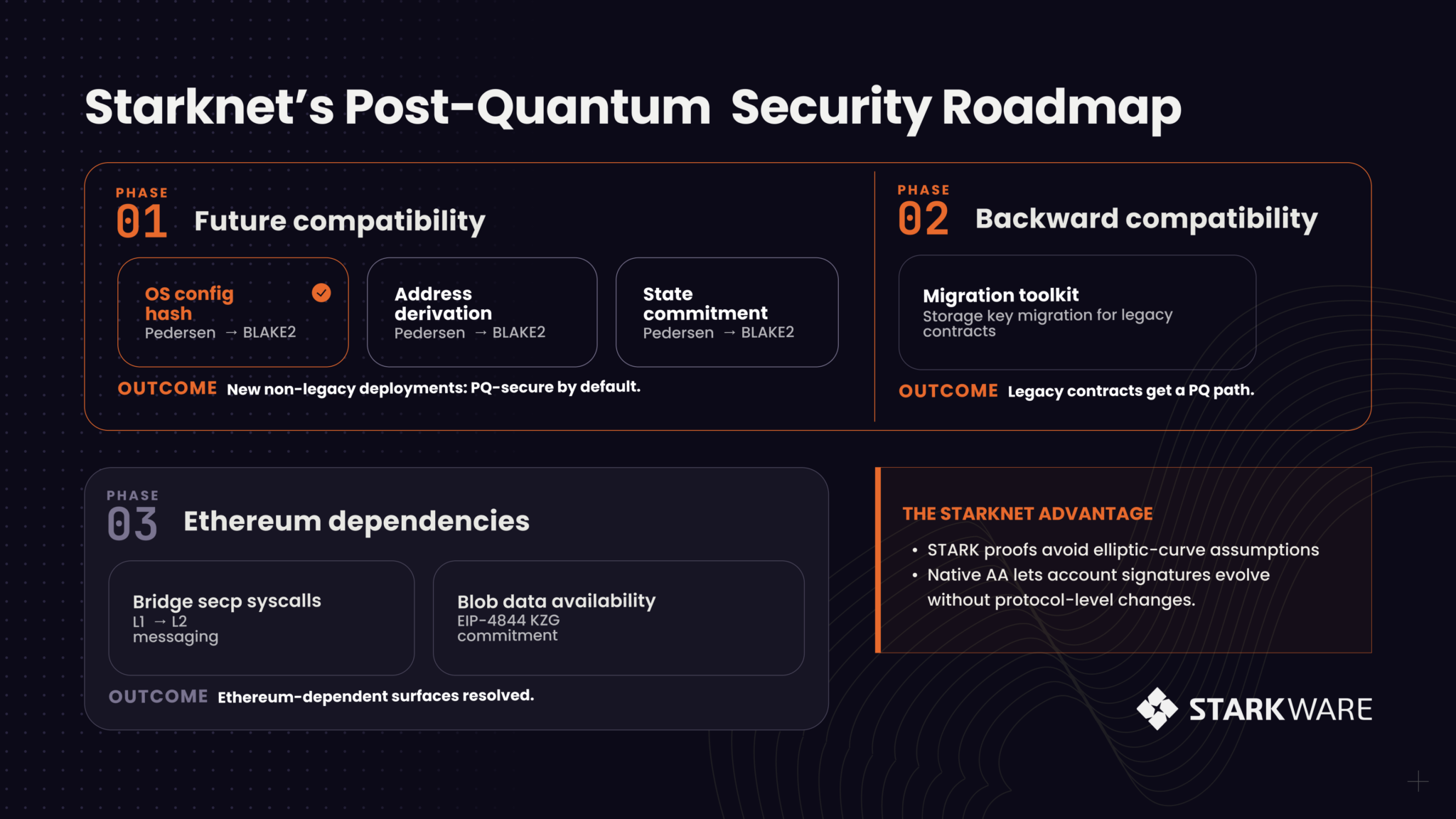
The argument comes as StarkWare prepares to release a comprehensive post-quantum security roadmap for Starknet on June 30, 2026, which the company is positioning as the most robust such plan in crypto. Ben-Sasson’s thesis is that serious blockchain projects need to integrate these properties from the start rather than scrambling to retrofit them once quantum computing becomes a real threat.
Why quantum resistance matters now
The quantum computing timeline is fuzzy, with estimates for when quantum machines could break current cryptographic standards ranging from 2029 to 2039. But Ben-Sasson’s point isn’t about predicting exactly when the threat arrives. Transitioning a live blockchain to quantum-resistant cryptography is roughly the equivalent of replacing an airplane’s engine mid-flight. Ben-Sasson has argued that blockchains need to begin preparing migration paths now, regardless of where you peg the quantum timeline.
StarkWare’s technical advantage here is architectural. STARK proofs, the cryptographic technology that underpins Starknet, rely on hash functions rather than elliptic-curve cryptography. That distinction matters because elliptic-curve methods are precisely what quantum computers are expected to shatter first. Hash-based systems, by contrast, are considered inherently resistant to quantum attacks.