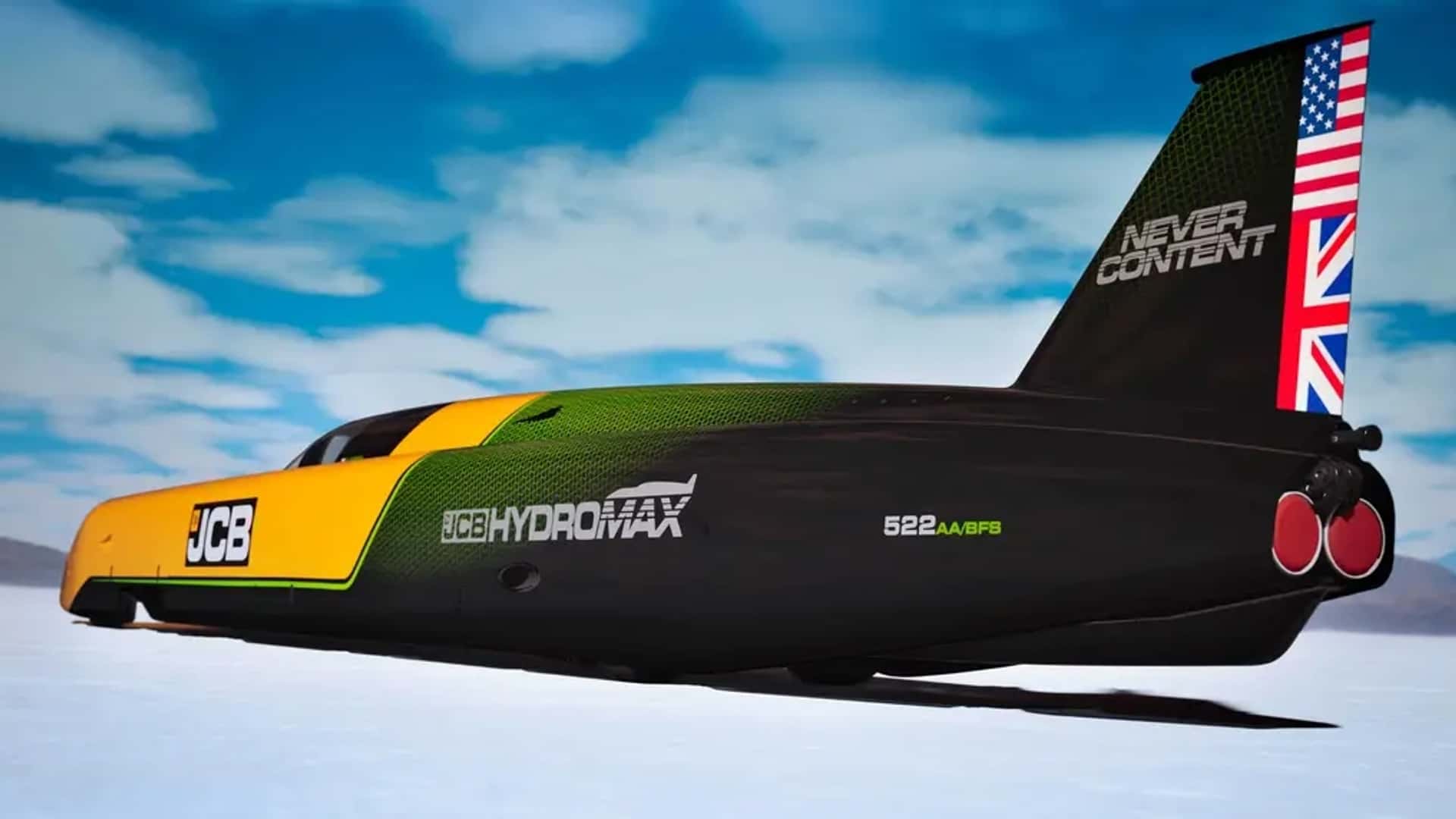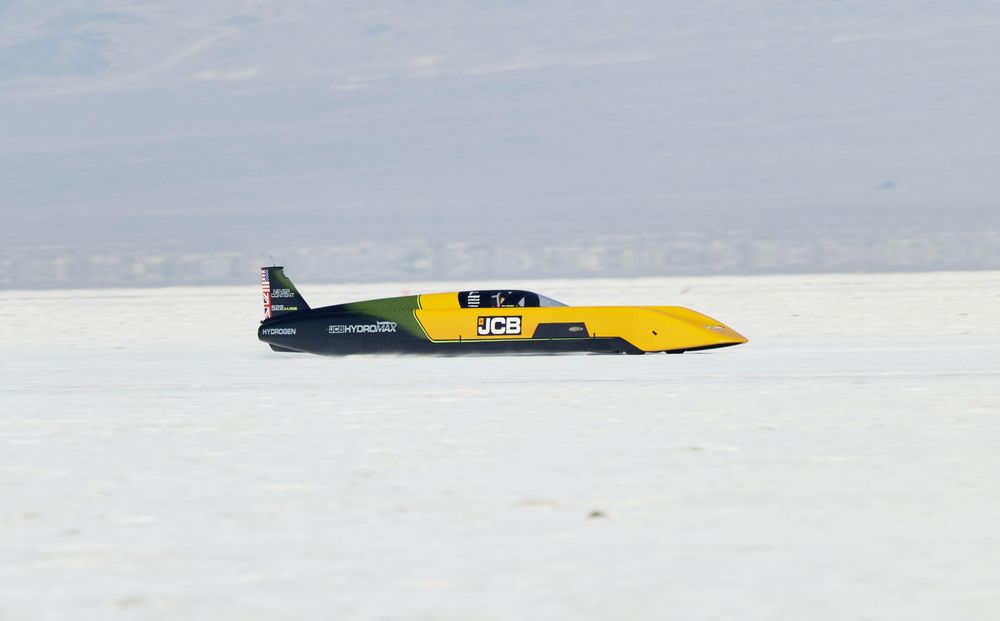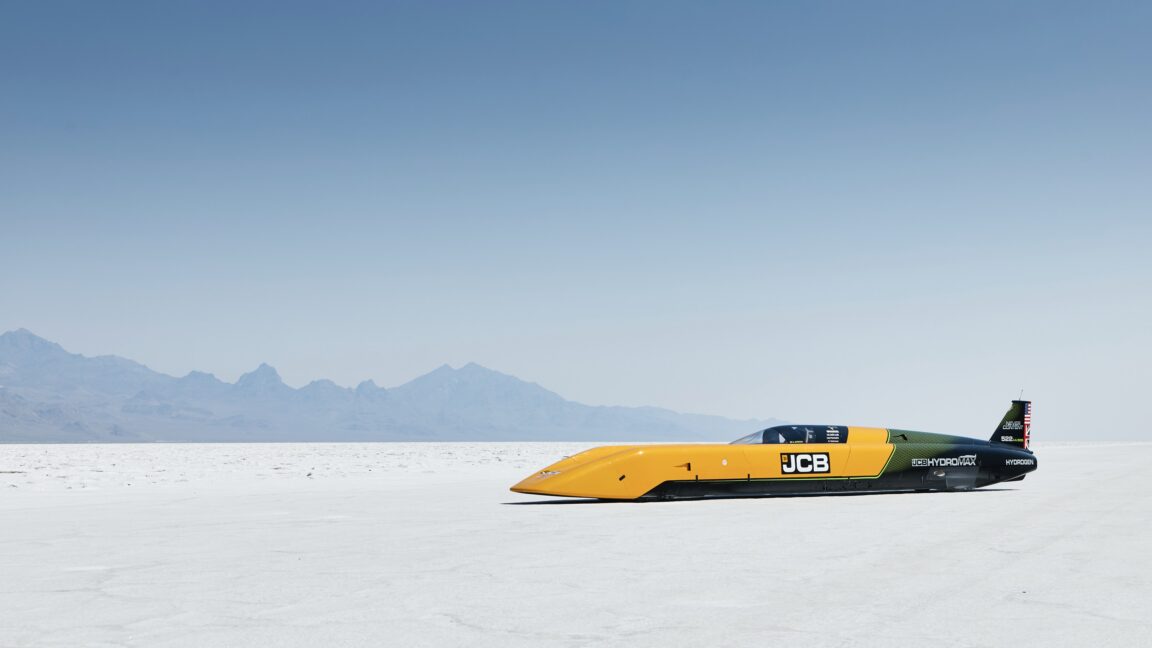
Performance might match JCB’s diesel engines, but 74 hp (55 kW) won’t go very fast on the salt. Instead, each of the two hydrogen engines powering the JCB Hydromax has been seriously worked on, increasing their outputs to 800 hp (597 kW) apiece. That required doubling the engine speed to a heady 3,800 rpm, replacing the pushrod valves with double overhead camshafts for better control over timing, and moving to direct fuel injection at much higher pressure than the production engine. JCB also dry-sumped the engine, cut weight, and improved cooling. The JCB Hydromax even uses two ice tanks to cool the air leaving the turbocharger, down from 392° F (200° C) to below 50° F (10° C).
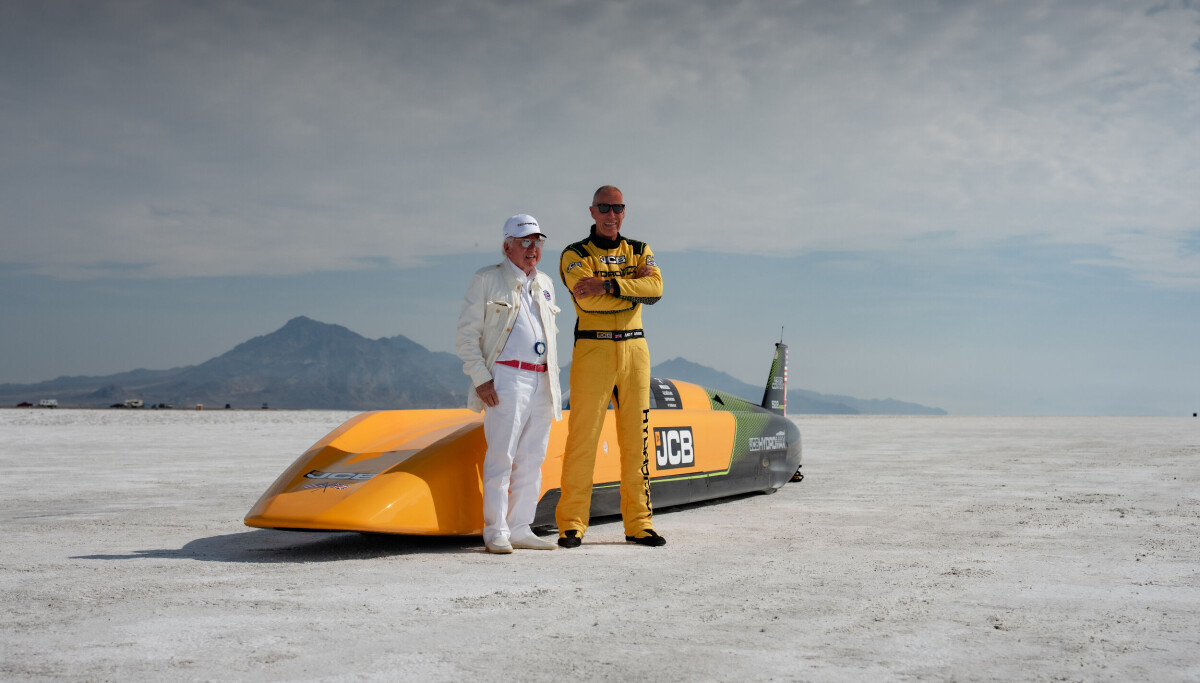
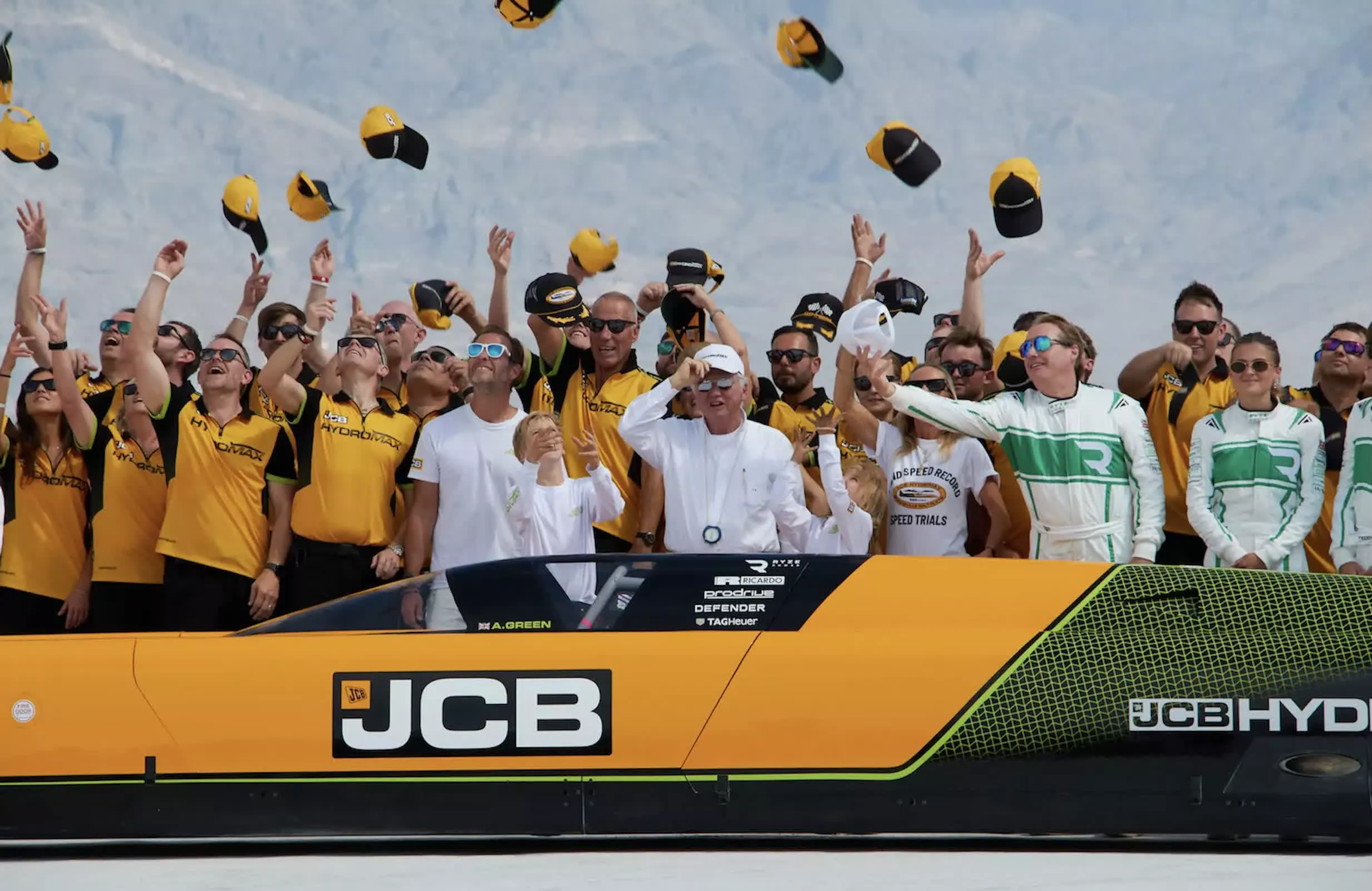
Behind the wheel yesterday was RAF Wing Commander Andy Green, who is no stranger to the record books. He also drove Thrust SSC through the sound barrier in 1997, and in 2006, he set a diesel-powered land speed record, again with JCB, with the JCB Dieselmax, which topped out at 350 mph (563 km/h). (Green was also set to drive Bloodhound, should it have happened.)
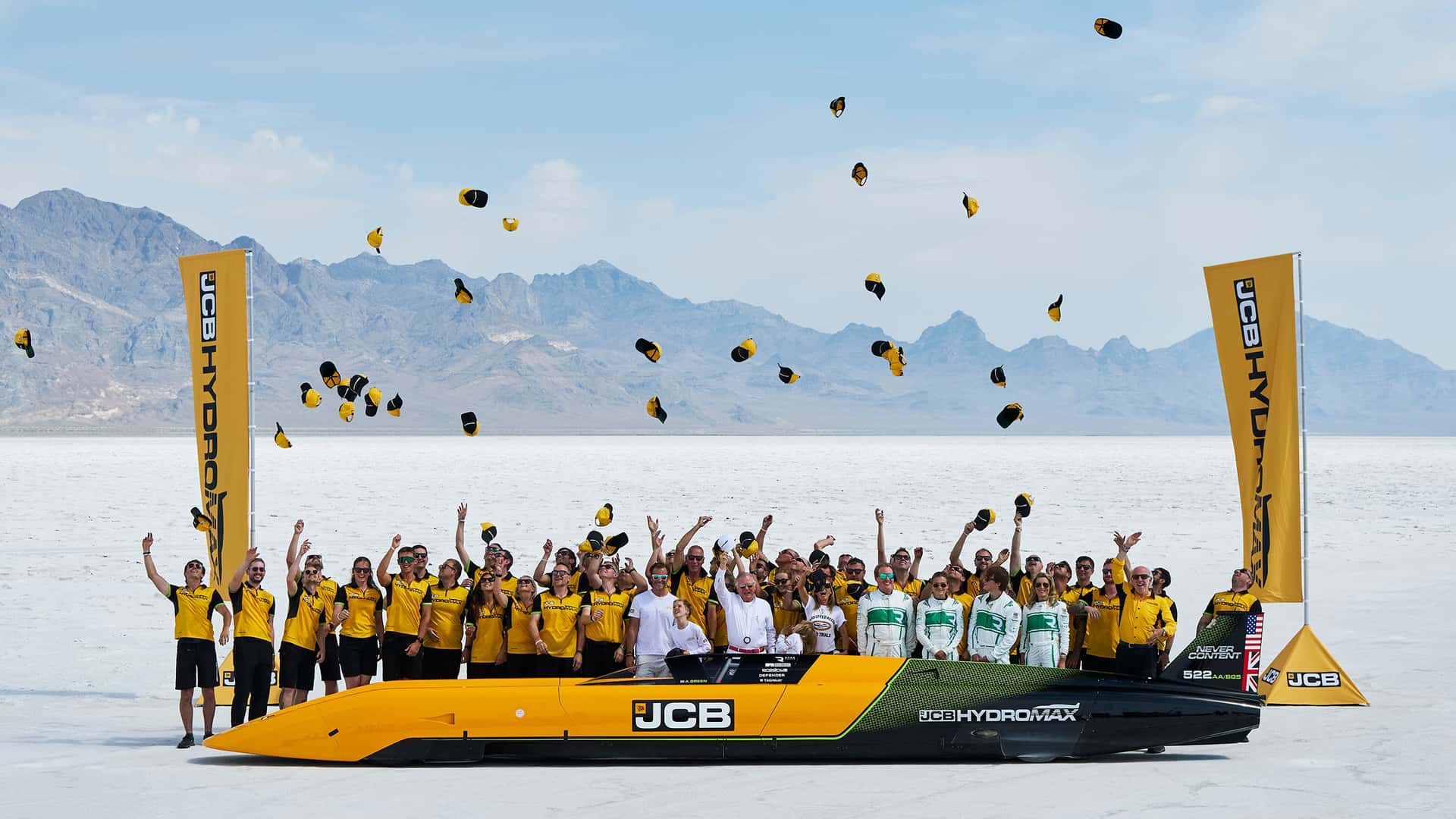
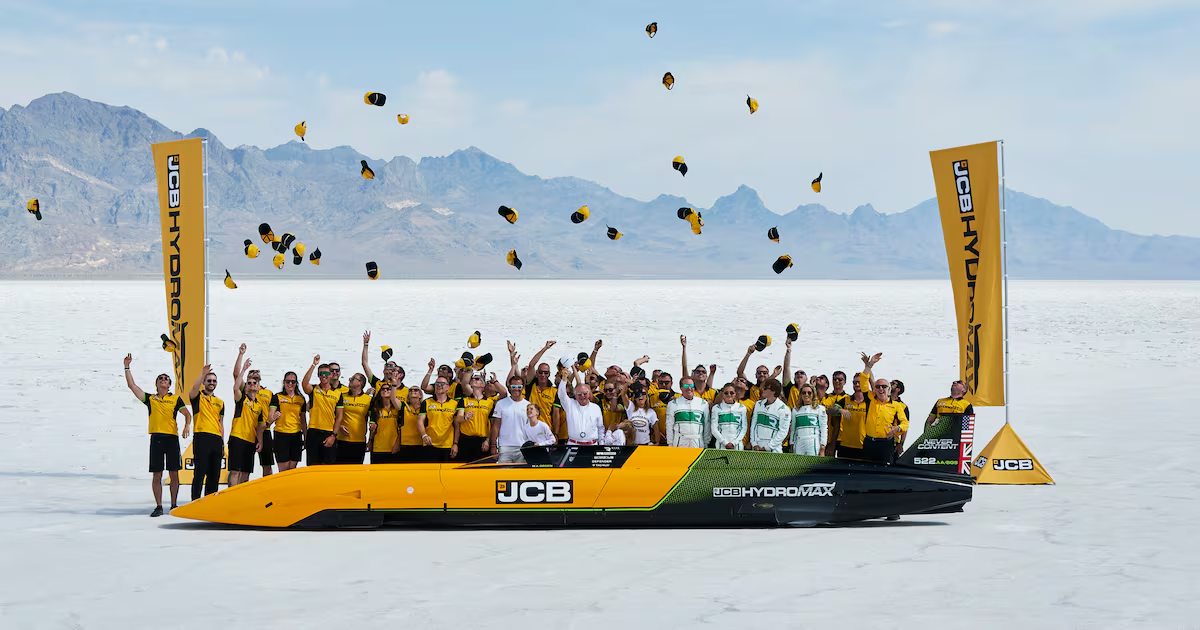
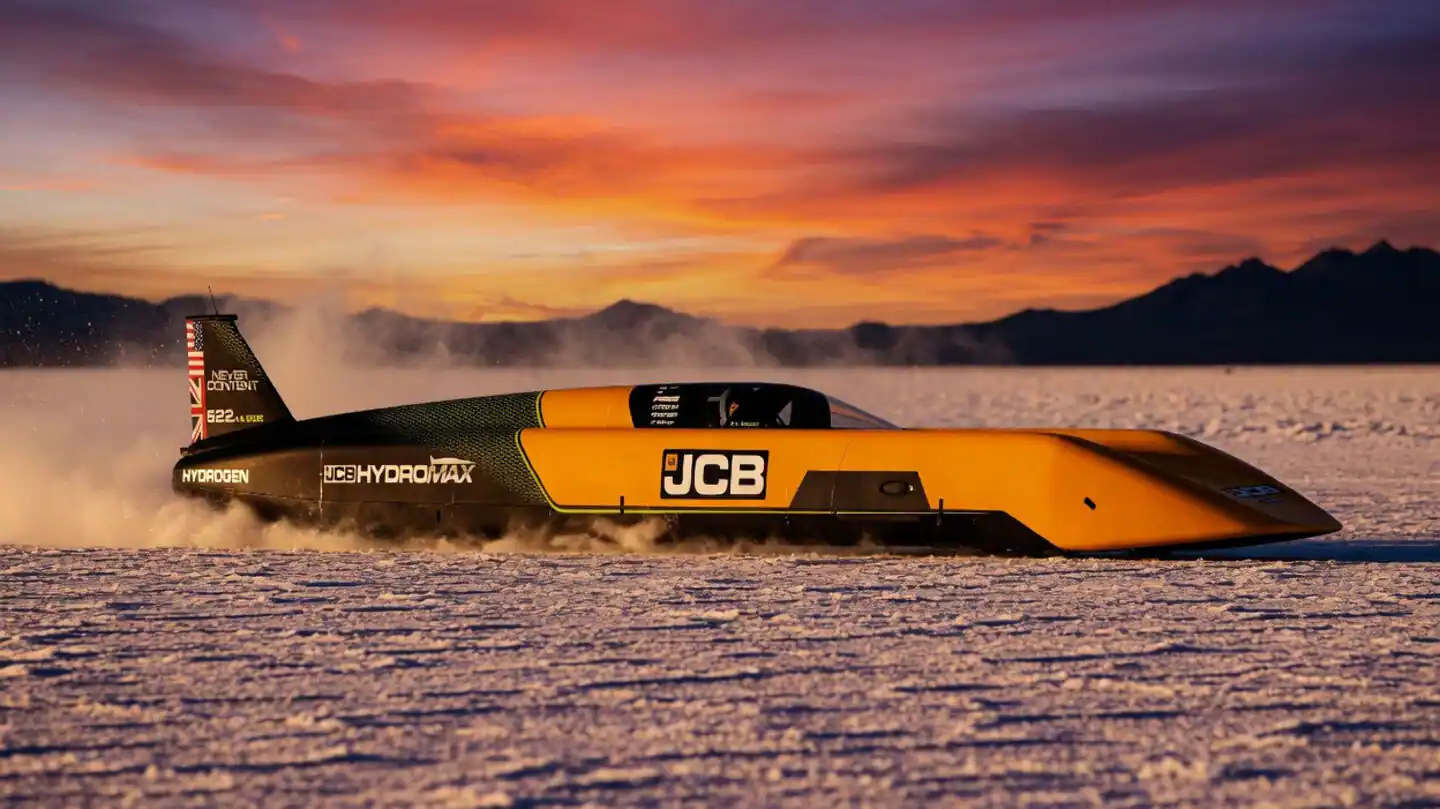
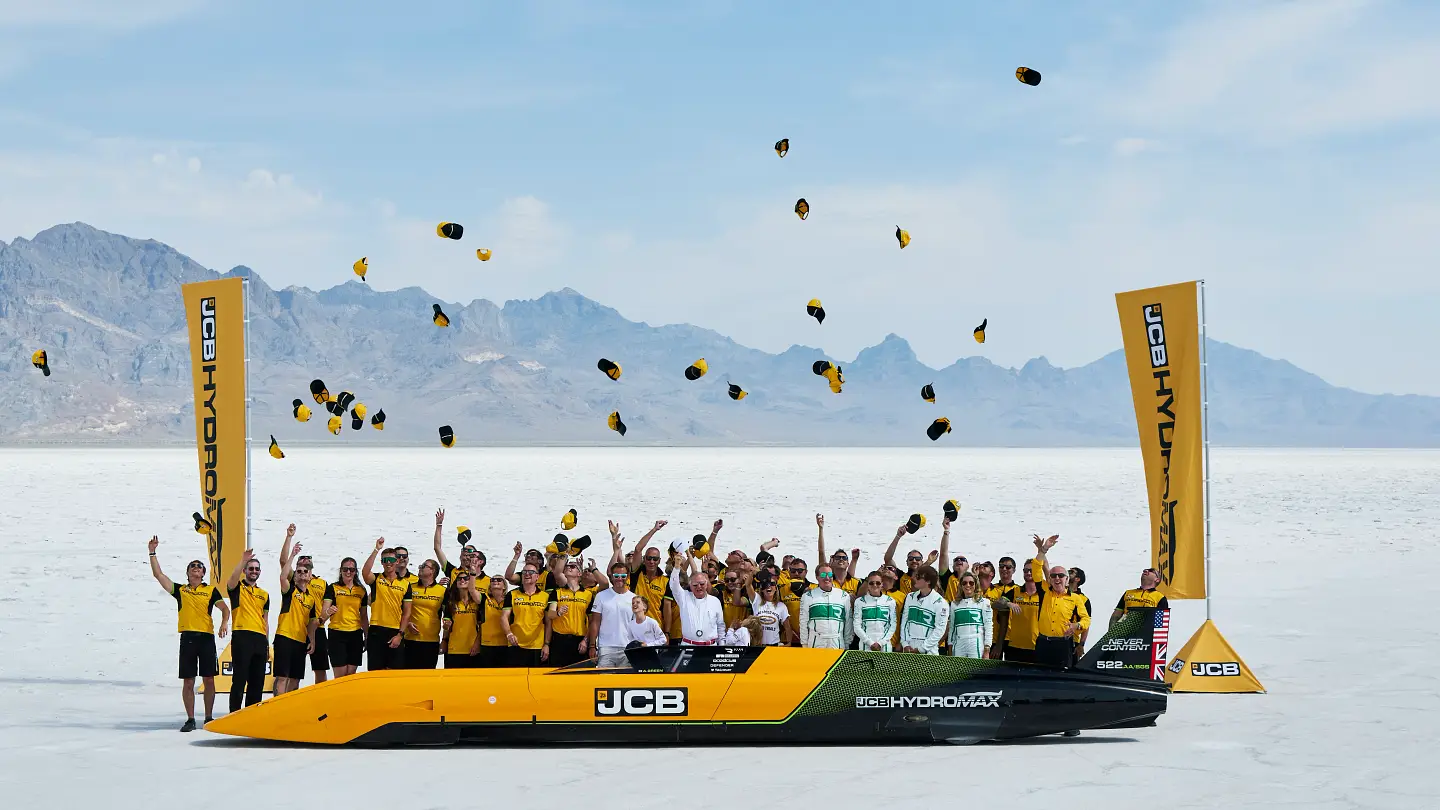
With a combined 1,600 hp (1,193 kW) and 2,600 lb-ft (3,525 Nm) and all-wheel drive, the JCB Hydromax set a speed of 400.623 mph (644.74 km/h) yesterday, followed by a run in the other direction of 412.135 mph (663.27 km/h) for a two-way average of 406.320 mph (653.91 km/h).