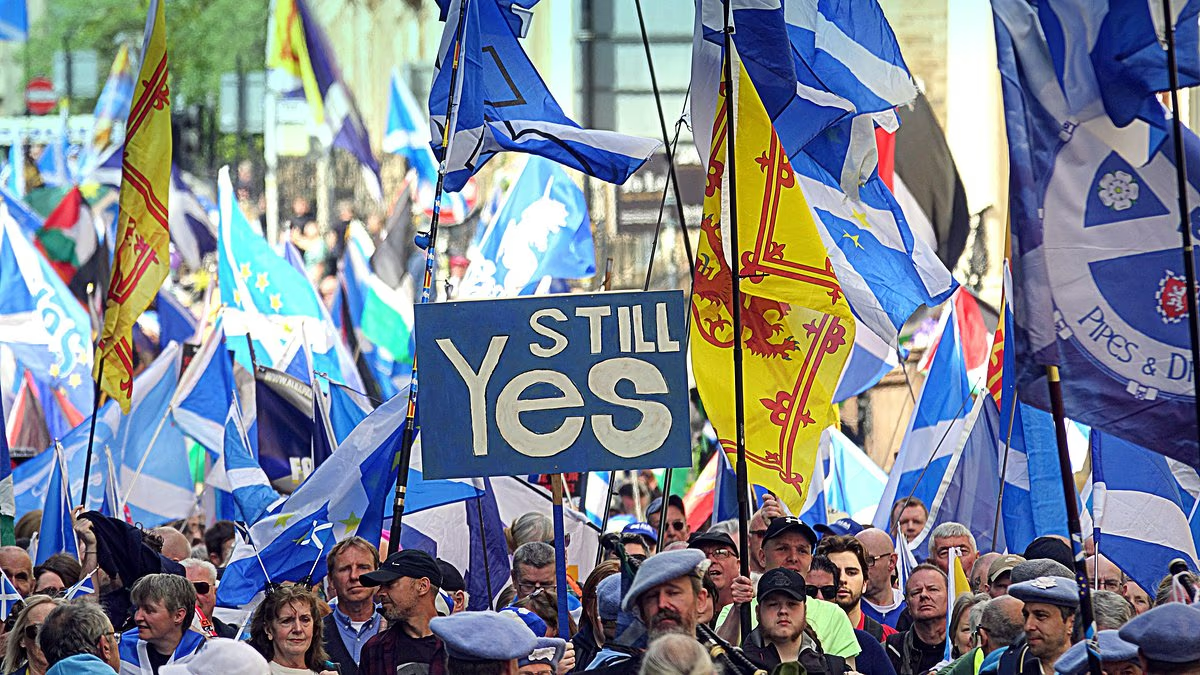
A country is not a fiscal transfer. It can be many things – a loose federation of diverging cultures, a constitutional shotgun wedding, an unattractive compromise of history – but it cannot be a cash transaction. There is no history in a debit made, no loyalty in a credit received. Peoples are bound together by heritage, creed, shared sacrifice, and common purpose, but not by block grants or spending allocations.
Opponents of Scottish independence still cannot grasp this plainest of truths
Opponents of Scottish independence still cannot grasp this plainest of truths. Twelve years on from the referendum on secession, they remain in campaigning mode, incapable of offering the electorate anything more than a bribe. The government is at it again, as is traditional on Gers Day, the annual publication of Government Expenditure and Revenue Scotland, a report card on devolved public finances.
This year it shows a notional deficit down £600 million on the previous 12 months to a trifling £25.3 billion, which at 10.9 per cent of GDP is still more than twice the UK’s deficit. Alas, the fall isn’t down to growth but to hikes in taxes. Scottish nationalists generally dismiss the deficit figure – many of them believe the numbers have been rigged by Westminster – except in years like this, when the improved fiscal ledger is cited as proof that Scotland would prosper with independence.