The 2030 FIFA World Cup was supposed to be a homecoming. One hundred years after Uruguay hosted the inaugural tournament in 1930, South America had a legitimate claim to anchor the centenary celebration. Instead, the continent got three matches and a ceremonial nod.
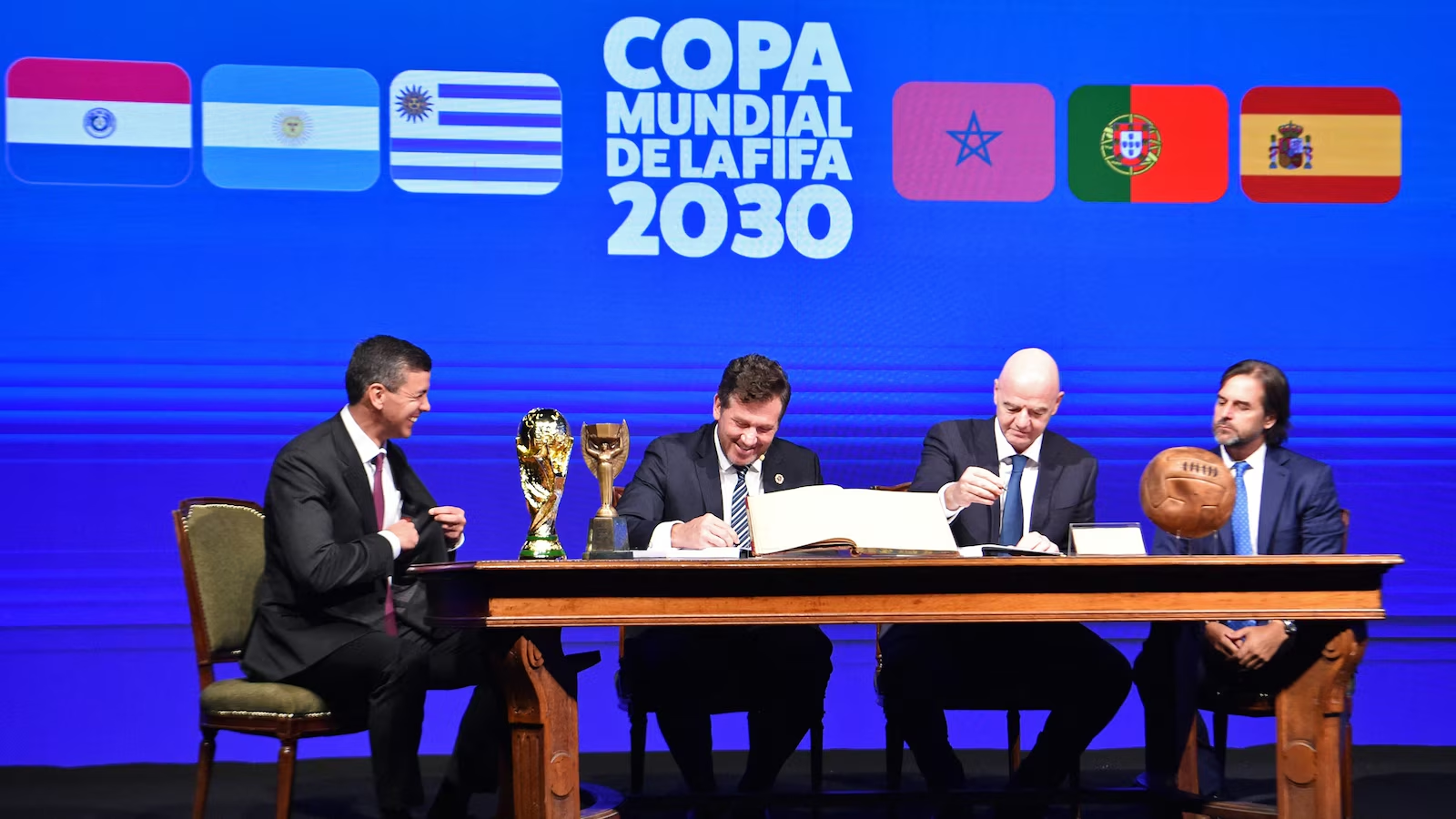
The primary hosting duties belong to Morocco, Portugal, and Spain. Uruguay, Argentina, and Paraguay will each stage one match as part of a centenary commemoration before the tournament moves across the Atlantic to its main venues in Europe and Africa. South America’s football confederation, CONMEBOL, has made clear that it finds this arrangement disappointing.
What the 2030 structure actually looks like
FIFA confirmed the host structure on December 11, 2024, and the format is unusual by design. The tournament opens with three symbolic matches in South America, at venues connected to the original 1930 competition. Then the bulk of the event shifts to Spain, Portugal, and Morocco for all remaining games.
The three South American nations, Uruguay, Argentina, and Paraguay, automatically qualify for the tournament as host nations. That is a meaningful benefit, particularly for Paraguay, which has struggled in recent World Cup qualifying cycles.