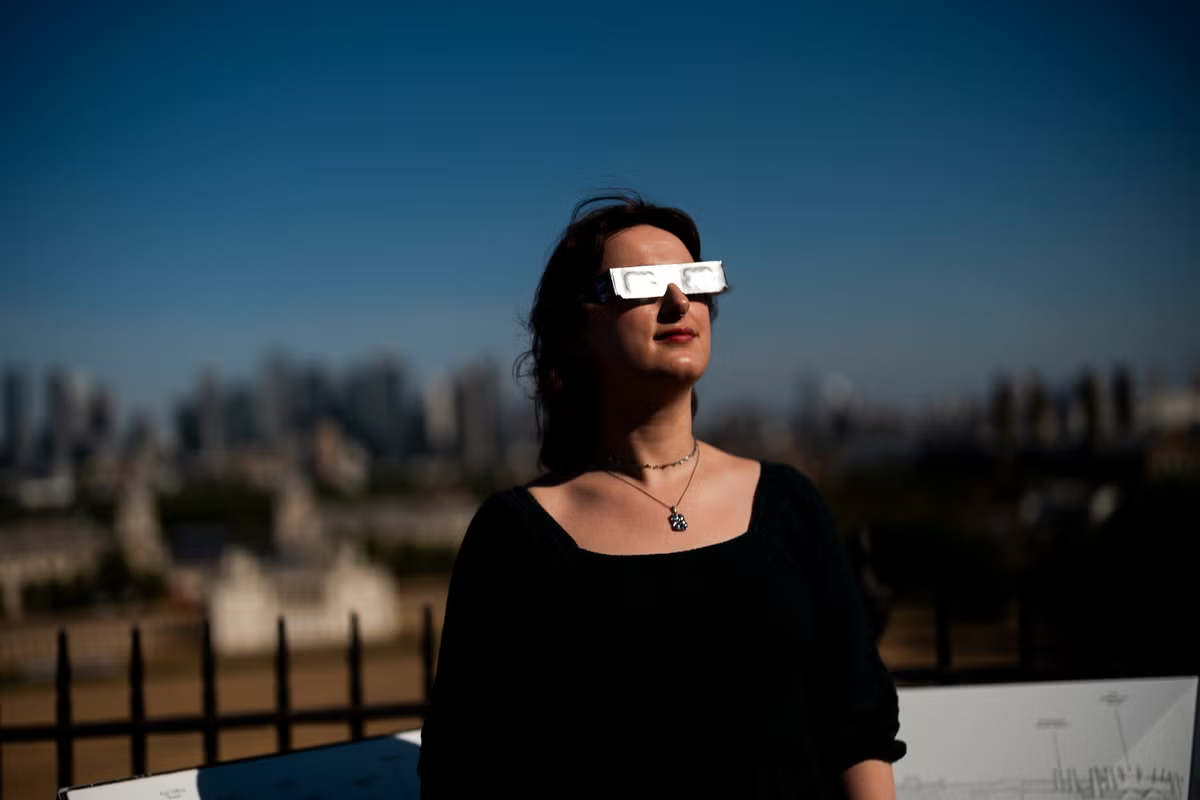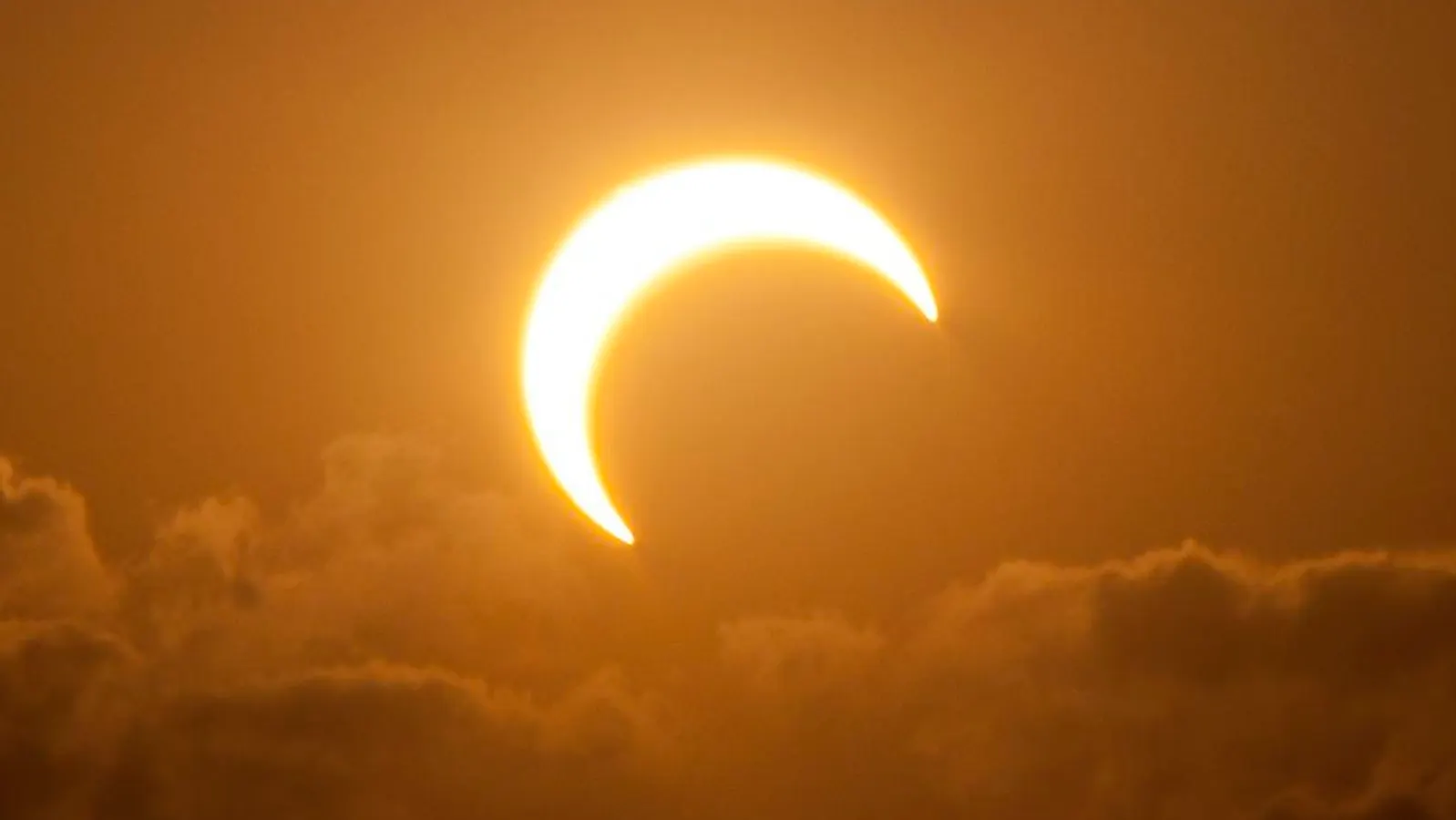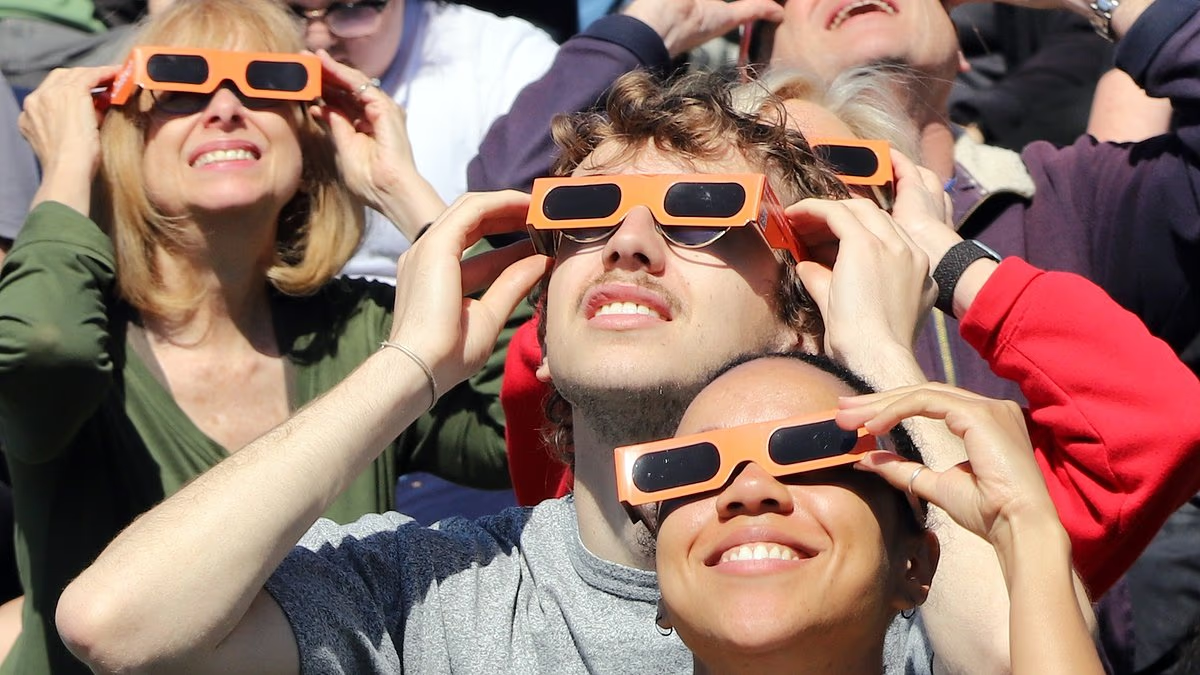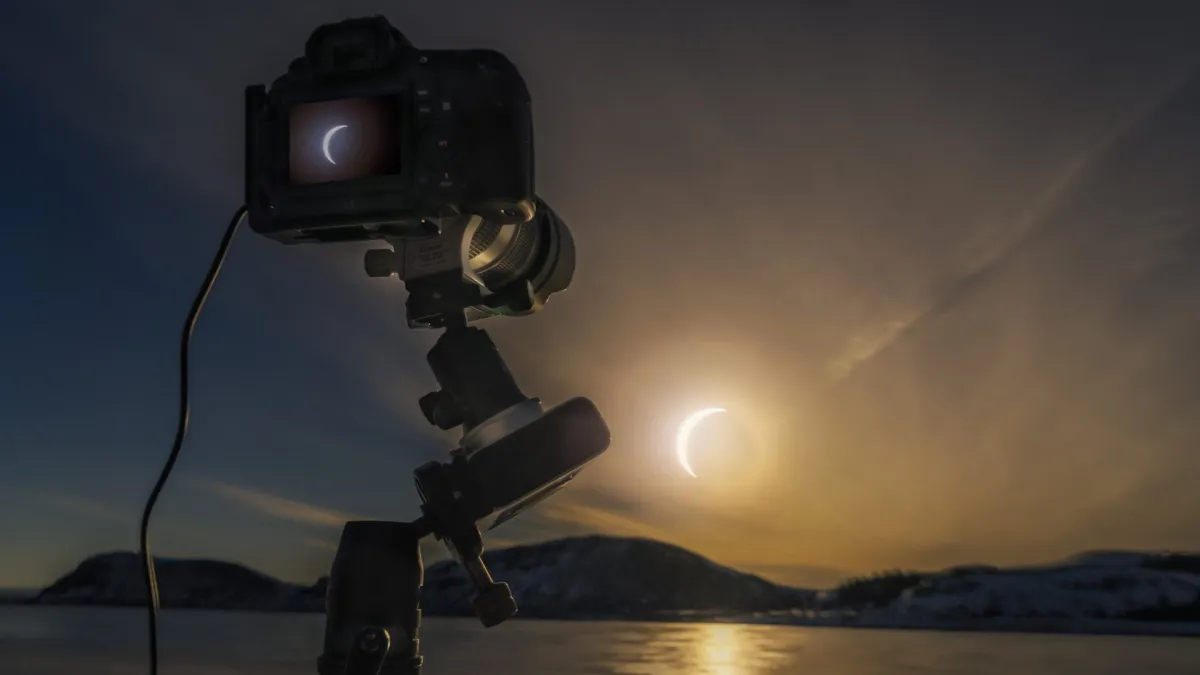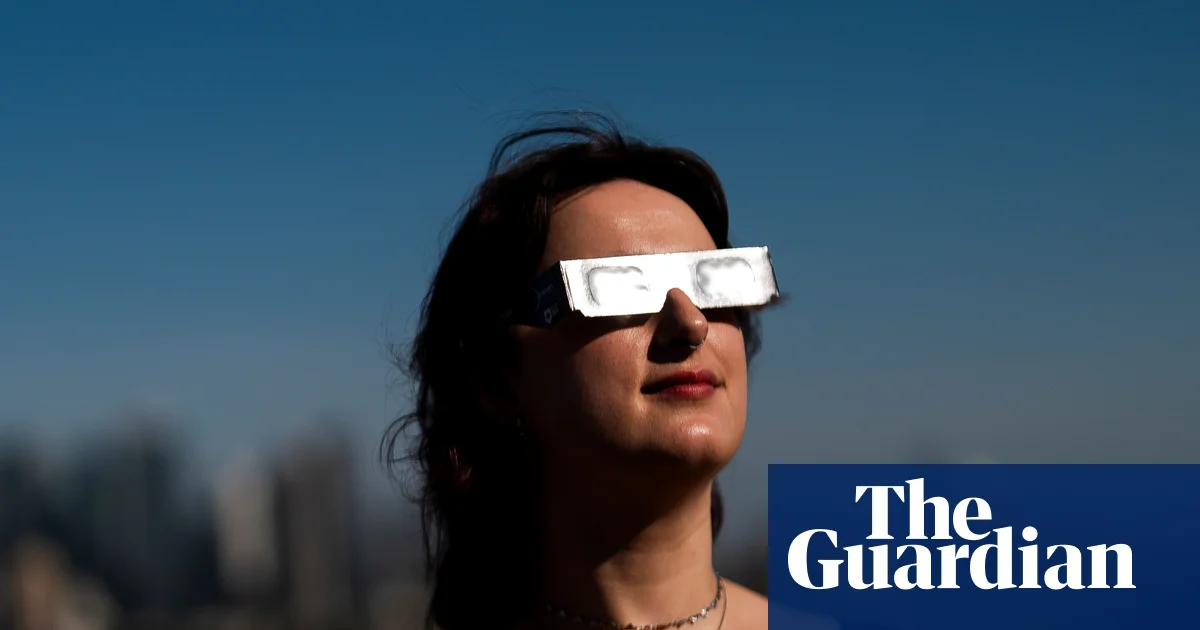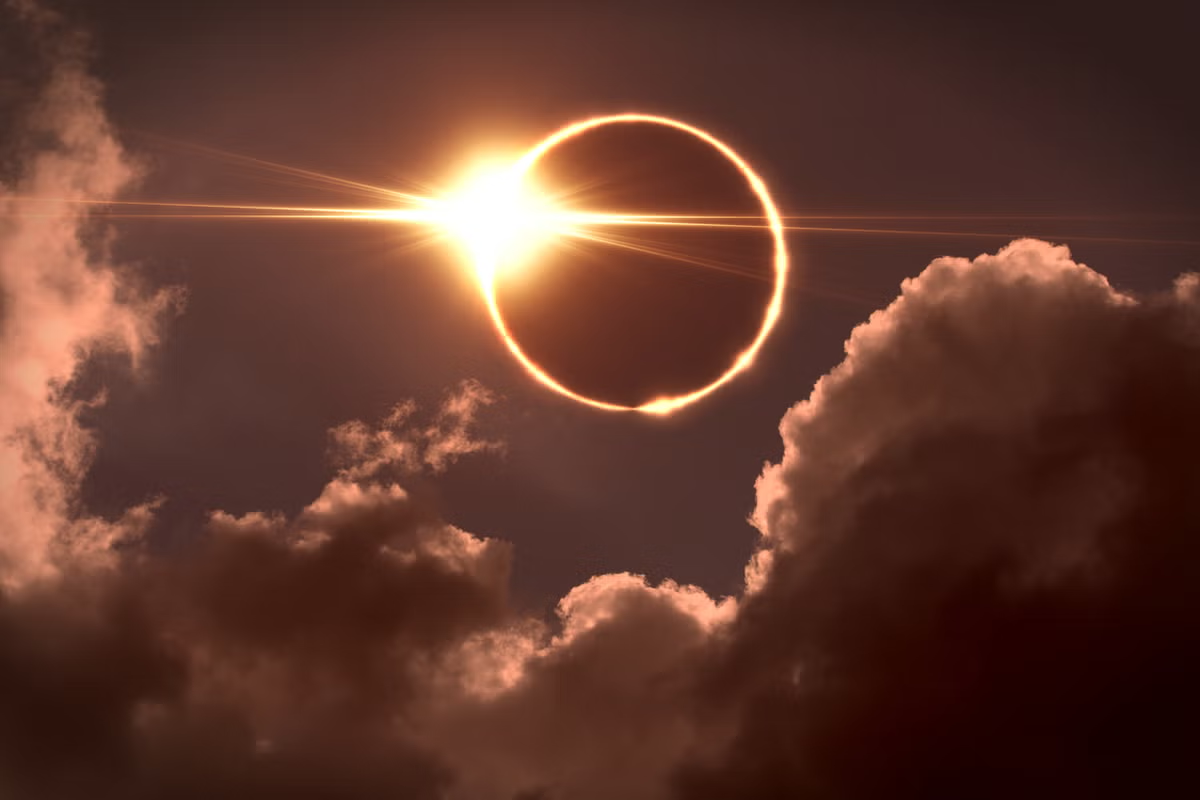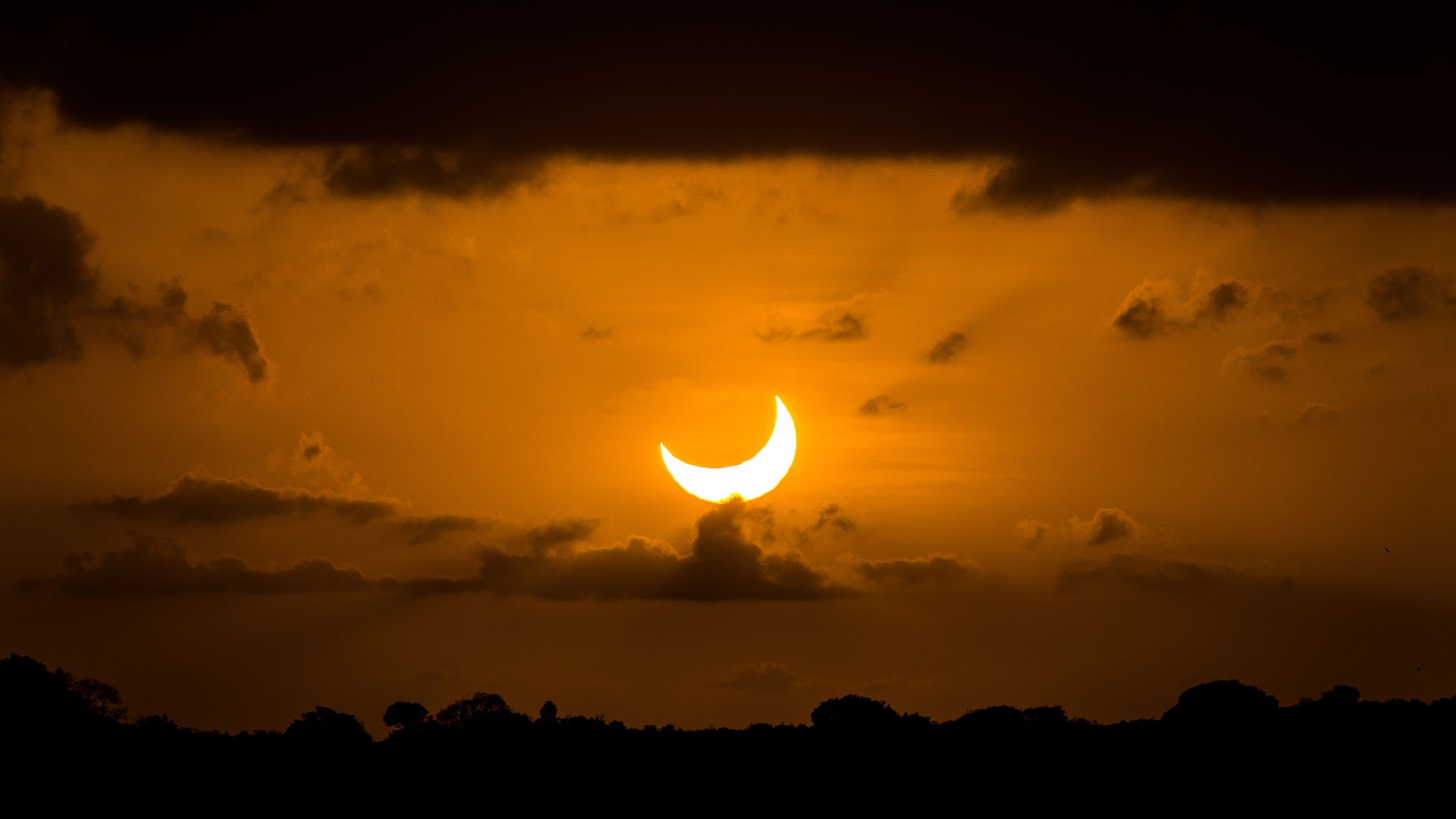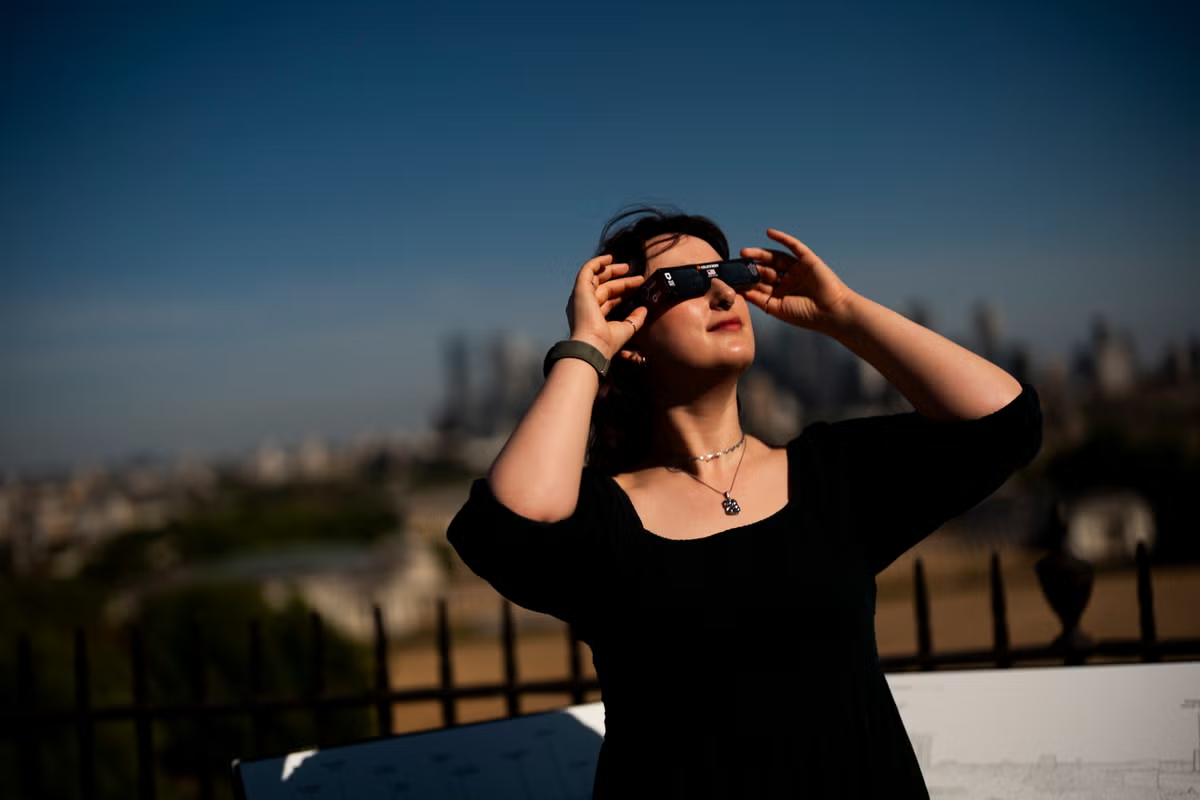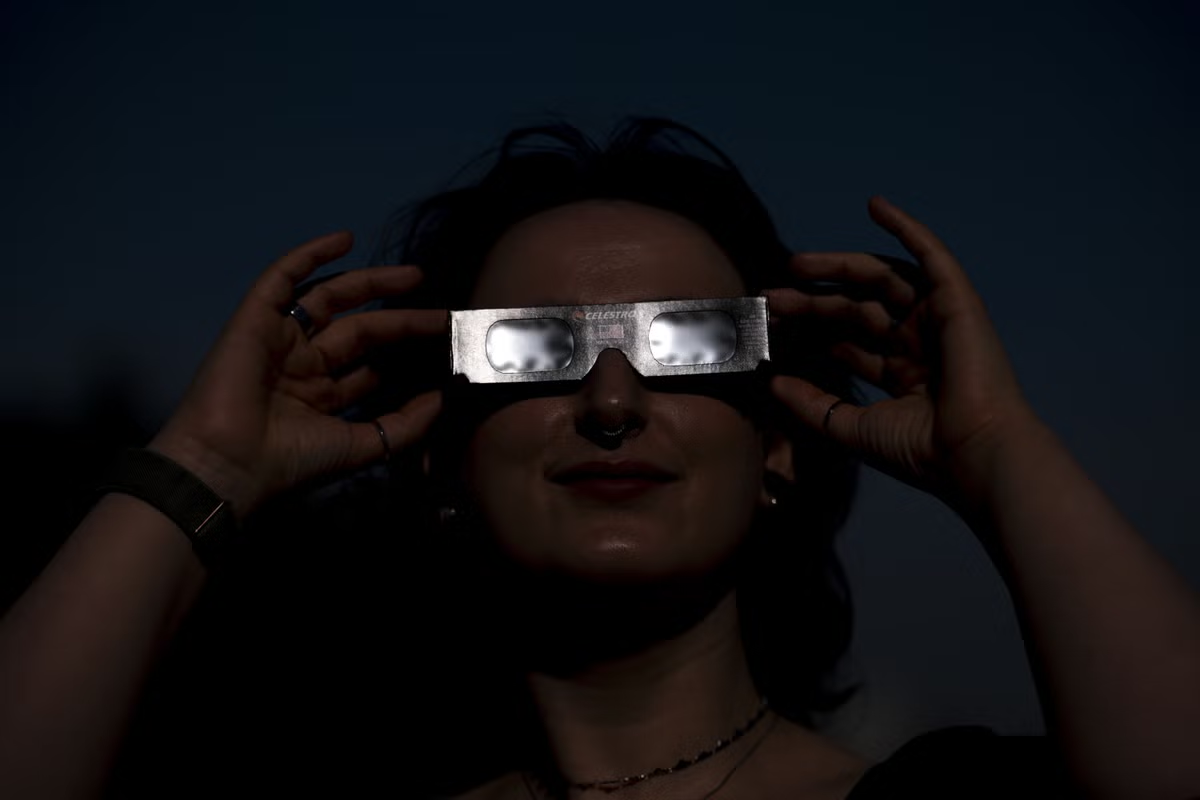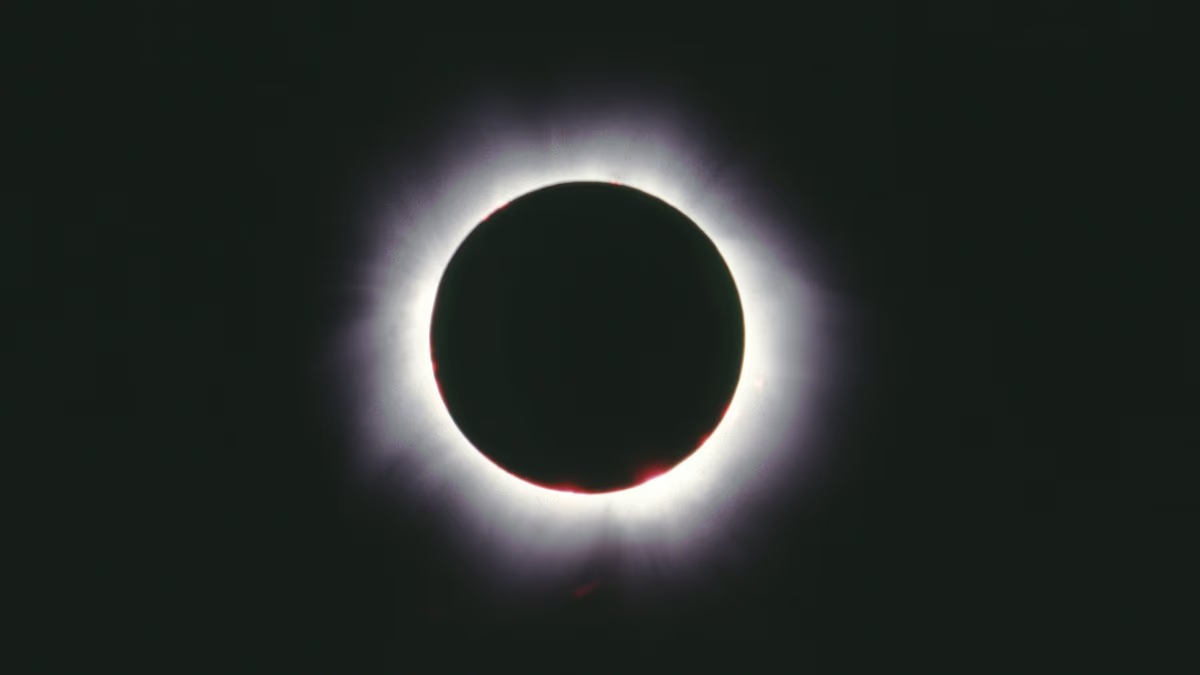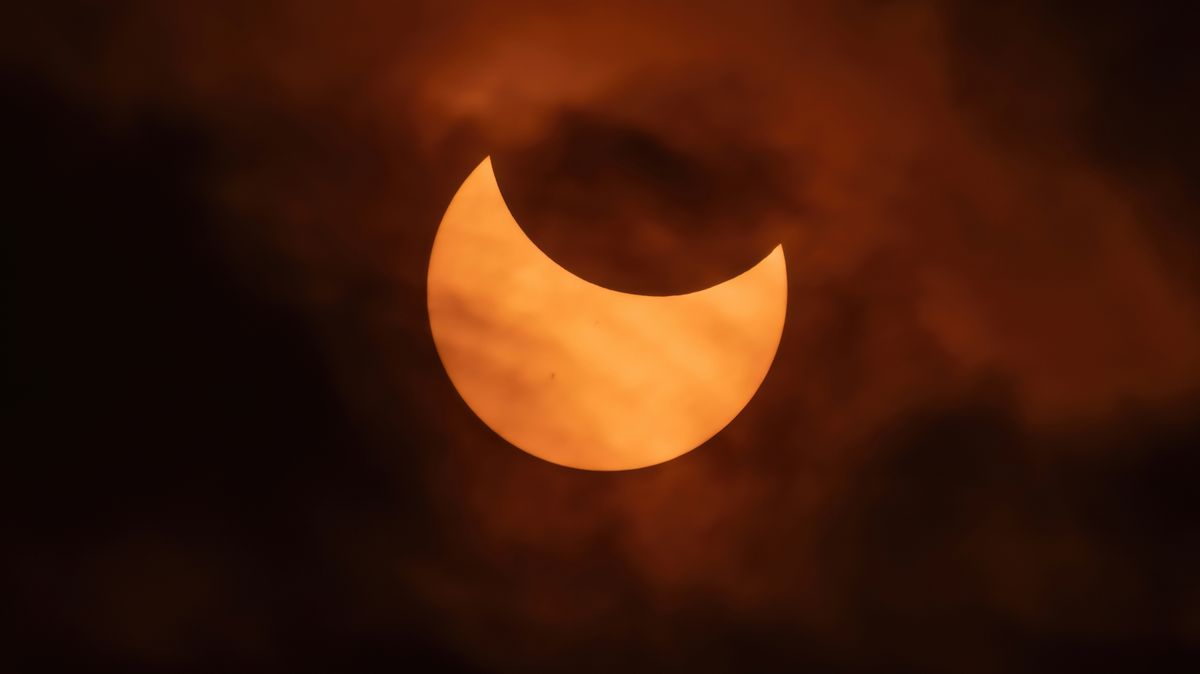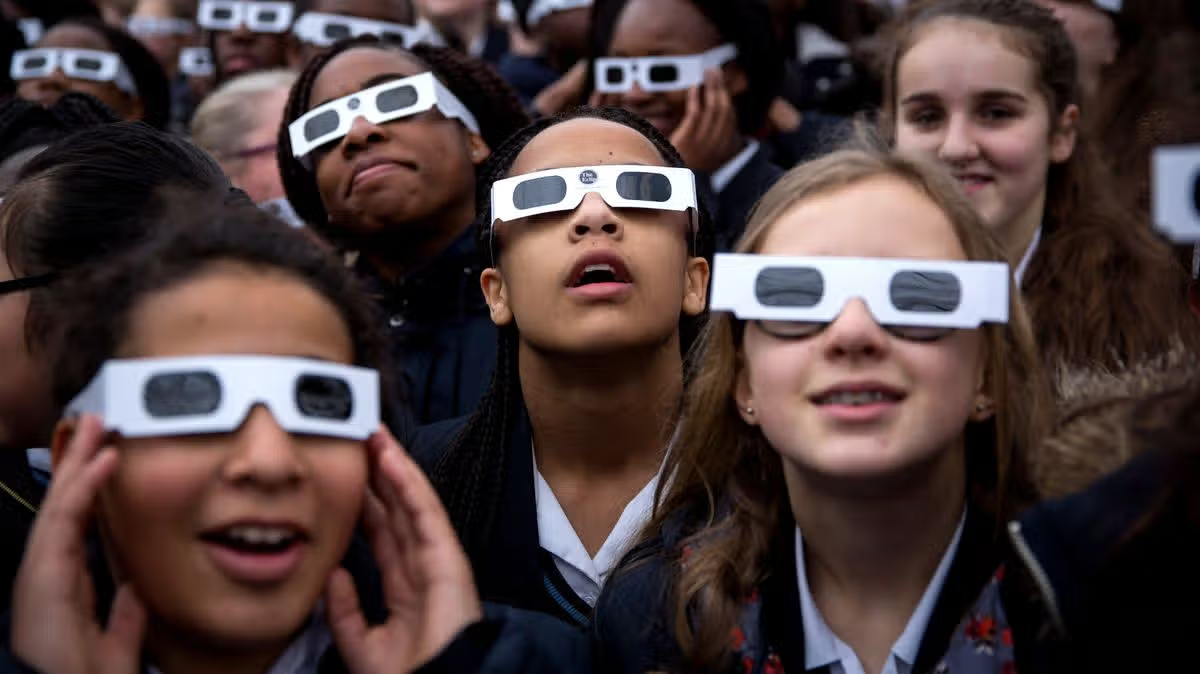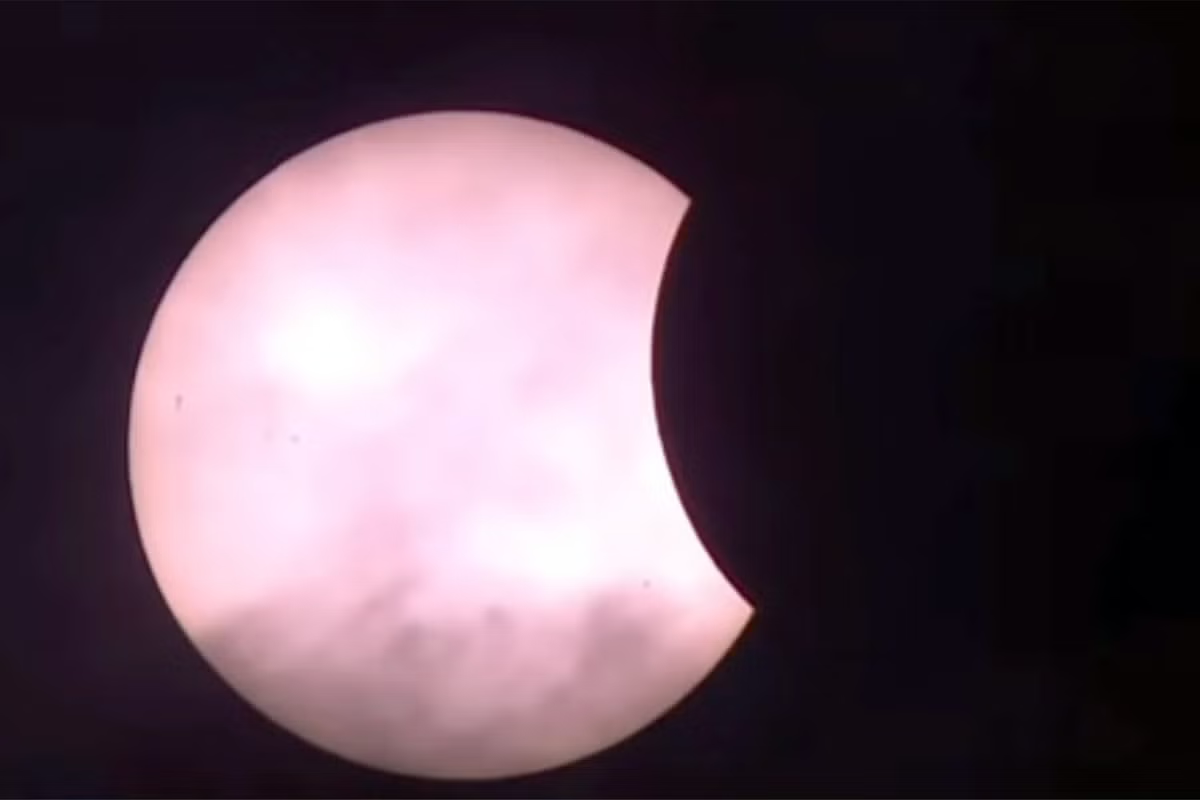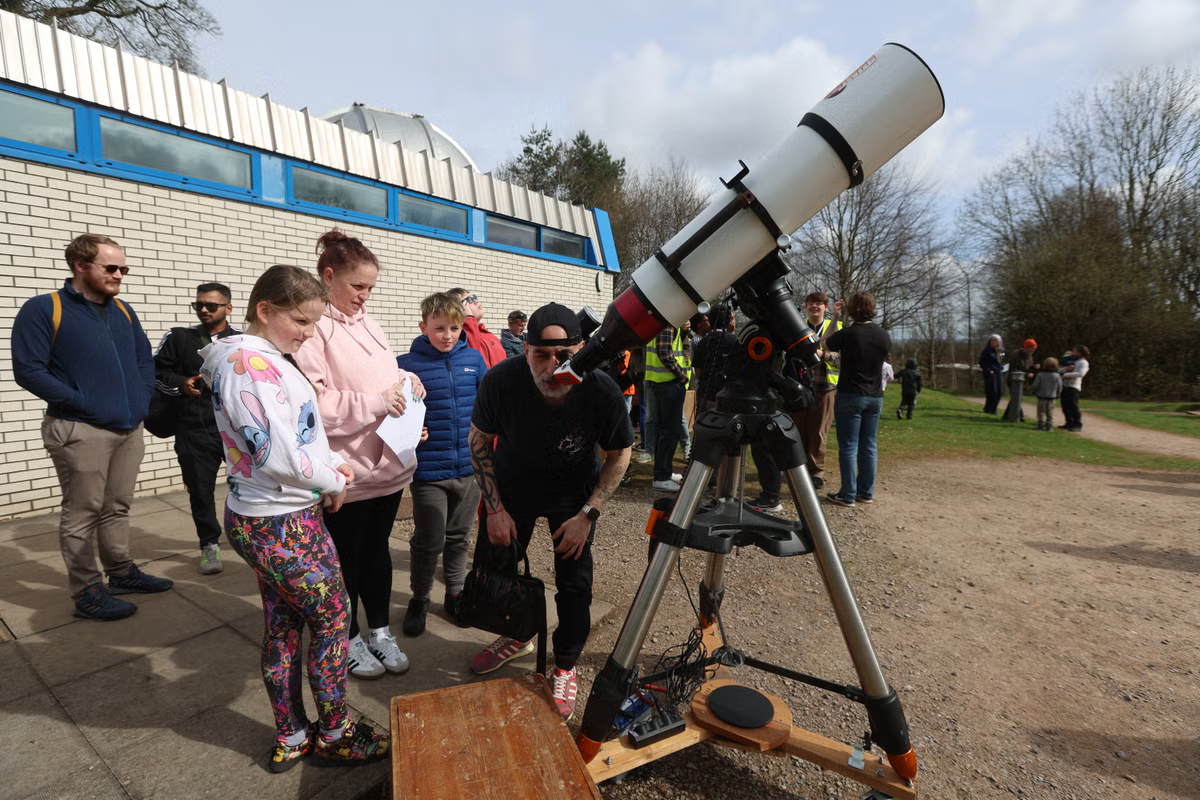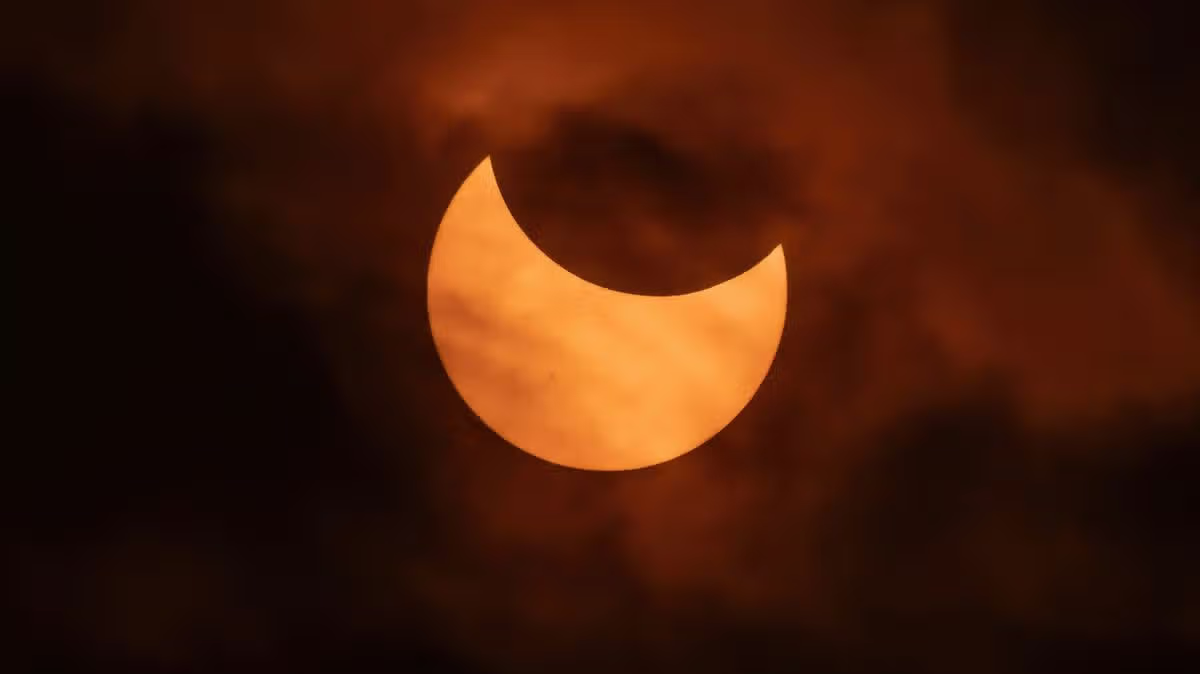
The timings for Wednesday's solar eclipse - the most dramatic for the UK since 1999 - vary depending on where you are in the country20:06, 04 Aug 2026Updated 16:44, 12 Aug 2026The UK is set to experience a partial solar eclipseTonight the UK will experience its fullest solar eclipse for the next 54 years, as millions of people across Europe are expected to gather to watch the Sun, the Moon and the Earth line up.More than 90 per cent of the Sun will be obscured by the Moon between 6.05pm and 8.09pm, the most it has been blocked above UK skies since the total eclipse in 1999. The maximum point of coverage is expected to be at around 7.13pm and the next time the Moon obscures as much of the Sun will be in 2081. The next total solar eclipse in the UK will be in 2090.University of Cardiff astrophysicist Dr Romero-Shaw said: "The last eclipse like this was in 1999 when I was four years old, so I only vaguely remember it, and I'm really looking forward to this one - particularly the brief and spooky moment the moon blocks most of the sun's light and all the birds stop singing!"Which parts of the world will see a solar eclipse today?A partial eclipse will be visible from much of Europe, including the UK, parts of Africa, North America, the Atlantic Ocean, the Arctic Ocean and the Pacific Ocean.A total eclipse will sweep across parts of northern Spain, eastern Greenland, western Iceland, northern Russia, the Atlantic Ocean and the north-east corner of Portugal.Where's the best place in the UK to see the solar eclipse?According to the Royal Observatory Greenwich, viewers in London will see roughly 90 per cent of the Sun covered by the Moon.The observatory says places in the south-west of the UK will see the greatest eclipse coverage. Cornwall will experience around 95 per cent coverage, while Pembrokeshire in south-west Wales will see around 94 per cent.Northern Ireland, parts of the West Midlands, the South West, the rest of Wales and parts of western Scotland are expected to get 92 per cent to 94 per cent coverage of the sun.Those able to travel to the south-west of Ireland will see some of the highest coverage anywhere in the British Isles, with almost 97.5 per cent of the Sun covered by the Moon.The exact timings of the eclipse will vary depending on your location, but other factors such as your elevation should also be taken into account.Ed Bloomer, an astronomer at the Royal Observatory Greenwich, told the Mirror: "The eclipse is happening in the evening so it is pretty low on the horizon. What you really want is a nice clear flat horizon, so you just have an unobstructed view of the sun."The astronomer suggested facing to the west and moving away from high-rise buildings for the best views. Some of the best places to watch the eclipse include elevated areas like Primrose Hill and Greenwich Park in London.Dr Isobel Romero-Shaw, from the University of Cardiff, told the Mirror: "I'm going to a local area with high elevation with my husband and some friends, and we're going to get take away pizza because round food seems appropriate for the eclipse."What time is the solar eclipse in your area today?EnglandBirmingham - Eclipse coverage: 91 per centEclipse starts: 6.15pmEclipse reaches maximum: 7.11pmEclipse ends: 8.05pmBristol - Eclipse coverage: 92 per centEclipse starts: 6.17pmEclipse reaches maximum: 7.13pmEclipse ends: 8.07pmCornwall - Eclipse coverage: 95 per centEclipse starts: 6.18pmEclipse reaches maximum: 7.15pmEclipse ends: 8.09pmLiverpool - Eclipse coverage: 91 per centEclipse starts: 6.13pmEclipse reaches maximum: 7.10pmEclipse ends: 8.04pmLondon - Eclipse coverage: 91 per centEclipse starts: 6.17pmEclipse reaches maximum: 7.13pmEclipse ends: 8.06pmManchester - Eclipse coverage: 91 per centEclipse starts: 6.13pmEclipse reaches maximum: 7.10pmEclipse ends: 8.03pmSouthampton - Eclipse coverage: 92 per centEclipse starts: 6.18pmEclipse reaches maximum: 7.14pmEclipse ends: 8.07pmScotlandAberdeen - Eclipse coverage: 89 per centEclipse starts: 6.06pmEclipse reaches maximum: 7.03pmEclipse ends: 7.57pmDundee - Eclipse coverage: 90 per centEclipse starts: 6.07pmEclipse reaches maximum: 7.04pmEclipse ends: 7.59pmEdinburgh - Eclipse coverage: 90 per centEclipse starts: 6.08pmEclipse reaches maximum: 7.05pmEclipse ends: 8.00pmFort William - Eclipse coverage: 91 per centEclipse starts: 6.06pmEclipse reaches maximum: 7.04pmEclipse ends: 7.59pmGlasgow - Eclipse coverage: 91 per centEclipse starts: 6.08pmEclipse reaches maximum: 7.06pmEclipse ends: 8.00pmInverness - Eclipse coverage: 90 per centEclipse starts: 6.05pmEclipse reaches maximum: 7.03pmEclipse ends: 7.57pmLerwick - Eclipse coverage: 88 per centEclipse starts: 6.01pmEclipse reaches maximum: 6.58pmEclipse ends: 7.52pmWalesAberystwyth - Eclipse coverage: 93 per centEclipse starts: 6.15pmEclipse reaches maximum: 7.12pmEclipse ends: 8.06pmBangor - Eclipse coverage: 92 per centEclipse starts: 6.13pmEclipse reaches maximum: 7.10pmEclipse ends: 8.04pmCardiff - Eclipse coverage: 93 per centEclipse starts: 6.16pmEclipse reaches maximum: 7.13pmEclipse ends: 8.07pmColwyn Bay - Eclipse coverage: 92 per centEclipse starts: 6.13pmEclipse reaches maximum: 7.10pmEclipse ends: 8.04pmNewport - Eclipse coverage: 93 per centEclipse starts: 6.16pmEclipse reaches maximum: 7.13pmEclipse ends: 8.07pmNewtown - Eclipse coverage: 92 per centEclipse starts: 6.15pmEclipse reaches maximum: 7.11pmEclipse ends: 8.05pmSwansea - Eclipse coverage: 93 per centEclipse starts: 6.16pmEclipse reaches maximum: 7.13pmEclipse ends: 8.07pmNorthern IrelandArmagh - Eclipse coverage: 93 per centEclipse starts: 6.10pmEclipse reaches maximum: 7.08pmEclipse ends: 8.03pmBelfast - Eclipse coverage: 93 per centEclipse starts: 6.10pmEclipse reaches maximum: 7.08pmEclipse ends: 8.03pmCraigavon - Eclipse coverage: 93 per centEclipse starts: 6.10pmEclipse reaches maximum: 7.08pmEclipse ends: 8.03pmLisburn - Eclipse coverage: 93 per centEclipse starts: 6.10pmEclipse reaches maximum: 7.08pmEclipse ends: 8.03pmLondonderry - Eclipse coverage: 93 per centEclipse starts: 6.09pmEclipse reaches maximum: 7.07pmEclipse ends: 8.02pmOmagh - Eclipse coverage: 93 per centEclipse starts: 6.10pmEclipse reaches maximum: 7.08pmEclipse ends: 8.03pmIs it safe to look at a solar eclipse with sunglasses?No. Regular sunglasses are not dark enough to block harmful solar radiation, which can severely damage your retinas.The UK Health Security Agency (UKHSA) has warned that the Sun may appear less bright than usual during an eclipse, making it easier to look at it directly. However, harmful radiation can still reach your eyes and cause damage - often without any immediate discomfort or warning signs.The Royal College of Ophthalmologists reported around 70 cases of people experiencing vision problems after viewing the 1999 solar eclipse. Around 40 per cent of those affected had observed it for less than a minute.Kyla Black, Boots Opticians director of optical practice, urged parents to be "particularly careful" letting their children view the eclipse, and warned some DIY filters can also be dangerous."If you’re purchasing specially made eclipse glasses, make sure to double check that they are undamaged before use as even a glimpse of damage could have an impact on your eyesight," she said."It’s a common myth that wearing multiple pairs of sunglasses can protect you from any harmful UV light - this is untrue and should be avoided at all costs as only purpose-built eclipse glasses can allow you to watch an eclipse."Black added: "Objects such as smoked glass, colour film, floppy disks, X-ray film, and dark sunglasses are unable to block invisible infrared and ultraviolet rays, potentially leading to damage to your eyesight."How can I watch the solar eclipse safely then?The UKHSA recommends two safe ways to view a solar eclipse: using specialist eclipse viewers or using indirect viewing methods.If you plan to use eclipse glasses or handheld solar viewers, make sure that they are genuine eclipse glasses fitted with specially designed filters that meet the international safety standard ISO 12312-2:2015(E).Genuine eclipse glasses are available from reputable retailers, including Royal Museums Greenwich. Eclipse glasses should never be used if the lenses are scratched, torn or damaged.Another safe method is using a simple pinhole projector. By making a small hole in a piece of card, you can project an image of the Sun onto a wall or a second piece of paper, allowing you to watch the eclipse safely without looking directly at the Sun.This is similar to watching the eclipse using a colander. Imo Bell, a planetarium astronomer at the Royal Greenwich Observatory, said: "Point the colander towards the sun with your back facing it, and in the shadow of the colander you’ll be able to see the eclipse in the holes, which is really cool."For people not looking to head out to view the eclipse, a livestream of the eclipse will be available to watch on the Mirror Online.What is the Perseid meteor shower and when will it be visible after the eclipse?Skygazers are in for a double cosmic whammy today as the eclipse will be shortly followed by the annual Perseid meteor shower. The spectacular celestial event will reach its peak tonight and continue overnight into Thursday.The shower is produced as Earth ploughs through a stream of dust left behind by Comet Swift–Tuttle. The tiny grains strike the Earth’s atmosphere at about 60 kilometres per second, burning up in a brief flash that look like shooting stars.Article continues belowThe Perseids - active this year between July 17 and August 24 - are widely regarded as one of the year's best meteor showers because they produce large numbers of bright, fast-moving streaks of light. If conditions are favourable, the Perseids can produce between 50 to 100 visible meteors every hour during their peak, according to NASA.The best time to see the event is between midnight and 5.30am on Thursday but some meteors will be visible as soon as the Sun sets today, with no special equipment required.
Solar eclipse timings for major UK cities tonight - and best places to watch it
The timings for Wednesday's solar eclipse - the most dramatic for the UK since 1999 - vary depending on where you are in the country
1,528 words~7 min read