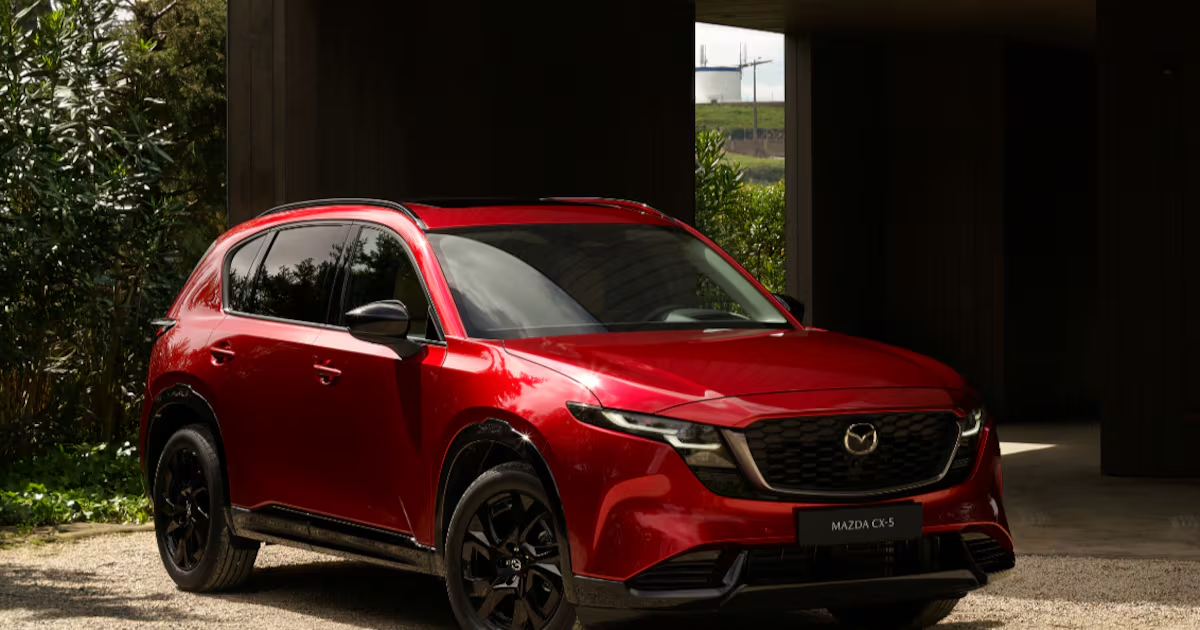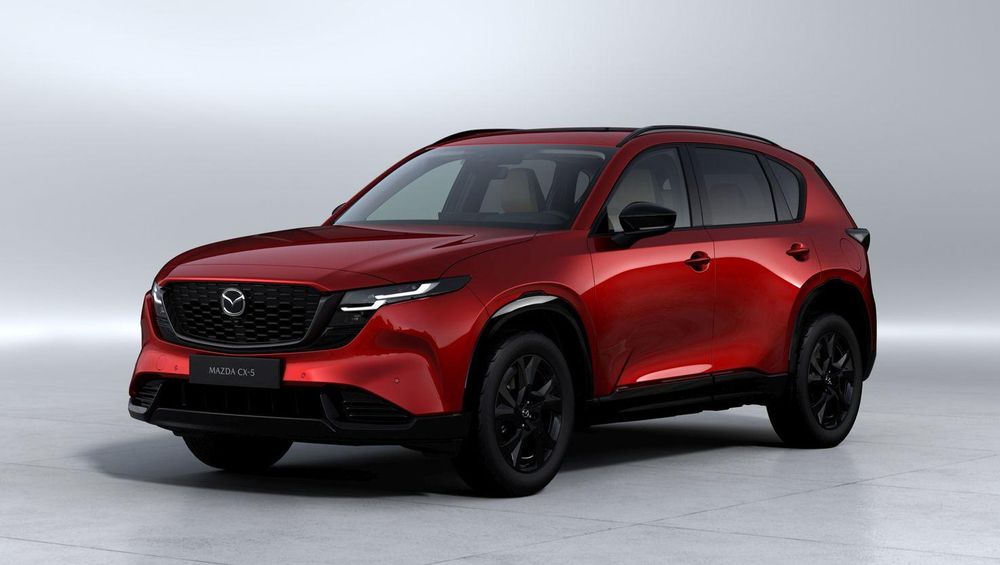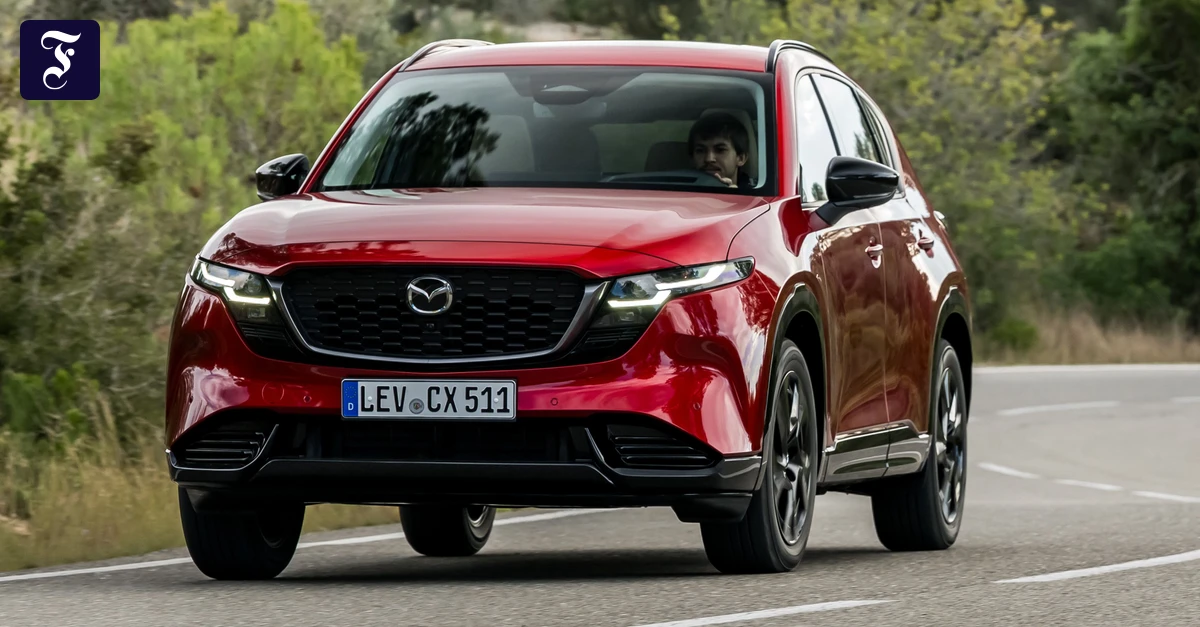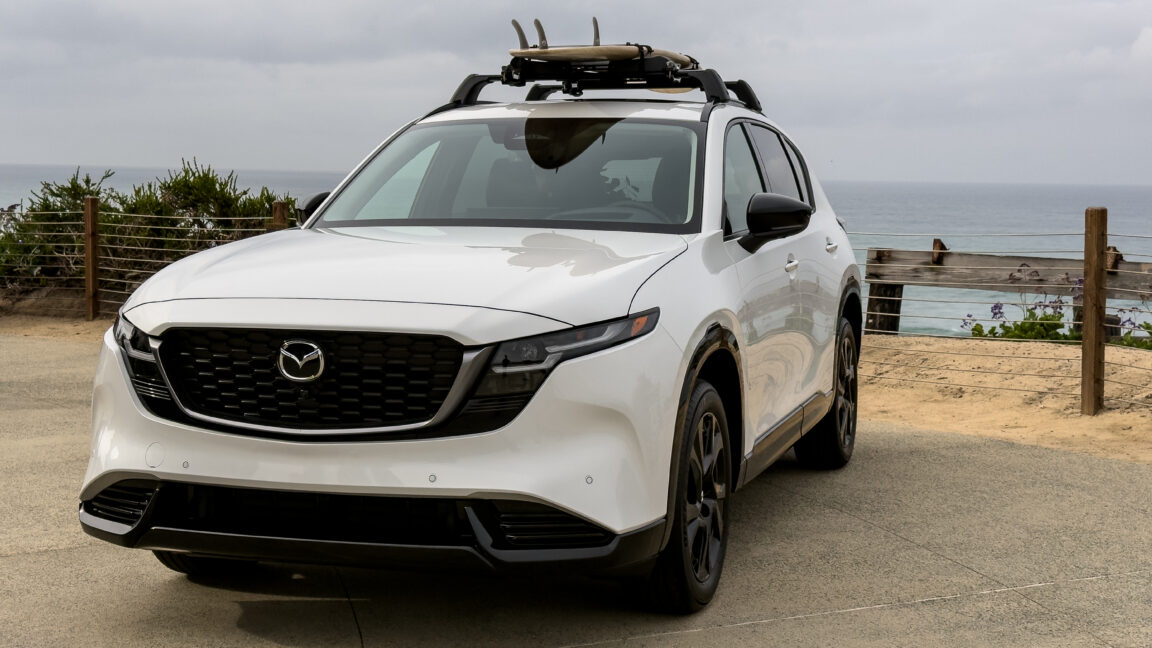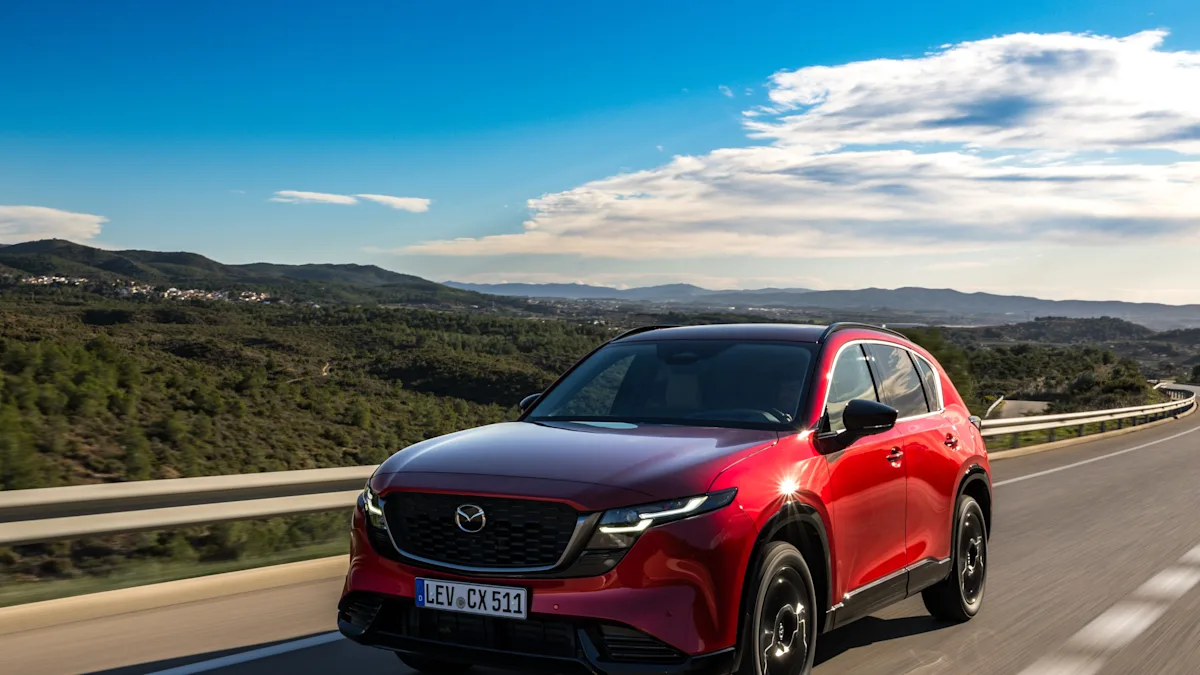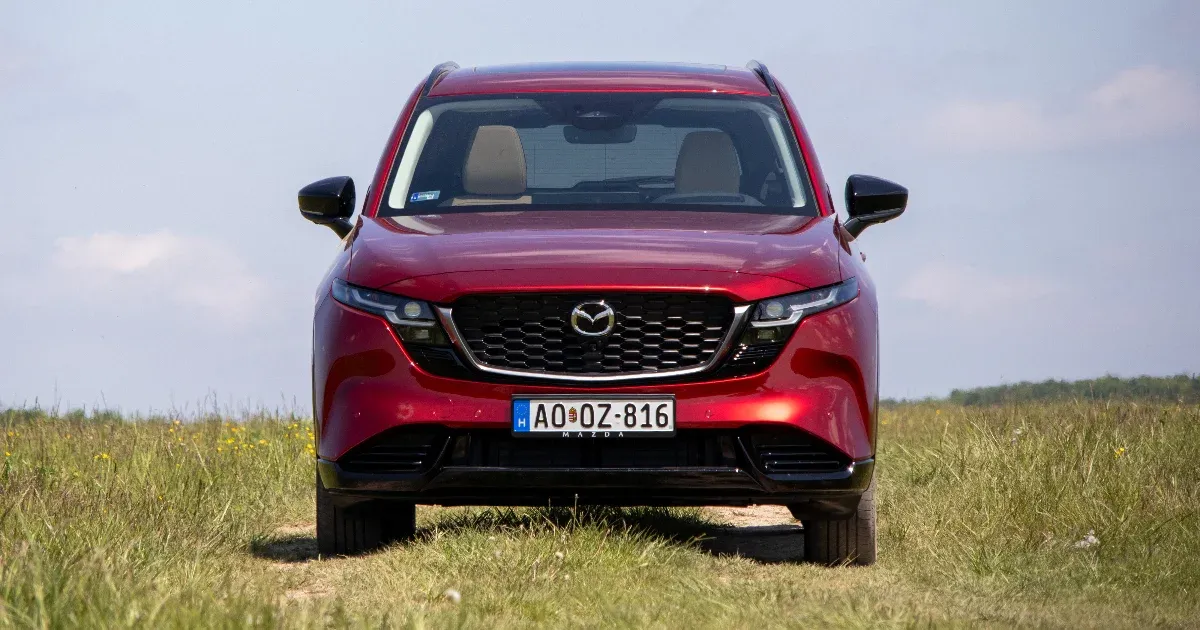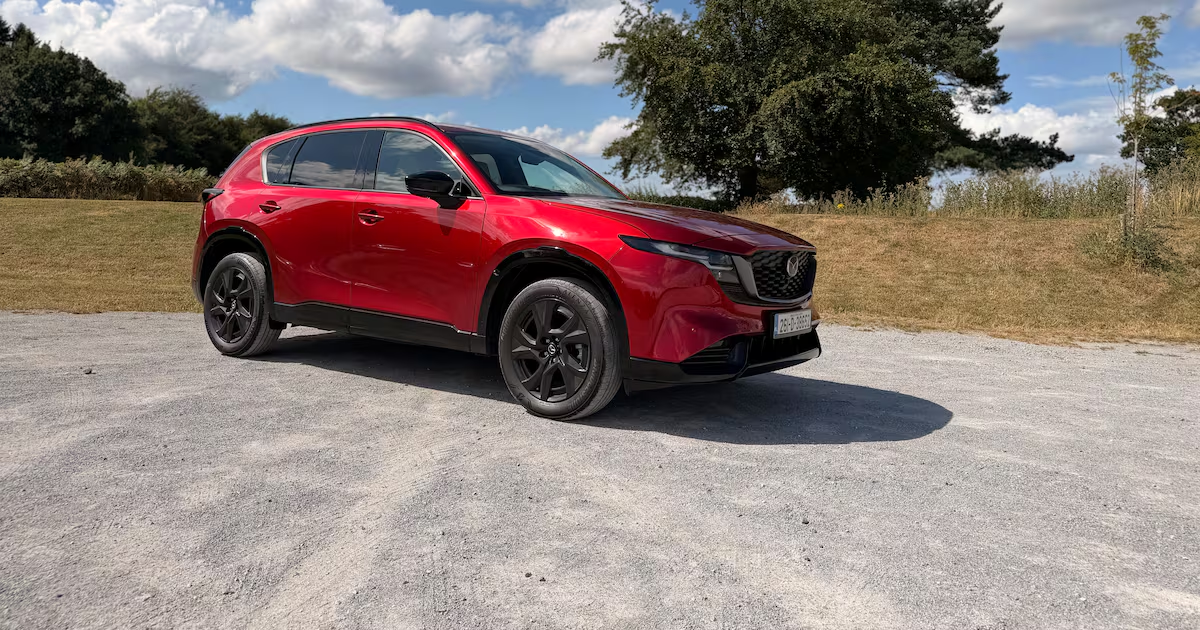
Buggy software. Endless superhero movies. Smaller Mars bars. Every new iteration of everything we do and everything we own seems to be slightly worse than it used to be, as companies ruthlessly cut costs (and staff) in an endless, fruitless chase of endless, fruitful growth. It’s enough to make you long for communism. Well, almost. I doubt that a bright, shiny red SUV would be sitting on my driveway were we living in a genuinely communist nation. It would either be a drab GAZ or a 1950s American car retrofitted with the hopeless diesel engine from a drab GAZ, depending on whether we’re talking about Caribbean or Muscovite communism.However, I digress, for a bright red SUV is sitting on my driveway right now, and that – net of my usual low-grade droning moaning about SUVs – makes me happy. Why? Because it’s a Mazda. Mazda is a brand for which I have a great deal of time. It’s something of an iconoclastic brand, still making the brilliant, effervescent MX-5 sports car when everyone else has abandoned affordable two-seaters, and instead of following the herd when it comes to smaller, turbocharged engines in search of fuel economy, Mazda went the other way – unstressed, big-capacity engines. Thanks to the black Mazda 3 hatchback that’s also parked on my driveway (the one I actually own …) I can tell you that works. Mazda CX-5 Does it work for the red CX-5? Let’s find out. The CX-5 is, iconography aside, way more important for Mazda as a company than the MX-5. The original version was launched in 2012, and it is credited with shoring up Mazda’s finances as it separated from previous owner Ford. The second generation kicked on from that and proved that Mazda could make a mid-size SUV that could compete, in quality and driver-appeal terms, with premium-badged rivals. Can this third-generation model do more of the same? Well, the new CX-5 looks good by basically looking the same. Some details are new, but the silhouette is identical to that of the old one, and the big, deep grille and kinked rear pillar are present and correct. This one looks a little more muscular, a touch sleeker than before.[ Mazda’s new CX-5 gains space, but loses engine optionsOpens in new window ]So, all familiar then? Nope. Crank open the door, and the new CX-5’s cabin is very, very new. And I’m afraid it’s not all good. You see, until now, Mazda has firmly believed that having an appropriate mixture of digital screens and physical switches was the best way to design an interior. Mazda CX-5 The new CX-5? Less so, although there are some nuances. Almost all physical buttons have been excised save for a few on the steering wheel, and so all of the controls are on the big central display, which measures 12.9 inches for basic models, and 15 inches in our high-spec Homura test car. Actually, this isn’t as bad as it sounds. The screen is responsive and swift to use, and the layout of on-screen controls is OK. I’d still prefer real buttons, but if screen it must be then this one is usable. However, it’s annoying to note that the screen is very slightly angled towards the left-hand seat – clearly Mazda’s budget didn’t extend to a proper right-hand-drive set-up. The 10-inch driver’s digital display is also fine and slightly reminiscent of previous BMW instrument screens. Space inside is excellent, with copious storage areas around the cabin (not a previous Mazda CX-model strong point) and the 583-litre boot is large and useful, but you can see where quality has been trimmed back. There’s little-to-no padding under the “leather” of the dashboard (unlike the squishy soft-touch surfaces of my own much humbler hatchback) and the top of the dash is covered in a cheap plastic panel that sounds distressingly hollow when you tap it. Smaller Mars bars. Cheaper Mazdas. When you start driving the new CX-5, the performance is equally mixed. Thankfully, the traditional Mazda sharp steering is present and correct, and the CX-5 feels sweetly balanced in corners and a bit more talkative for the driver than an equivalent VW Tiguan or Toyota RAV4. The ride quality, which gets a bit too stiff and noisy around town, becomes smoother at speed, which is again something of a Mazda tradition. Mazda CX-5 The engine, though? It’s a definite weak point. Mazda says that a proper, full-hybrid engine – badged as SkyActiv-Z, is coming for the CX-5 by next year, but in the meantime your only propulsive pick is this 2.5-litre naturally aspirated mild-hybrid unit. It develops a mere 141hp and 238Nm of torque, which is fine in the smaller Mazda 3 (to which this engine is now also fitted) but in the CX-5, even with its relatively trim 1,600kg kerb weight, it struggles, and that struggle comes through as a droning, blaring, dull noise. This isn’t helped by a six-speed automatic gearbox being your only transmission choice. You can’t help feeling that Mazda’s old slick-shifting six-speed manual would help a bit. [ Mazda CX-80 review: Style to spare, but substance still laggingOpens in new window ]At least fuel economy isn’t too bad. On a long run, with some heavy urban traffic at the start, the CX-5 averaged 6.9 litres per 100km, which is neither spectacularly good nor spectacularly bad, but it did prove capable of greater frugality – around 6.2 litres per 100km – on other journeys. Considering the size and weight of the CX-5, that’s not too shabby, but the relatively high CO2 emissions will hit you come motor tax time. Hopefully, the new hybrid engine will ride to the rescue, and in the meantime, the price will do the rest. While our top-spec test car was predictably pricey, the CX-5 has a sub-€40,000 starting price, which is notably €10,000 less than a basic Tiguan and around €7,000 less than the current cheapest Toyota RAV4 (which, against the Mazda’s basic 2.5, does come with a plug-in hybrid engine). There’s a potentially excellent car within the CX-5, but Mazda needs to sort the engine and the cabin quality to unlock it. Lowdown: Mazda CX-5 SkyActiv-G 140 HomuraPower: 2.5-litre four-cylinder mild hybrid petrol engine with 141hp and 238Nm of torque driving the front wheels through a six-speed automatic gearbox. 0-100km/h: 10.9 secs. Emissions (motor tax): 168g/km (€420). Fuel consumption: 7.4-7.5l/100km (WLTP); 6.9l/100km (Observed). Price: €49,045 as tested. CX-5 from €39,965. Our rating: 2/5. Verdict: Still handsome, and still fun but needs a (much) better engine and (much) improved cabin quality.
Mazda’s new CX-5 feels like a step back, but the price makes amends
Only one engine choice for the new Mazda SUV for now, so you might be better off waiting
1,092 words~5 min read