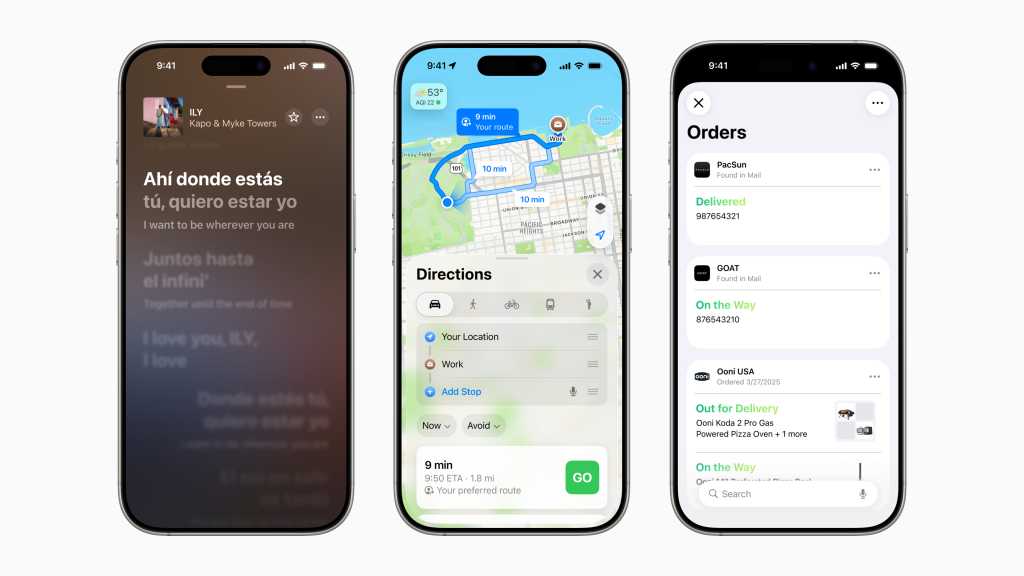
Dan Haiem is the founder and CEO of AppMakers USA, helping business leaders design, build and scale apps that deliver real-world impact.gettyAfter every major Apple announcement, I hear some version of the same conversation. A founder watches the keynote, a developer sends over a recap and suddenly the question is: "How quickly can we add this to our product?" The CoreAI announcement at WWDC 2026 is exactly the kind of release that sets those conversations in motion.I already know how those discussions are going to unfold. Before we talk about implementation, I always ask the same question. More often than not, it's one they haven't considered yet.What CoreAI Actually ChangesTo be fair, this one is worth paying attention to. CoreAI lets developers run large language models directly on Apple Silicon with no cloud costs, no per-token fees and no user data leaving the device. For the right app, that's a real unlock. If you're building something where privacy matters, where offline capability matters or where you can't afford the latency of a round-trip to a server, this is probably the first-party path you've been waiting for.But here's the thing. The framework being available doesn't mean your app has a reason to use it. When I started doing project onboarding calls, maybe one or two founders out of every 10 mentioned AI in their initial brief. That number is sitting at around six out of 10 now. The feature set keeps growing. The clarity behind why founders want it hasn't kept up.Wanting AI And Needing It Are Two Different ThingsMy team has worked through a lot of app audits and rescues over the past few years. Based on what I've seen, almost half of the companies had tried to add AI features at some point in their build. Of that group, around 64% had a real reason: something specific that made the user's experience meaningfully better. The rest added it because it felt like the thing to do.When I ask those founders what actually drove the decision, the answer is almost always the same. The majority say a competitor shipped something with AI first, and others trace it back to something an investor said. Only a small handful can point to something a user actually asked for or a behavior they observed in the product.I get it. Competitor pressure is real. Investor conversations are real. But "they have it so we need it" isn't a product decision; it's a reaction. And reactions tend to get built on shaky ground, which is where the real cost shows up.What It Actually Costs When You Get This WrongRetrofitting AI into an app that wasn't built for it tends to run roughly twice what it would have cost to build with AI in mind from the start. That's not me guessing. That's what we see consistently when a founder comes in wanting to add something the original architecture was never designed to support.There's another cost that's quieter but shows up faster. The Stack Overflow 2025 Developer Survey found that only about a third of professional developers trust the accuracy of AI output, while nearly half actively distrust it. If the people building with these tools are skeptical, users interacting with the finished product aren't starting from a position of confidence either. That skepticism tends to surface in cloud-dependent AI features more than anywhere else, where, in my experience, we consistently see more support tickets around data concerns than on-device equivalents generate. The reason CoreAI's privacy story matters isn't the technical architecture per se. It's that users don't have to wonder where their information is going. But that only helps you if the feature was worth building in the first place.Before You Call Your DeveloperI'm not telling you to ignore AI. I'm saying the announcement shouldn't be the thing that makes the decision for you. Before you scope anything, I'd ask three questions.1. Can you describe a specific moment in your user's experience where AI makes the outcome better? Not broadly, but a specific moment. If the best answer you have is "it makes everything smarter," that's worth sitting with a little longer.2. Is there a version of this that works without AI, and why isn't that good enough? If nobody has tried the simpler path, you don't actually know what you're improving on.3. Who asked for this? If the honest answer is a competitor's product page or something said in a board meeting, that doesn't kill the idea. It does mean you should validate harder before you start building.Apple built something genuinely useful. On-device AI at this scale is a real step forward for the right use cases. The mistake is letting the keynote excitement do the product thinking for you.The right time to add AI to your app is when your users feel something missing without it, not when your competitor ships it first.Forbes Technology Council is an invitation-only community for world-class CIOs, CTOs and technology executives. Do I qualify?
Apple Made On-Device AI Easy, But That Doesn't Mean Your App Needs It
The right time to add AI to your app is when your users feel something missing without it, not when your competitor ships it first.
TL;DRAI
Apple's CoreAI enables on-device LLM execution with zero cloud costs and no data leakage. Yet 36% of companies add AI without genuine user need, driven by competitor moves; retrofitting AI doubles costs, so implement only where users request it.
826 words~4 min read