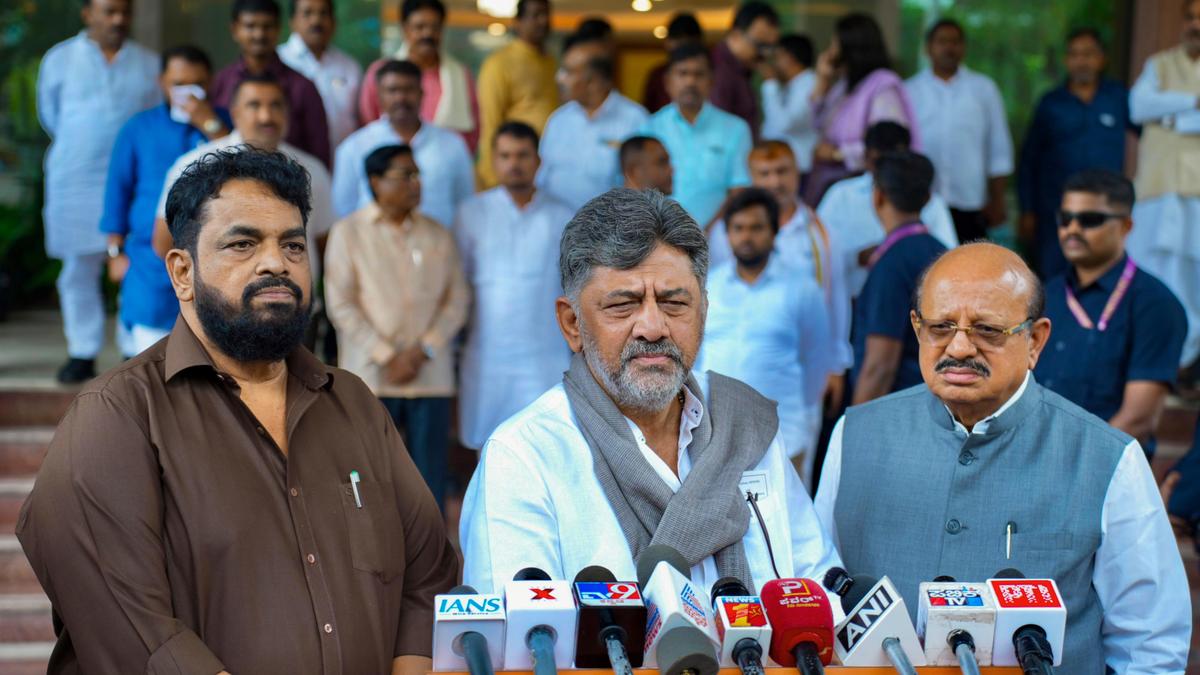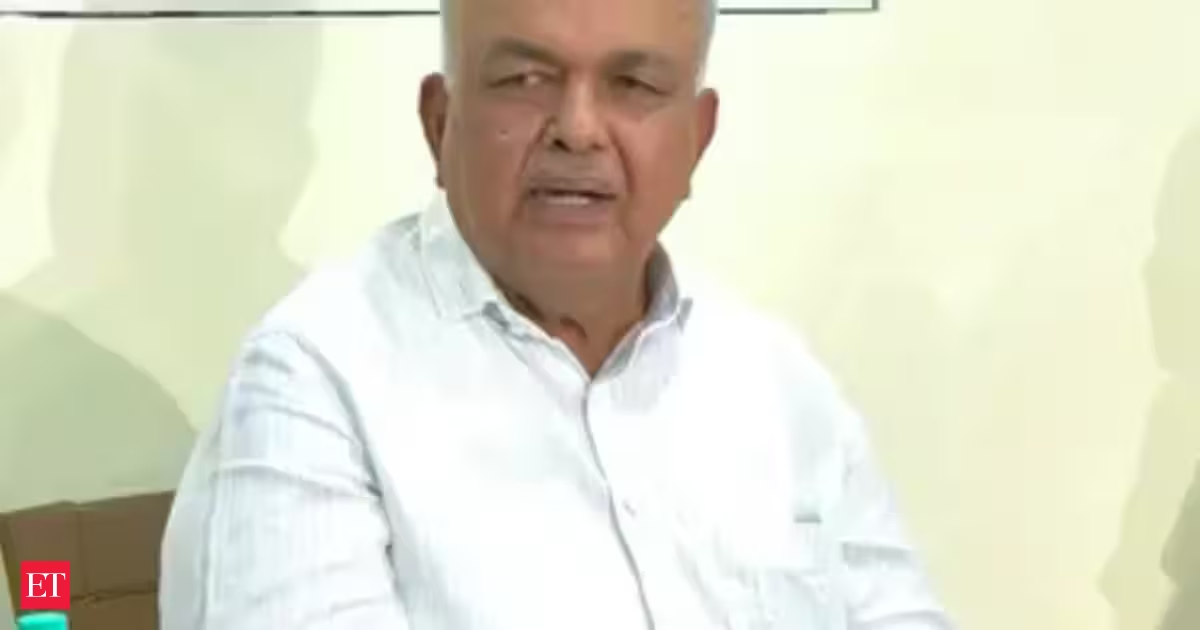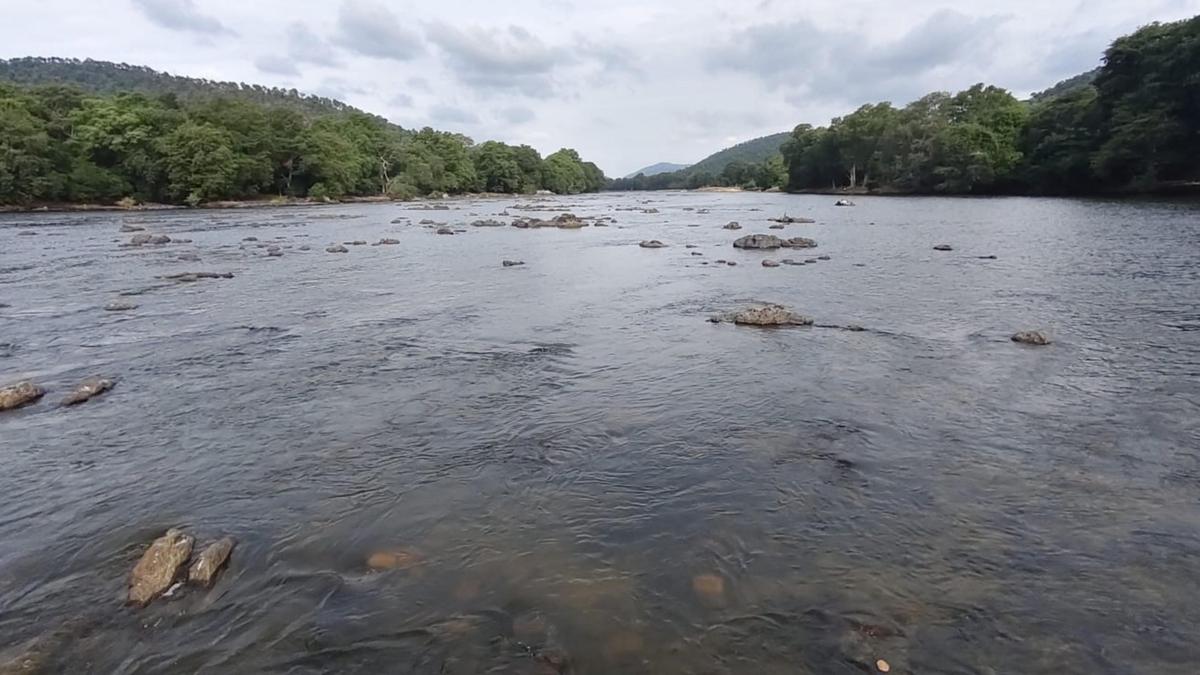
The proposed river board should “own, operate, manage, and regulate” reservoirs in the entire Cauvery basin, says CWMA chairperson Saumitra Kumar Haldar.
| Photo Credit: SPECIAL ARRANGEMENT
The Cauvery Water Management Authority (CWMA) chairperson Saumitra Kumar Haldar has called for better agricultural and water management practices and the formation of a river board that will “own, operate, manage, and regulate” reservoirs in the entire Cauvery basin to resolve the vexatious dispute between Tamil Nadu and Karnataka over the sharing of the river water. In a conversation with The Hindu on Tuesday evening, Mr. Haldar said that after an initial forecast for the southwest monsoon, made in April, was not favourable, he had conveyed to the Cauvery basin States to “conserve the available water” and “use it judiciously.” Supporting the idea of curtailing water supply for irrigation in times of distress, he cited the decision of the Tungabhadra Board, the oversight institution for inter-State projects involving Andhra Pradesh, Karnataka and Telangana, not to provide water for irrigation during this year’s kharif season.In the case of the Cauvery, in a normal year, the yield had been assessed as 740 thousand million cubic feet (tmc ft) at 50% dependability. “This means that water won’t be available in five years out of a block of 10 years,” Mr. Haldar pointed out, adding that water on such occasions should be used only for drinking water, livestock and environmental flows and not for irrigation. As for the idea of the river board, the CWMA chief referred to the Cauvery Water Disputes Tribunal (CWDT)’s recommendation for the constitution of an implementation mechanism on the lines of Bhakra Beas Management Board (BBMB) “which is a basin authority, and not a regulatory body.” The Board, comprising representatives of Haryana, Rajasthan, Himachal Pradesh, and Punjab with the chief being appointed by the Union government, “owns, operates, manages, and regulates” projects. “They [BBMB] take joint decisions with regard to how much water is to be given and what will be the scheduling. Everything is planned,” Mr. Haldar said. Explaining further, he said power generation, being carried out mostly at canal-head power houses, had to be matched with irrigation requirements and “they [BBMB] achieve synchronisation between irrigation departments and power utilities.” He also quoted the example of the Damodar Valley Corporation (DVC), a power behemoth of eastern India covering Jharkhand and West Bengal and owning power plants in the basin. “Once the DVC releases water, the States, which have their own canal systems, use it in a synchronised manner. “Such coordinated and comprehensive institutions - the BBMB and the DVC - would be “the most effective set up” for the management of a basin, the CWMA chief said.To a query whether the June 2018 notification, constituting the CWMA, had any provision for dealing with a situation wherein a riparian State refused to comply with the Authority’s direction, Mr. Haldar answered that “if any State feels aggrieved over the CWMA’s decision, the only option available is to go to the Supreme Court.” He recalled that in 2023, when Karnataka approached the Court against the Authority’s decision, the latter had not only defended the CWMA but also asked the upper riparian State to implement the decision. Published - August 12, 2026 06:39 pm IST