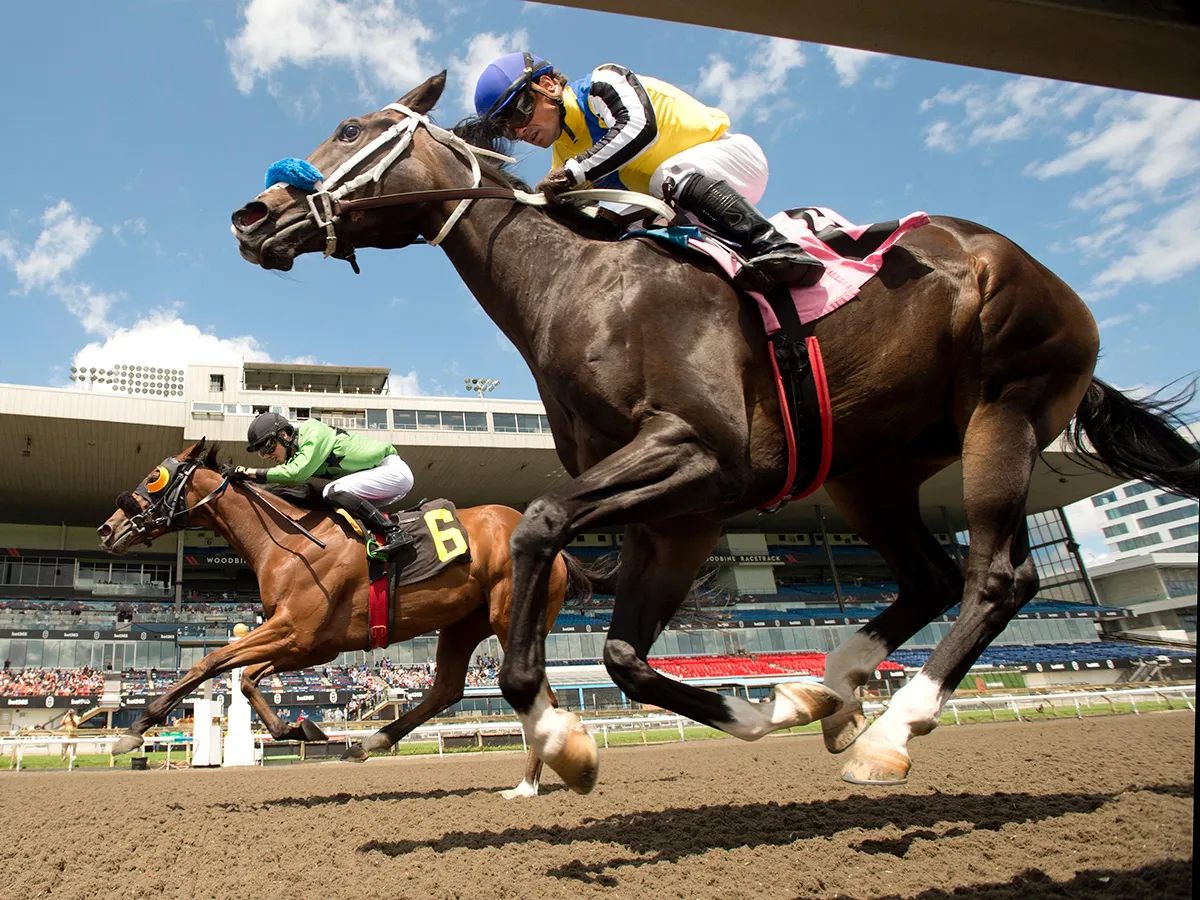
Skip to Content Subscribe Our Offers My Account Manage My Subscriptions FAQ Newsletters Canada Canadian True Crime Canadian Politics Health World Israel & Middle East Financial Post NP Comment Longreads Puzzmo Diversions Comics NP News Quiz New York Times Crossword Horoscopes Life Eating & Drinking Style Sponsored Play for Ontario Travel Travel Canada Travel USA Travel International Cruises Travel Essentials Culture Books Celebrity Movies Music Theatre Television Business Essentials Advice Lives Told Tails Told Shopping Buy Canadian Home Living Outdoor Living Kitchen & Dining Tech Style & Beauty Personal Care Entertainment & Hobbies Gift Guide Travel Guide Amazon Prime Day Deals Savings National Post Store More Sports Hockey Baseball Basketball Football Soccer Golf Tennis Driving Vehicle Research Reviews News Gear Guide Obituaries Place an Obituary Place an In Memoriam Classifieds Place an Ad Celebrations Working Business Ads Archives Healthing Epaper Manage Print Subscription Profile Settings My Subscriptions Saved Articles My Offers Newsletters Customer Service FAQ Newsletters Canada World Financial Post NP Comment Longreads Puzzmo Diversions Life Shopping Epaper Manage Print Subscription HomeNP CommentScott Stinson: Ontario taxpayers plowing another $175 million into horse racing. When will it end?The industry once had a monopoly on legal gambling, but it is struggling in a world where sports wagering has gone mobileLast updated 35 minutes ago You can save this article by registering for free here. Or sign-in if you have an account.A race at Woodbine Racetrack in Toronto. Going to the horse races was once the only way to attend a sporting event while putting some money on it, but now that can be done at any sporting event. Photo by Michael Burns/Toronto Sun/Postmedia/FileThe Ontario government has recently finalized details of a $175-million boost to an industry that, such an investment suggests, it sees as a key driver of economic growth and jobs.Enjoy the latest local, national and international news.Exclusive articles by Conrad Black, Barbara Kay and others. Plus, special edition NP Platformed and First Reading newsletters and virtual events.Unlimited online access to National Post.National Post ePaper, an electronic replica of the print edition to view on any device, share and comment on.Daily puzzles including the New York Times Crossword.Support local journalism.Enjoy the latest local, national and international news.Exclusive articles by Conrad Black, Barbara Kay and others. Plus, special edition NP Platformed and First Reading newsletters and virtual events.Unlimited online access to National Post.National Post ePaper, an electronic replica of the print edition to view on any device, share and comment on.Daily puzzles including the New York Times Crossword.Support local journalism.Create an account or sign in to continue with your reading experience.Access articles from across Canada with one account.Share your thoughts and join the conversation in the comments.Enjoy additional articles per month.Get email updates from your favourite authors.Create an account or sign in to continue with your reading experience.Access articles from across Canada with one accountShare your thoughts and join the conversation in the commentsEnjoy additional articles per monthGet email updates from your favourite authorsSign In or Create an AccountorArtificial intelligence? Critical minerals?Nope: horse racing.The quaint pastime, for decades the only way to legally wager on sports in Ontario, has been struggling, now that it is very much not the only way to legally wager on sports in the province. Key metrics are down, and costs are up.And so, the Doug Ford government has done what the Dalton McGuinty and Kathleen Wynne governments did before him: Handed over a giant sack of cash to the horse racing industry and tried to buy it some more time as it figures out how to stay relevant in a world where all that is needed to legally gamble on sports is an internet connection.The National Post newsletter that doesn’t hold back, giving readers the unvarnished truth on media, politics and culture.By signing up, you consent to receive the above newsletter from Postmedia Network Inc.A welcome email is on its way. If you don't see it, please check your junk folder.The next issue of Right? will soon be in your inbox.We encountered an issue signing you up. Please try againOntario taxpayers are giving $35 million a year for the next five years, in addition to the up to $120-million annually that was already earmarked for the horse racing industry, to help it avoid collapse. The supplementary money has been in the works for months but was not formally approved until late June, after industry players agreed upon the distribution of the spoils.It is a lot of money. That $35 million annual boost is more than the cost of one used Bombardier jet, the purchase of which sent the Ford government into a public-relations tailspin and caused the plane’s hasty resale. The cash injection also comes at a time when the province has cut post-secondary education grants, has chronic health-care funding problems, and is in negotiations with teachers unions over new contracts.So how does horse racing, a niche industry if ever there was one, qualify for such an enthusiastic investment? The short answer is that it knows the right people. And it is very good at sounding the alarm.Ontario’s financial backstopping of horse racing goes back to the late 1990s, when the introduction of legalized casino gambling in the Mike Harris era threw it into crisis. Threatened by flashy new competitors in the business of convincing the public to wager (and, more often than not, lose) money, the horse racing industry convinced the government of the day to share a portion of casino revenues with it.Racetracks around the province, from smaller ones in places like Sarnia and the Kawarthas to the much larger one at Woodbine, promptly put slot machines on the premises and kept a slice of the proceeds. The Slots at Racetracks program was so successful that it was eventually pumping almost $350 million annually into the horse racing industry.It was, in fact, too successful. The McGuinty government, facing a budget crunch in its waning days almost 15 years ago, abruptly cancelled the program, saying that the province could no longer afford to subsidize horse racing at such a scale. There was, not surprisingly, a political angle to the decision: most of Ontario’s 15 racetracks were in rural ridings that were not held by Liberals.Faced with the potential collapse of the industry, which would have meant job losses and even the possible culling of thousands of horses, the Liberals backtracked, to a degree. A set proportion of slot machine money no longer went straight into horse racing, but there was transitional funding provided under a newly created Horse Improvement Program, which despite the name is not related to equine self-help.That “transitional” money, more than $100 million annually at the time, has since become effectively permanent. The Ford government in 2019 signed off on a plan to direct more than $117 million each year to the horse racing industry, from OLG, the provincial lottery and gaming corporation, to Racing Ontario, an umbrella group.That agreement has since been amended multiple times. The industry took a big hit during the stay-at-home days of the pandemic, then bounced back somewhat in the years since, but costs are said to have spiked due to inflation. Thus, the extra $175 million lifeline. That agreement says the government expects that the horse racing industry will have increased responsibility “to become self-governing and manage its business towards greater sustainability” — which is a polite way of saying it doesn’t want to hand over another giant pile of cash in five years.But, how is that going? The financials for the industry, published by OLG, are a sea of red. At this time last year, the amount wagered on live racing was down almost 12 per cent from the year prior, and the number of tickets sold at tracks was off by more than 16 per cent. That only continued a trend, with wagers down more than five per cent and tickets sold down more than 22 per cent a year earlier. And that comes after the provincial auditor general found in a 2019 report that Ontario wagering on horse racing had dropped by 44 per cent since 2009. That report also said more than half the industry’s revenue was generated by government sources.None of that should be surprising. If legalized casino gambling was once an existential threat to Ontario horse racing, then legal sports betting was an apocalypse. Where going to the ponies was once the only way to attend a sporting event while putting some money on it, now that can be done at any sporting event. Alternatively, an Ontario resident can bet on just about anything, at any time, using online platforms.The industry’s defence of its subsidies, which is also the government’s justification for them, is that it supports more than 15,000 jobs and generates close to $2 billion in economic activity. And a lot of those jobs — trainers, breeders, groomers, farmers — are in rural areas where they would not be easily replaced if the racing industry shrank drastically.But the whole idea of the government’s backstopping of the industry, for more than a decade now, was to provide a platform where it could become sustainable on its merits. The taxpayer supports were supposed to decrease over time, and instead they have gone in the other direction. Throwing more money at a problem and hoping it goes away isn’t what a government that insists it is concerned about wasteful spending would do. Join the Conversation This website uses cookies to personalize your content (including ads), and allows us to analyze our traffic. Read more about cookies here. By continuing to use our site, you agree to our Terms of Use and Privacy Policy.
Scott Stinson: Ontario taxpayers plowing another $175 million into horse racing. When will it end?
Taxpayer money was once supposed to be a temporary fix, but the industry increasingly needs it as it loses business to legal sports betting.
1,601 words~7 min read