The Hidden Math: Why "Cheapest Model" Doesn't Mean Cheapest Execution
You're building an AI agent. Smart cost strategy: route to GPT-4o when you need reasoning, Haiku for simple classification, Groq when it's available and fast. In your head, the math is simple: pick the cheapest model per task.
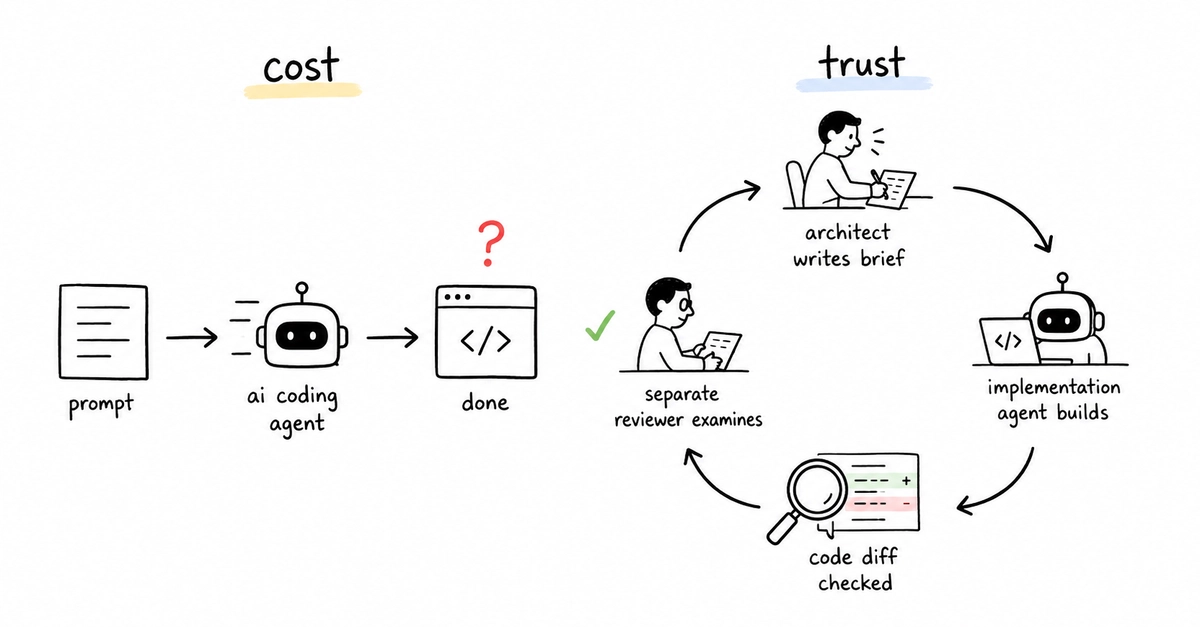
In practice, you ship code and never really know if it worked.
Here's the gap: cheapest model ≠ cheapest execution.
A single agent run might span multiple model calls. One task uses Anthropic's Sonnet ($3 / 1M input, $15 / 1M output). Another uses OpenAI's GPT-4o mini ($0.15 / 1M input, $0.60 / 1M output). A third falls back to Groq Llama 3.1 when latency spikes. By the time the execution finishes, you have no idea which model was actually called, how many tokens each burned, or whether that "cheap" fallback actually saved money — or whether a long output summary from one call inflated the token count beyond what you budgeted.