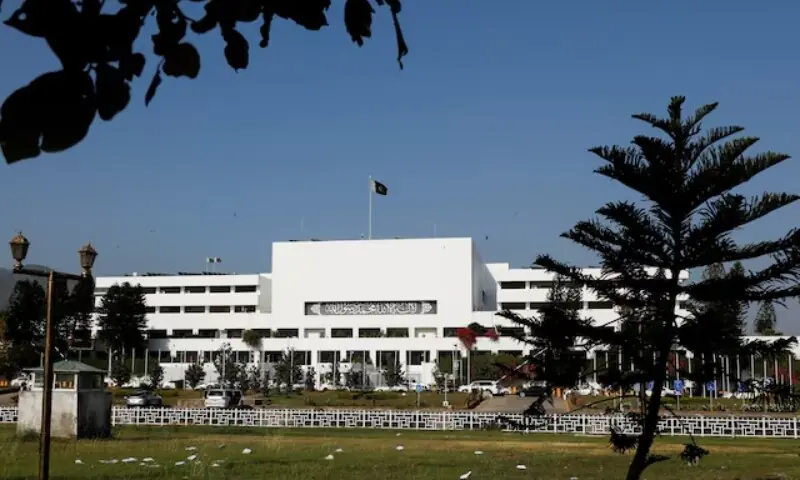
The US State Department has called on Pakistan to bring its military and intelligence budgets under civilian and parliamentary oversight, citing a lack of public scrutiny over defence spending, as per an ANI report. Washington also flagged limited disclosure of government debt obligations, including liabilities linked to major state-owned enterprises, and delays in publishing the executive budget proposal.The concerns were outlined in the 2026 Fiscal Transparency Report, which assessed Pakistan's broader public financial framework while identifying gaps in transparency around defence spending and debt.Also Read: French pilot who claimed India lost Rafales against Pakistan during Op Sindoor caught spying for ChinaUS flags lack of oversight of military, intelligence spendingAccording to the report, Pakistan makes its enacted budget and end-of-year financial statements widely available online. However, military and intelligence expenditures remain outside adequate parliamentary or civilian public oversight.The State Department urged Islamabad to introduce legislative checks over these budgets as a key measure to strengthen fiscal governance.The report also noted that Pakistan did not publish its executive budget proposal within a reasonable period, limiting the time available for lawmakers and civil society to examine the government's plans before they were enacted.Washington seeks greater disclosure of Pakistan's debtThe US assessment also raised concerns over the limited public information available on Pakistan's debt obligations.It specifically highlighted liabilities associated with major state-owned enterprises, saying greater disclosure was needed to improve transparency around government debt.Washington identified three corrective measures for Pakistan:Publish the executive budget proposal within a reasonable period.Provide detailed information on government debt obligations, including those of state-owned enterprises.Place military and intelligence budgets under parliamentary or civilian public oversight.Pakistan's defence allocation rises to Rs3 trillionThe report comes after Pakistan's federal government proposed a PKR 3 trillion defence allocation for fiscal year 2026-27 in June. According to Dawn, the proposed allocation represents a 17.65% increase from the previous year's initial defence outlay of PKR2.55 trillion.The allocation is equivalent to around 2.08% of Pakistan's projected GDP of Rs143.6 trillion and nearly 16% of the total federal expenditure of Rs18.77 trillion. This would put military spending above the 2% of GDP threshold after remaining slightly below it for several years.Military infrastructure, pensions get separate allocationsSpending on civil works, covering the construction of new facilities and maintenance of military infrastructure, was projected to increase 7.92% to Rs363.16 billion from Rs336.49 billion.Military pensions were budgeted separately from the defence services allocation. The government set aside Rs822 billion for retired military personnel under the federal pensions outlay, according to Dawn.The allocation for defence administration was set at Rs10.9 billion, compared with Rs7.9 billion in the outgoing fiscal year's original allocation. The figure was later revised upward to Rs11.75 billion.Dawn also reported that major military imports and defence acquisitions were generally financed outside the primary defence budget head and remained undisclosed.Also Read: Iran claims to destroy drone hangars, fuel depot at US base in KuwaitUS report acknowledges Pakistan's audit frameworkDespite raising concerns over defence and debt transparency, the State Department recognised some strengths in Pakistan's broader public financial system.The report commended Pakistan's supreme audit institution for meeting international standards of independence. It also noted that audit reports were published in a timely manner and contained substantive findings.
Why is Pakistan's ally US upset over its PKR3 trillion defence budget spending
The US State Department has urged Pakistan to bring military and intelligence budgets under civilian oversight. Greater disclosure of government debt obligations, including state-owned enterprises, is also requested. Pakistan's executive budget proposal publication faced delays, limiting public examination time. The report follows Pakistan's proposed Rs3 trillion defence allocation for fiscal year 2026-27. The US acknowledged strengths in Pakistan's audit framework and independent supreme audit institution.
526 words~2 min read