The chipmaker’s credit-default swaps had spiked to a record on fears of circular financing. They eased once Jensen Huang recast the plan as other people’s money, with Nvidia’s own exposure capped.
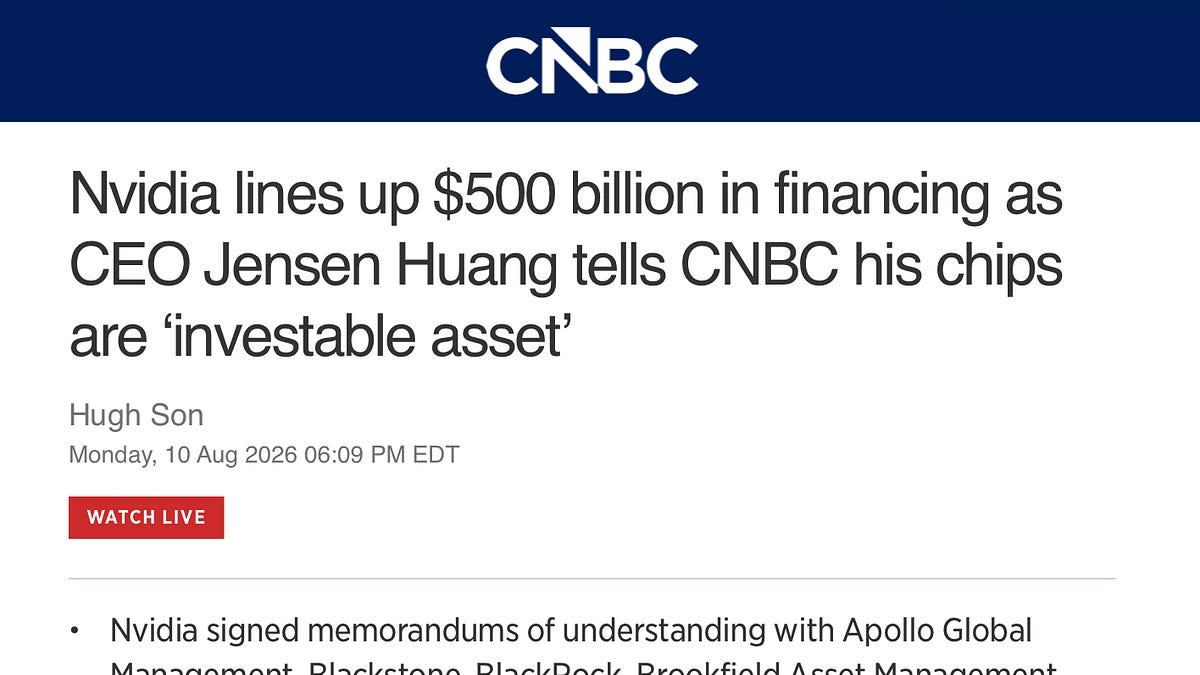
After weeks in which the cost of insuring its debt climbed to a record on worries about so-called circular financing, that cost eased once chief executive Jensen Huang spelled out how his $500bn plan to bankroll the AI build-out actually works.
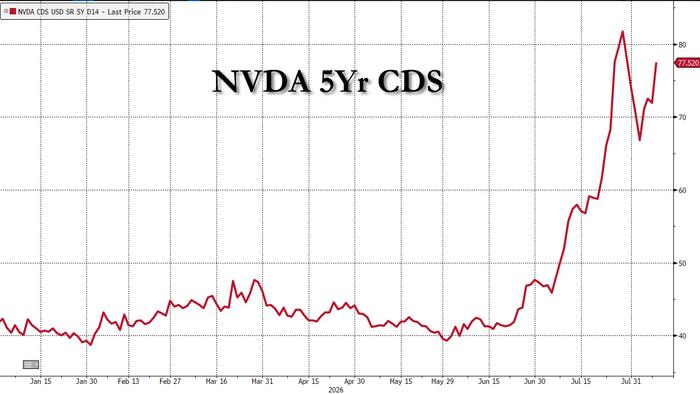
Nvidia’s five-year credit-default swaps, in effect a wager on the odds it fails to pay its debts, jumped from around 40 basis points at the start of the month to a record near 82 in late July, the sharpest single-day move since the contract began trading.
And the shares shed close to 5%, which briefly cost Nvidia its crown as the world’s most valuable company. As we noted when its own credit market first flinched, traders had been unnerved by the sheer scale of Nvidia’s entanglement with its customers.
Nvidia has been taking equity stakes in, and offering debt guarantees to, the very companies that then spend the money on its chips, from a reported $250bn backstop for OpenAI’s Ohio data centres to tens of billions in AI equity bets, all of which flatters demand for its own hardware.