Six of the biggest names in finance are helping Nvidia Corp ease some of the investor anxiety that’s been building for weeks over its swelling commitments to backstop the artificial intelligence (AI) boom.The early signs came after Nvidia CEO Jensen Huang (黃仁勳) announced on Monday that the coalition of major investment firms including BlackRock Inc and Goldman Sachs Group Inc were lining up more than US$500 billion to help fund the AI build-out. The group will independently judge individual deals and their own participation level, while Nvidia’s contribution will be relatively limited, and only factor into some deals.
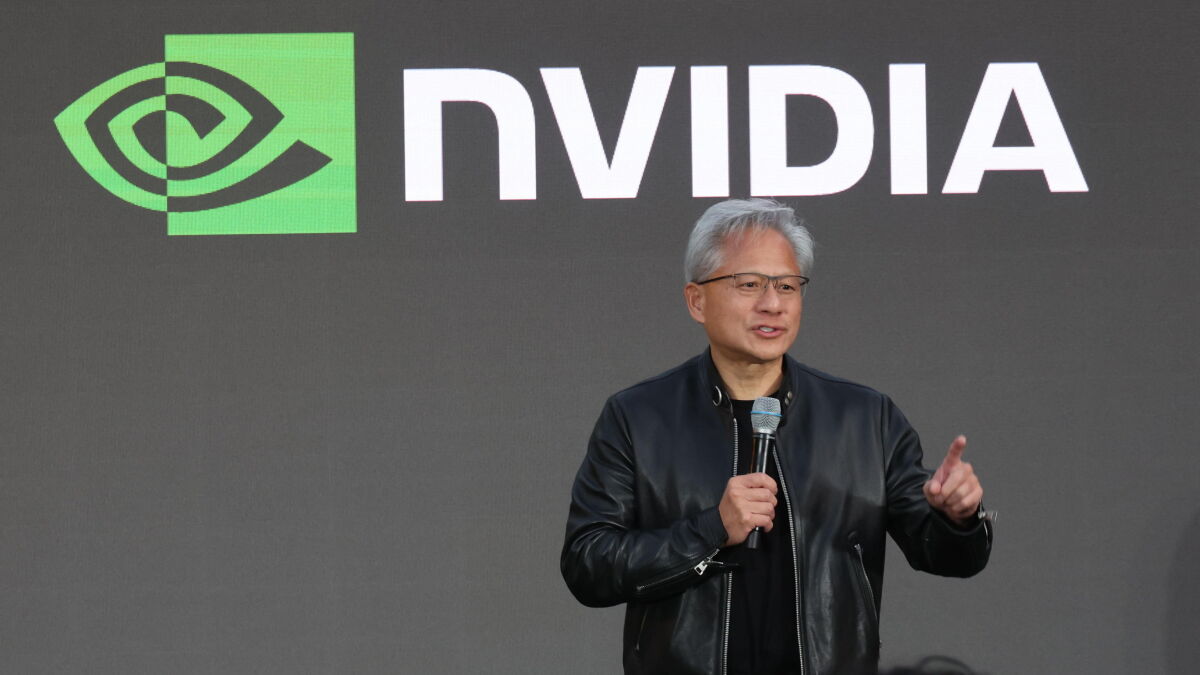
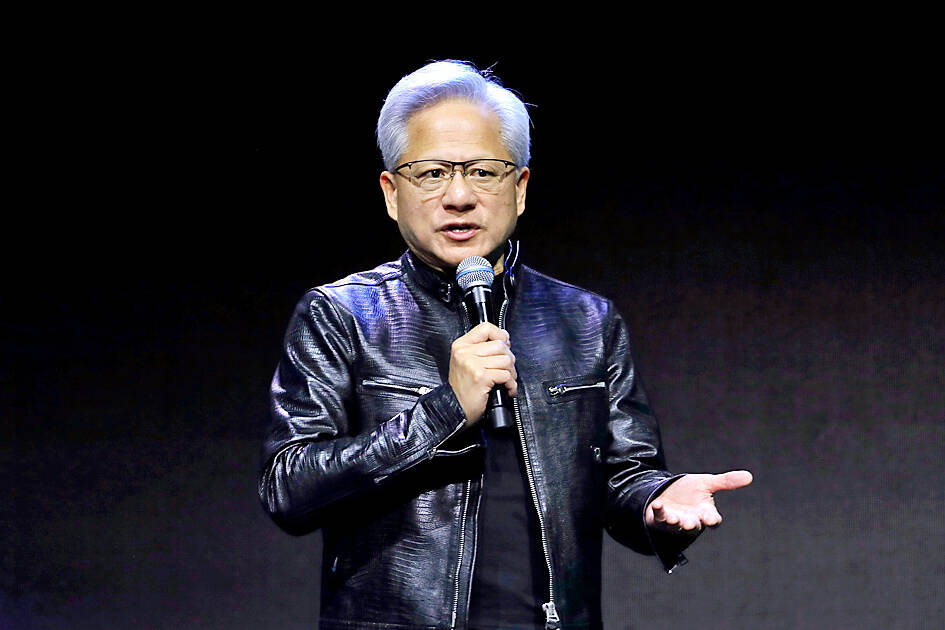
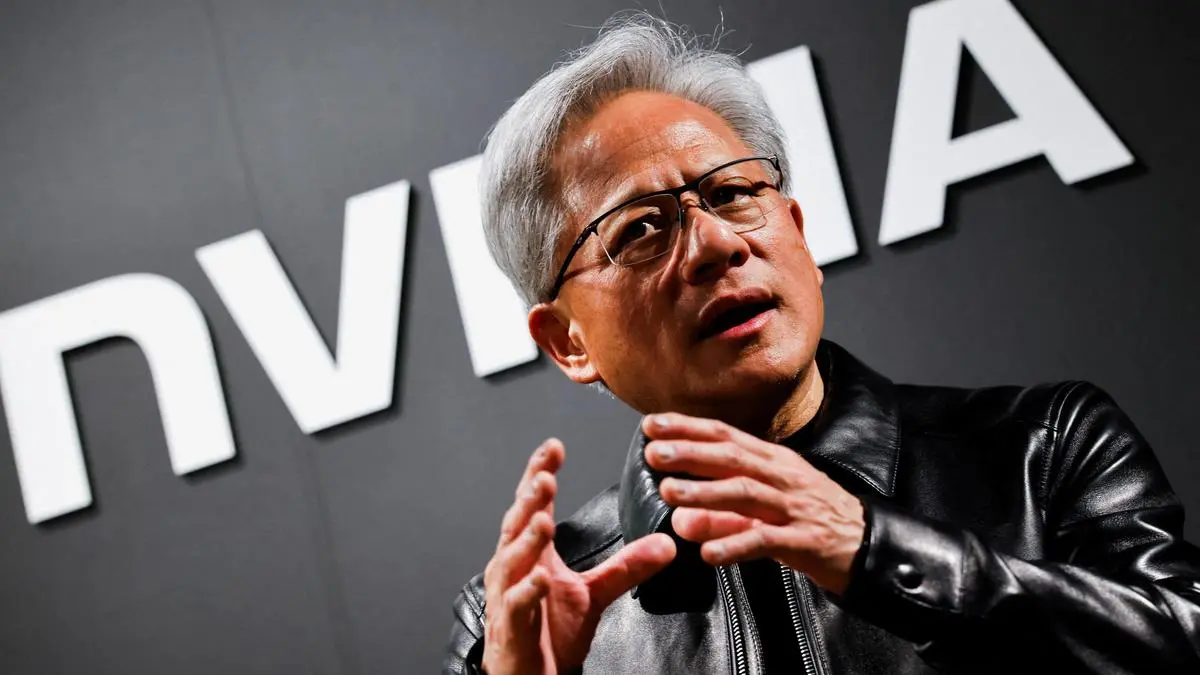
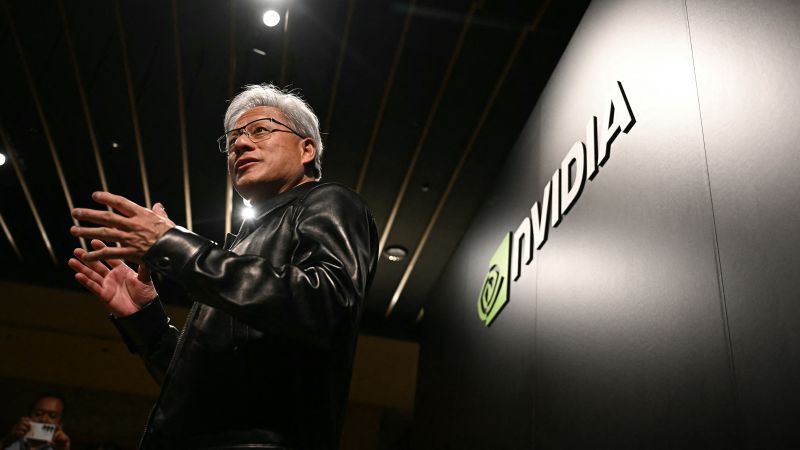
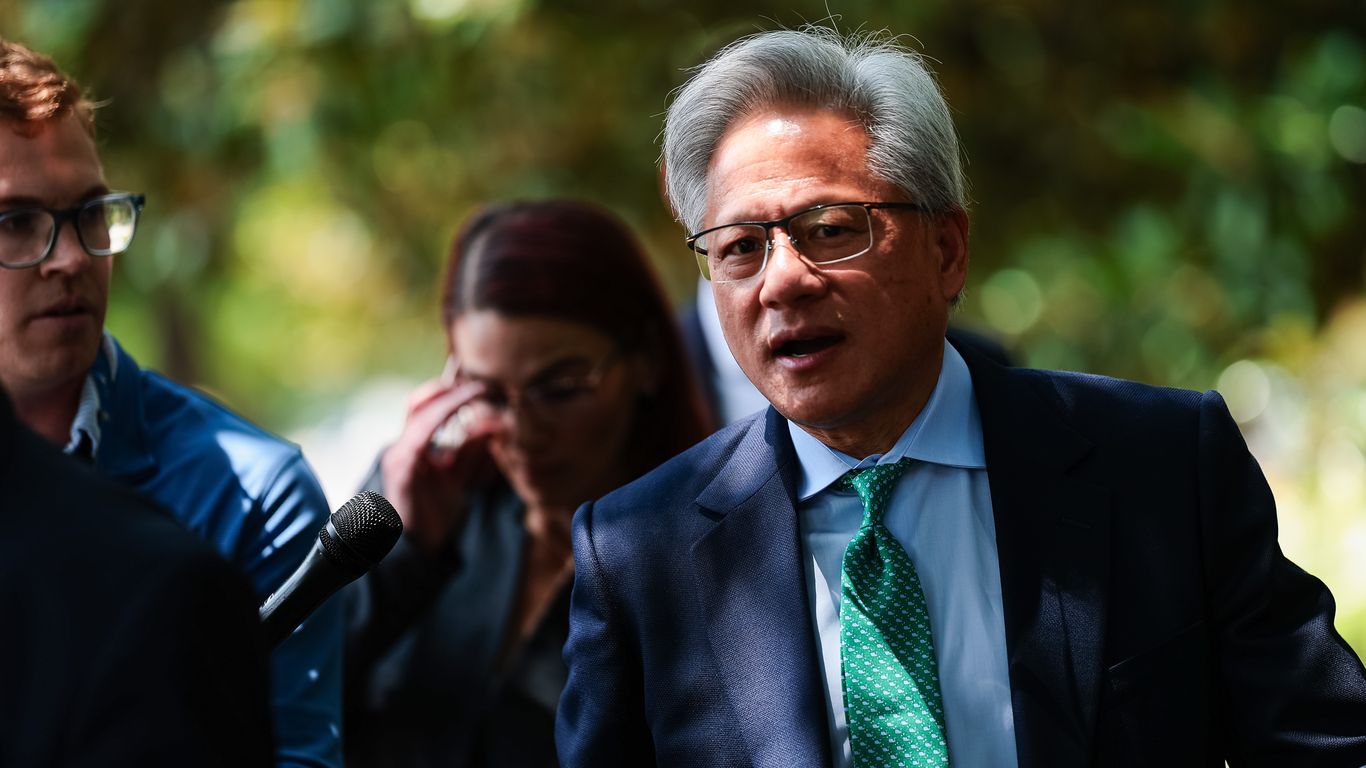
Nvidia Corp CEO Jensen Huang speaks during a doorstep after attending the AI Ecosystem Reception in Tokyo, Japan, on July 16.
The idea is that outside money, sophisticated eyes on deals and Wall Street’s stamp of approval should help alleviate worries that Nvidia was inflating an AI asset bubble with circular financing. In less than three weeks, a gauge of the chipmaker’s credit risk had nearly doubled on concern that while loans to customers would bring more sales, they risked causing pain later if those customers fail.
On Tuesday, the cost of protecting Nvidia’s debt against default dropped and the company’s bonds rallied, with risk premiums over US Treasuries dropping back to where they were last week.The commitment from some of Wall Street’s biggest firms “is a positive development to take out some of the uncertainty about both infrastructure build-out and customers’ future spending,” GW&K Investment Management LLC portfolio manager Brett Kozlowski said in an interview.Nvidia is a key player in the US$5.5 trillion global race to profit from AI. Its powerful computer chips were originally designed for graphics and can perform multiple tasks simultaneously, making the latest generations useful for data centers.Demand for its chips has helped make Nvidia the most valuable publicly traded company in the world, with its market valuation topping US$5.2 trillion. But investors have grown concerned about whether the company’s customers were too reliant on Nvidia’s financial support to pay for chips and data centers that have grown ever-more expensive in recent years.Late last month, Bloomberg reported that Nvidia was in talks to backstop as much as US$250 billion to help OpenAI lease computing power from an Ohio data center hub that a Softbank Group Corp unit is developing. It would be among the chipmaker’s biggest financing deals with a customer. Nvidia was also in discussions to finance US$350 billion of OpenAI’s purchases of its chips for the project, people familiar with the situation said at the time.While the news heartened AI evangelists, it had fueled fresh worries in credit markets about circular financing — loans to customers that will bring more sales for Nvidia now, but potential pain later if those customers fail. In less than three weeks, a gauge of Nvidia’s credit risk nearly doubled.Late last month, the cost of protecting Nvidia’s debt for five years climbed to as high as US$82,000 a year for every US$10 million of principal protected, after hovering at about half that level for much of the year. On Tuesday, that figure was closer to about US$73,000, or 73 basis points, down around 4 basis points for the day.The new deal will bring in capital raised by firms including Apollo Global Management Inc, Blackstone Inc, Brookfield Asset Management Inc and KKR & Co, in addition to BlackRock and Goldman Sachs. The firms will independently evaluate each project and decide whether to supply capital. Nvidia, for its part, said it’s setting up a marketplace for independent capital providers to match with users of the funds, describing its role as providing a platform.The result will be “dedicated pools of capital at significant scale at attractive rates for Nvidia customers,” the chipmaker said in its statement.The company will support some projects by guaranteeing up to 25% and using a residual value mechanism to help limit losses if a project runs into trouble. The company didn’t provide much detail, but said its chips can be used by a wide array of its customers, which can presumably help minimize Nvidia’s losses.For example, if a project stumbles, a residual value guarantee might mean that Nvidia provides financial support after steps have been taken to recover value, like finding new firms to lease capacity or selling off chips. But there’s still risk about the AI build-out and credit environment, Andromeda Capital chief investment officer Alberto Gallo said.The credit market is increasingly becoming a bet on the demand and the value of computing power in the US, and investors in that market probably aren’t getting paid enough for the risk they’re taking, Gallo said in an interview. Defaults can come because there will be winners and losers in the breakneck competition to expend trillions of capital on data centers and other infrastructure.“There is essentially panic capital expenditure,” he said. “Who is going to pay for losses? It’s bondholders, it’s life insurers, it’s policyholders.”For now, Nvidia itself is highly profitable, giving it ample cushion to withstand credit pressure. Free cash flow in the fiscal year ended Jan. 25 was nearly US$100 billion, and now investors are concluding there’s less chance Nvidia will have to absorb big losses since outside firms are taking on much of the risk.“Nobody knew what the US$500 billion potential financing meant,” Coherence Credit Strategies chief investment officer Sal Naro said. “Today you have an idea that they’re getting everybody involved and that their exposure isn’t as serious as investors originally feared.”