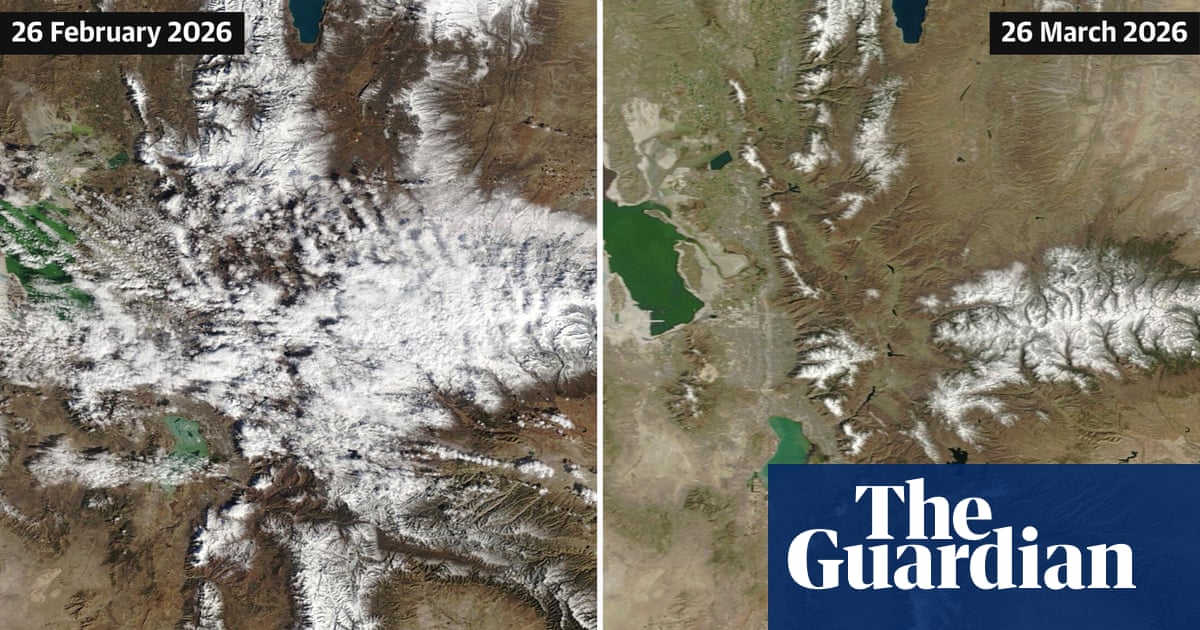
Matthew LaPlante doesn’t have to go to a lab to see his research in action. On some mornings, he can just look out his own window in the mountains high above Salt Lake City. After a warm night when the temperature stays above freezing, he’ll wake up and see that the snow level has dropped by inches, revealing more of the aspens he taps for syrup.
“It feels like a monster came and just in the middle of the night, took a bite out of a snowpack,” said LaPlante, a journalist and climate scientist at Utah State University.
So it’s fitting that scientists have started calling these kinds of heat waves, marked by unusually high temperatures in the spring and early summer, “snow eaters.” LaPlante was part of a recent study, published in the journal Science Advances, that attempted, for the first time, to identify what conditions exactly make for a “snow eater.” Compared to normal warm spells or heat waves, the researchers determined that these events happen when temperatures stay above freezing through both day and night for multiple days, typically three to five. These events can roughly double the rate at which snow melts, causing flooding and making it challenging to manage water resources.