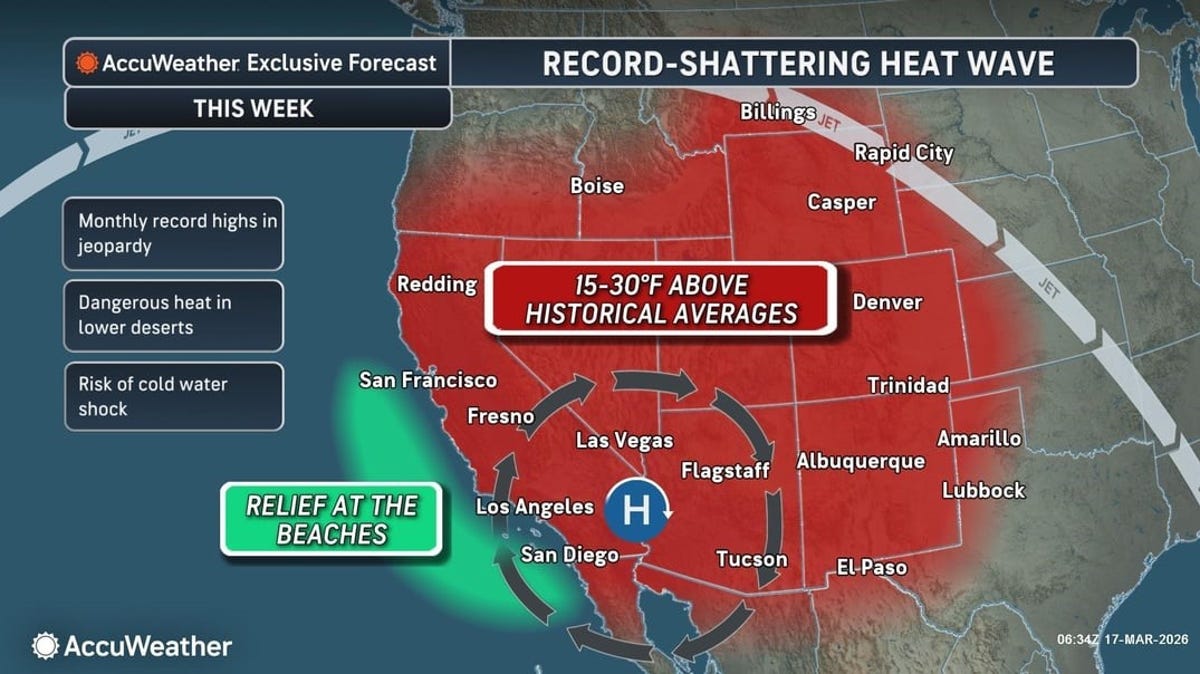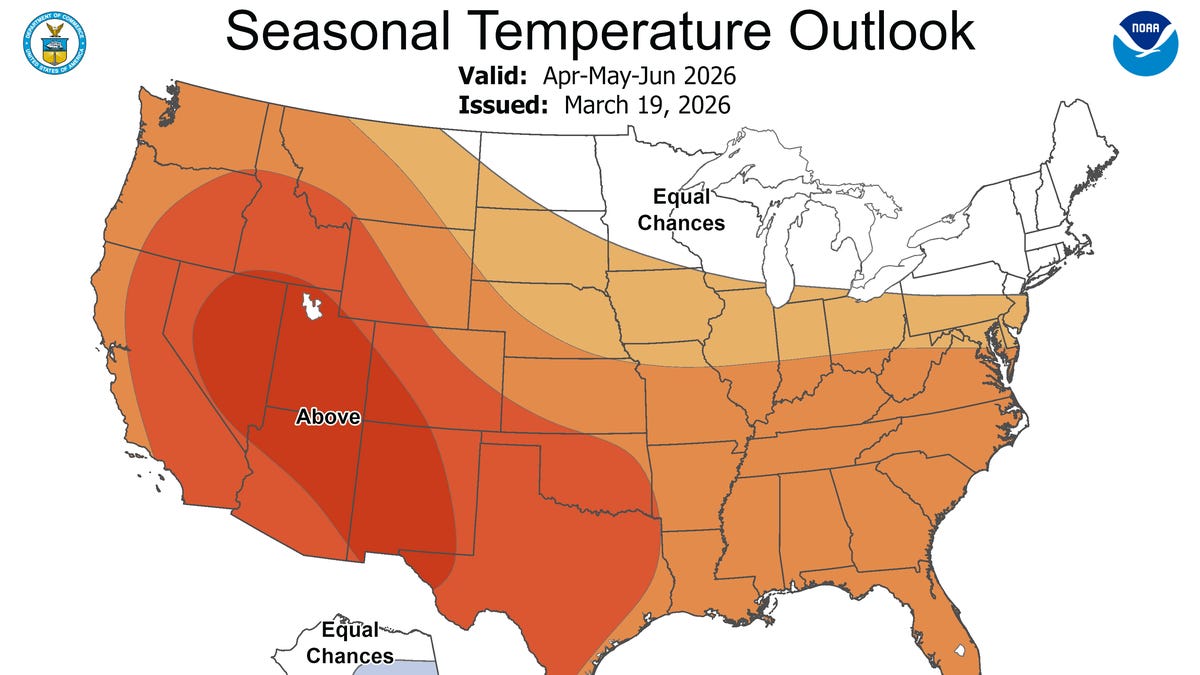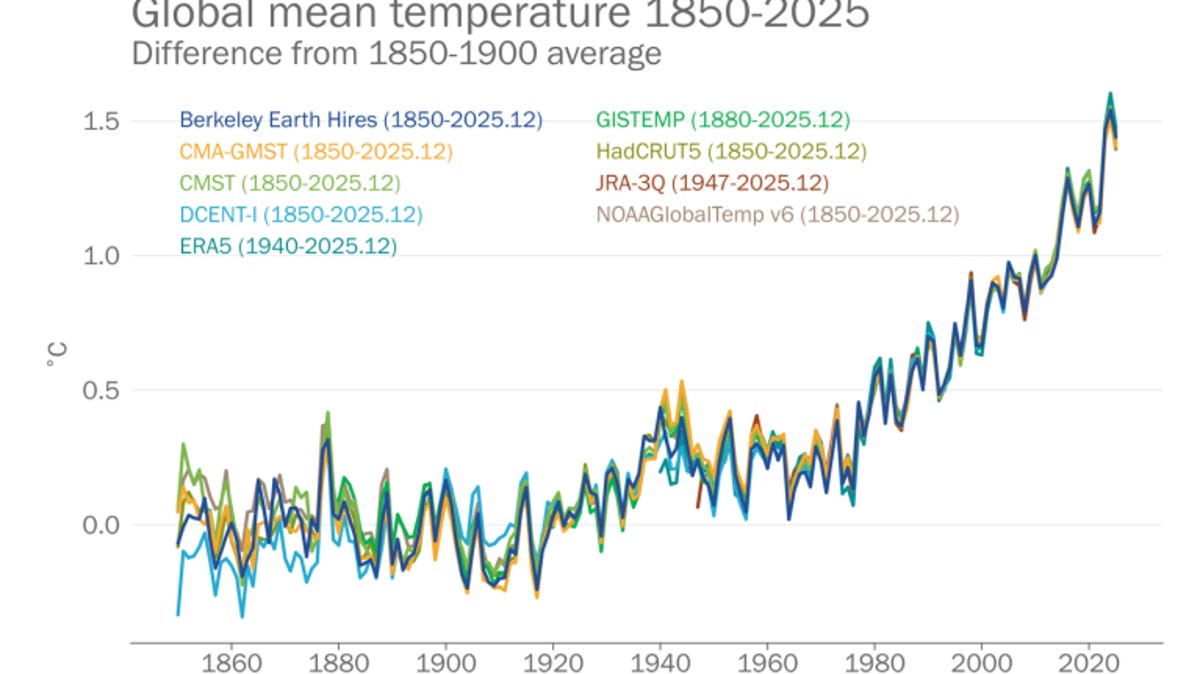
WASHINGTON (AP) — The dangerous heat wave shattering March records all over the U.S. Southwest is more than just another extreme weather blip. It’s the latest next-level weather wildness that is occurring ever more frequently as Earth’s warming builds.
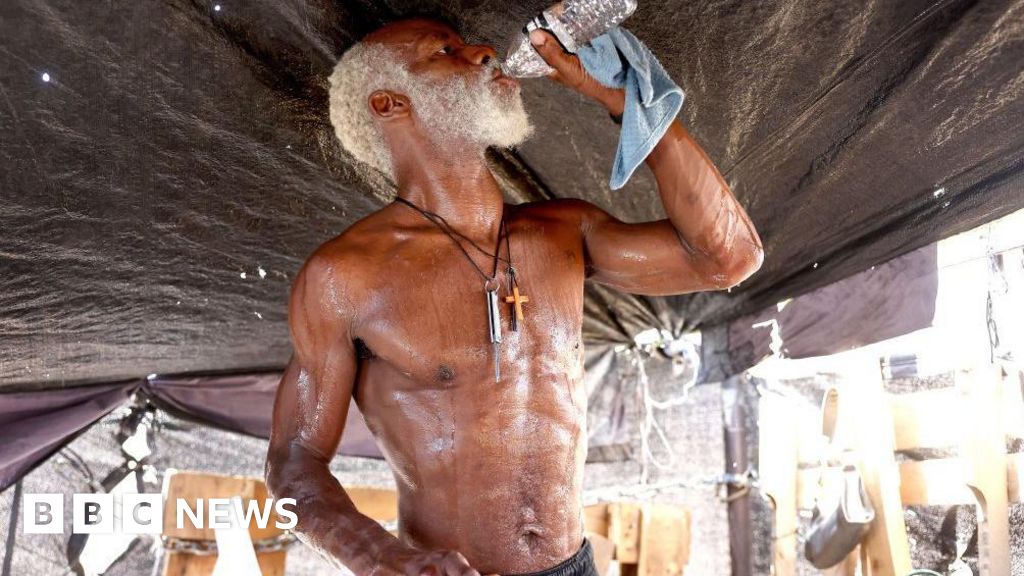
Experts said unprecedented and deadly weather extremes that sometimes strike at abnormal times and in unusual places are putting more people in danger. For example, the Southwest is used to coping with deadly heat, but not months ahead of schedule, including a 110-degree Fahrenheit (43.3 Celsius) reading in the Arizona desert on Thursday that smashed the highest March temperature recorded in the U.S.
On Thursday, sites in Arizona and southern California had preliminary readings of 109 F (about 43 C), which would be the hottest March day on record for the United States.
“This is what climate change looks like in real time: extremes pushing beyond the bounds we once thought possible,” said University of Victoria climate scientist Andrew Weaver. “What used to be unprecedented events are now recurring features of a warming world.”
March’s heat would have been virtually impossible without human-caused climate change, according to a report Friday by World Weather Attribution, an international group of scientists who study the causes of extreme weather events.