The traditional August political lull is being interrupted by a renewed focus from government officials on former prime minister Alexis Tsipras, according to an analysis of recent political developments and polling trends.
Government representatives appearing on television or online during the summer break have increasingly targeted Tsipras, a strategy described as rooted in specific political calculations. The first factor is polling.
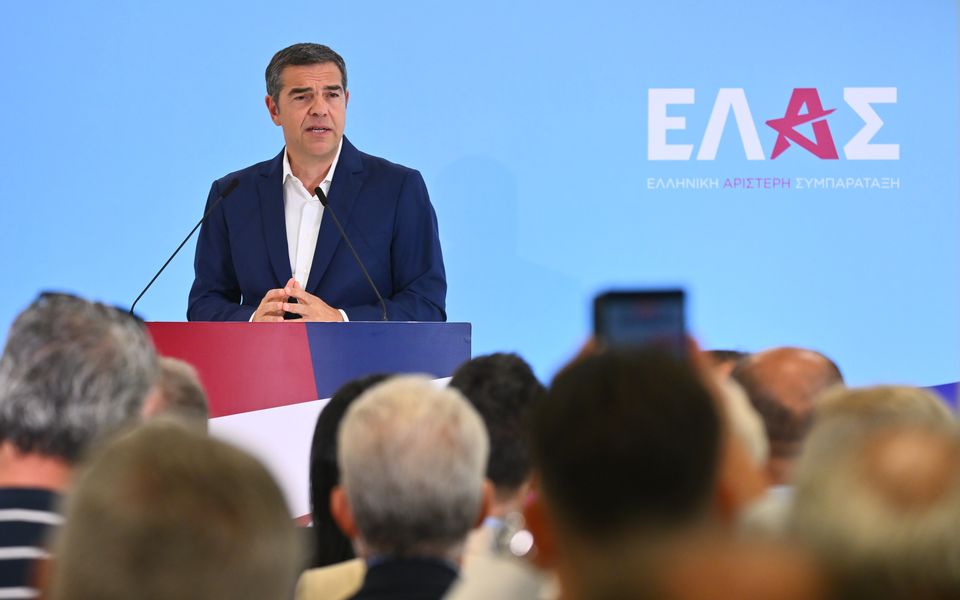
Recent surveys conducted before the summer recess reportedly showed Tsipras’ party firmly established in second place, with qualitative indicators suggesting that position is unlikely to change. In measures such as which party provides the most effective opposition and potential voting intention, the party identified as ELAS outperformed PASOK.
In the second part of an interview with the news website in.gr, Tsipras said that “ELAS in the second election can be the first party,” signaling confidence that second place is secure. The second factor is political advantage. According to a government source, Tsipras’ period in office continues to carry negative associations for a broader segment of voters than those who currently support New Democracy.
That makes a direct confrontation with Tsipras an attractive strategy for drawing voters who may not back the government but do not want to see his return. The approach is expected to intensify after August as New Democracy seeks gains among centrist voters.