Skip to content
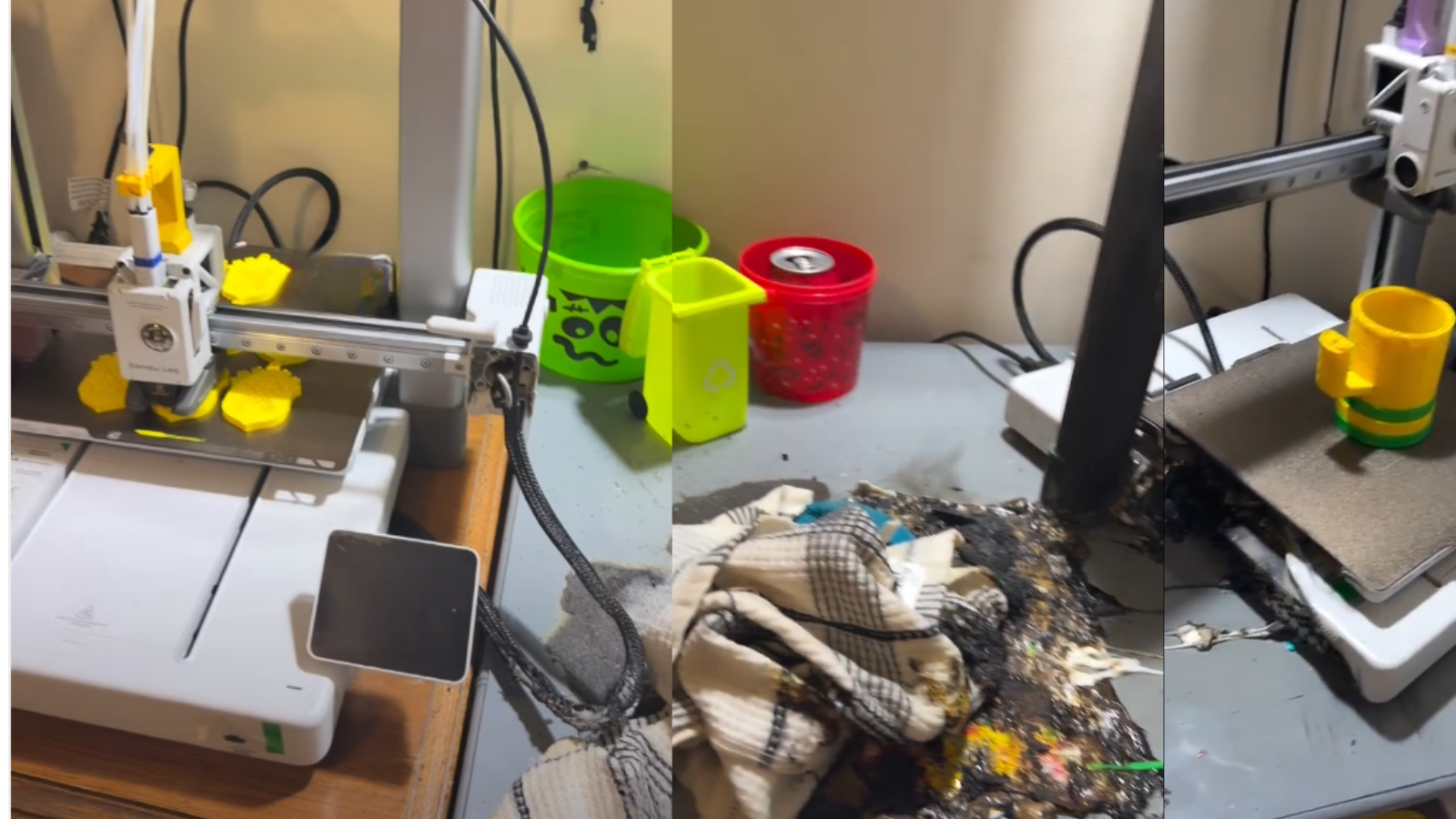
Although lighting 3D prints on fire is rarely the intended outcome, it’s possible that said print will at some point in its future come into contact with either an open flame or a significant source of heat. Once that happens, what will be the result and how worried should one be? This is basically the excuse behind [Maker’s Muse] recent decision to light some 3D prints on fire.
Crispy 3D printed combat robot. (Credit: NHRL)
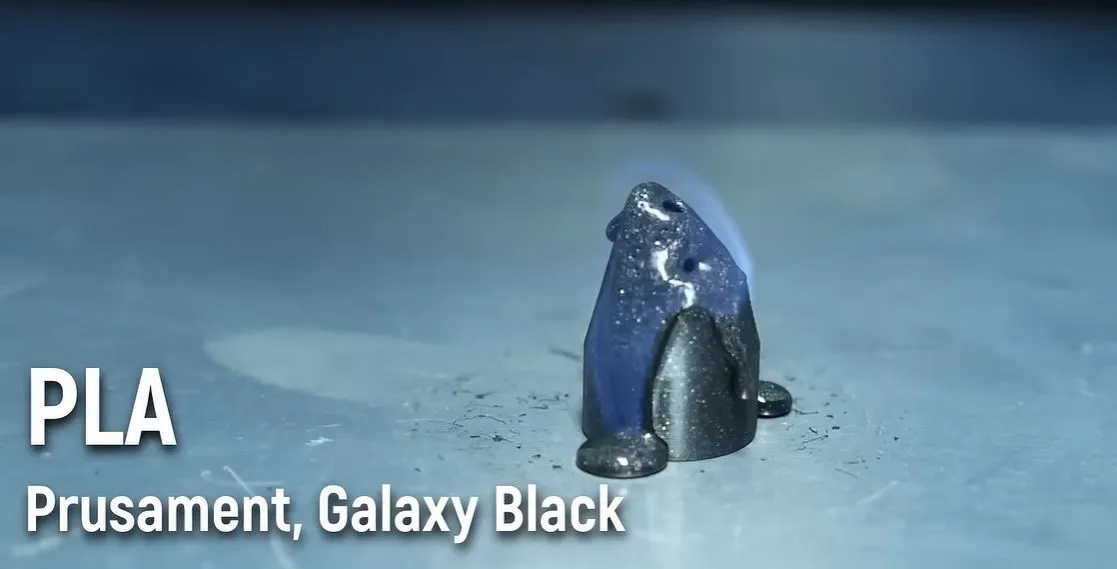
Materials exposed to an open flame in this experiment included various types of PLA, PETG, ABS, ASA, TPU and PEBA. Since PLA filaments have a significant amount of carbon in them it’s little wonder that these burned quite readily, though an interesting difference was immediately visible between an Elegoo PLA+ test cone and a Prusa Galaxy Black PLA cone. The latter required a blow torch to properly ignite, after which it burned rather hot whilst melting, unlike the dirty yellow flame of the PLA+.
So-called ‘high temperature’ PLA (HTPLA) seems to actively resist burning, self-extinguishing after a blowtorch treatment. Just these few samples of PLA already gave very different results, with very likely the additives being the defining factor since pure PLA is easy to burn as a way to dispose of it somewhat cleanly.