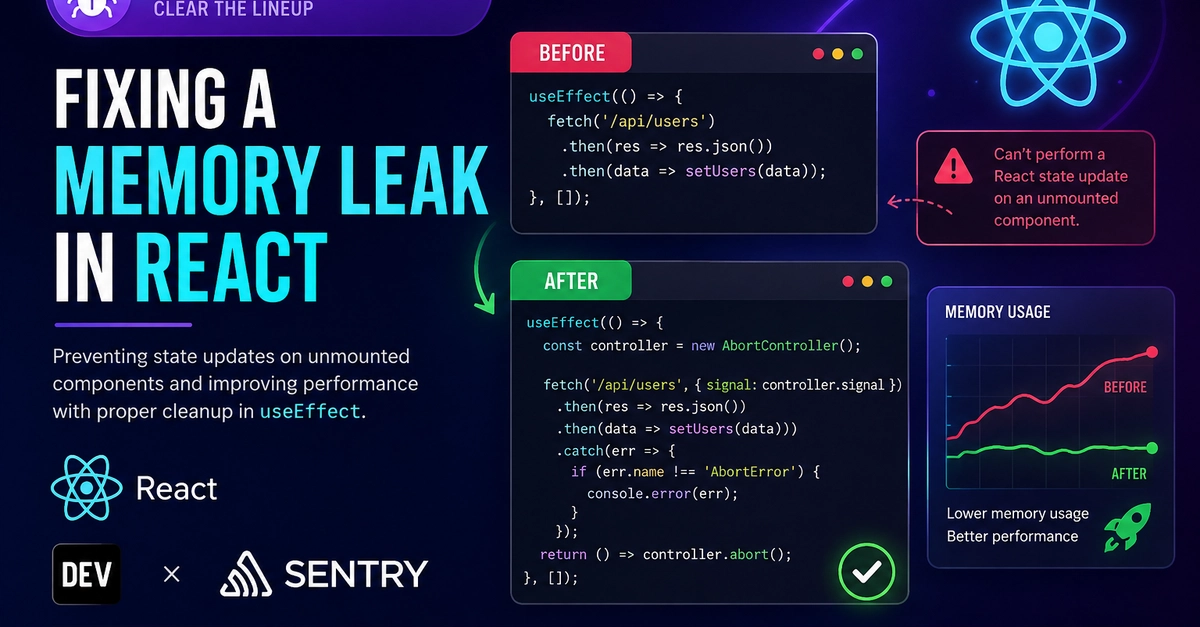
We have all seen that notorious warning pop up in our browser console during React development. It informs us that a state update was attempted on an unmounted component, signaling a potential memory leak in our application. For a long time, many of us brushed this message off as a minor annoyance, assuming React or browser garbage collection would eventually clean up the mess. However, as our front-end applications grow in scale and complexity, those neglected leaks accumulate, quietly consuming system memory, causing interface lag, and creating subtle bugs that are frustrating to debug.
Understanding why our useEffect hooks frequently cause memory leaks requires a closer look at how React handles component lifecycles alongside JavaScript closures. When we construct an effect hook, we often initiate asynchronous network requests, attach event listeners to window objects, or set up timer intervals. The core issue occurs when a user navigates away from a page or toggles a UI element, causing the component to unmount before those background operations complete. The component UI may disappear from the DOM, but the lingering JavaScript callbacks remain alive in browser memory, holding firm references to state update functions that no longer have a active component target.