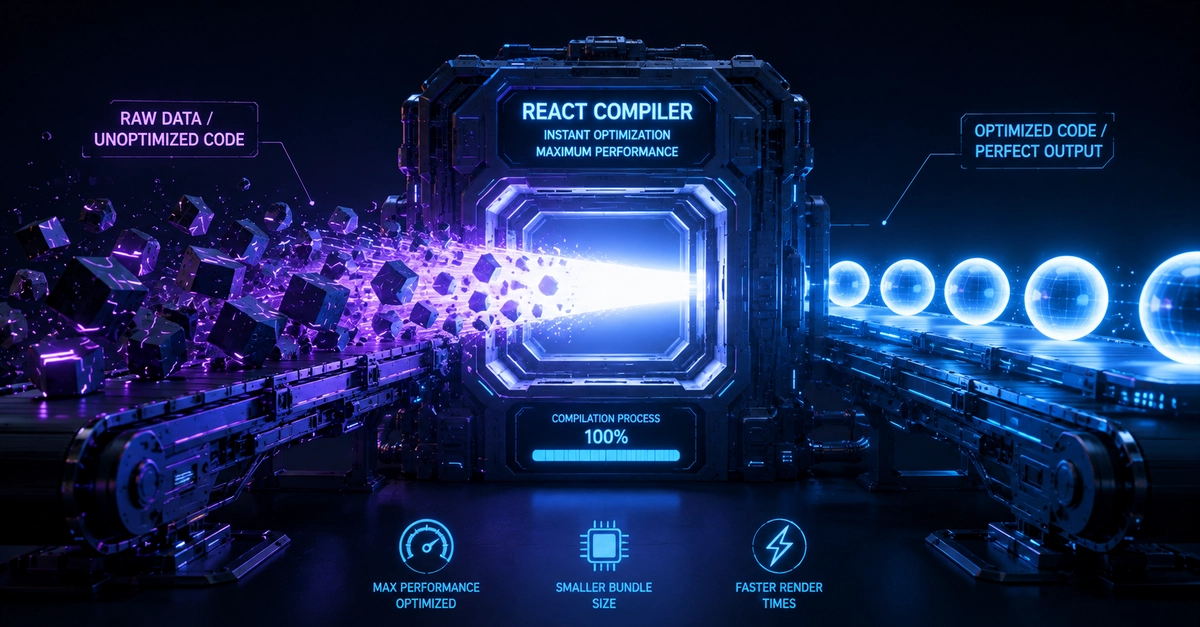
The Exhausting Re-Render Crisis
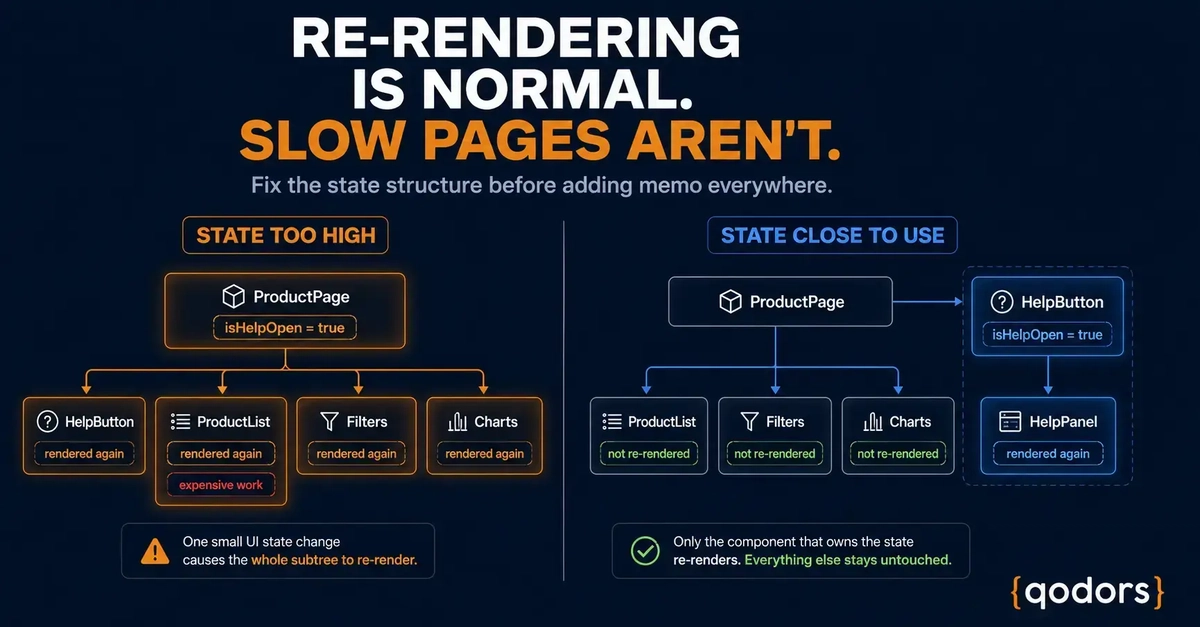
For the past decade, building highly interactive React applications has been a delicate balancing act. React’s core architecture dictates that when a component's state or props change, that component—and every single one of its nested child components—must re-render. While React's Virtual DOM makes this process relatively fast, in massive enterprise dashboards with data grids, interactive charts, and deeply nested UI trees, these cascading re-renders inevitably destroy frontend performance.
To combat this, React provided developers with manual memoization hooks: useMemo, useCallback, and React.memo(). However, these tools introduced a new crisis: the dependency array. Developers were forced to manually track exactly which variables triggered a re-calculation. If you missed a variable, your UI displayed stale data (the infamous "stale closure" bug). If you included an unstable object reference, the memoization silently failed, and the component re-rendered anyway. Codebases became polluted with deeply nested, unreadable memoization wrappers that consumed more developer time than the actual business logic.
At Smart Tech Devs, we are aggressively modernizing our frontend architectures to eliminate this manual toil. With the release of React 19 and the revolutionary React Compiler (formerly React Forget), manual memoization is officially obsolete. The compiler fundamentally shifts performance optimization from a developer responsibility to a build-time automation.