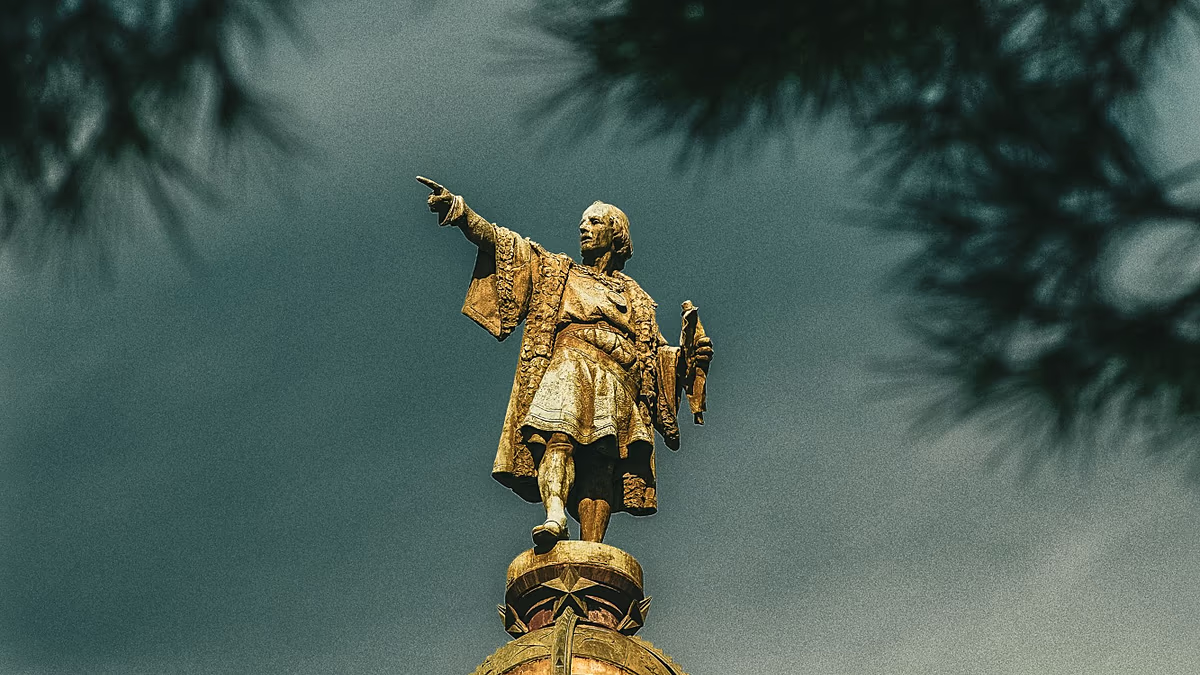
In 1504, Christopher Columbuswas on his fourth voyage to the New World when his ships ran aground off the coast of Jamaica. Spain had already christened it in 1494 as Santiago island, but it was still known by the name given to it by the native people 'Xaymaca' or 'Yamaya', meaning "land of wood and water". The admiral and his crew were stranded, trapped on an island from which they were unable to set sail from.
A dead end in Jamaica
The chief scribe of the voyage, Diego Méndez, tried the only possible solution: to set off by canoe to La Española, in what is now the Dominican Republic, to ask for help from the governor Nicolás de Ovando. It took him five days to get there, but Ovando, who deeply distrusted Columbus, refused to send assistance and kept Méndez back for months. Meanwhile, in Jamaica, the castaways had managed to establish a trading relationship with the indigenous people, who supplied them with food in exchange for trinkets and European tools.
For months the arrangement held, but hope gradually faded. A mutiny broke out among the sailors themselves, which heightened tensions with the islanders. The inhabitants of the island, tired of the conflict and at the end of their tether, decided to stop supplying the Europeans with food. Columbus's crew were on the brink of starving to death.