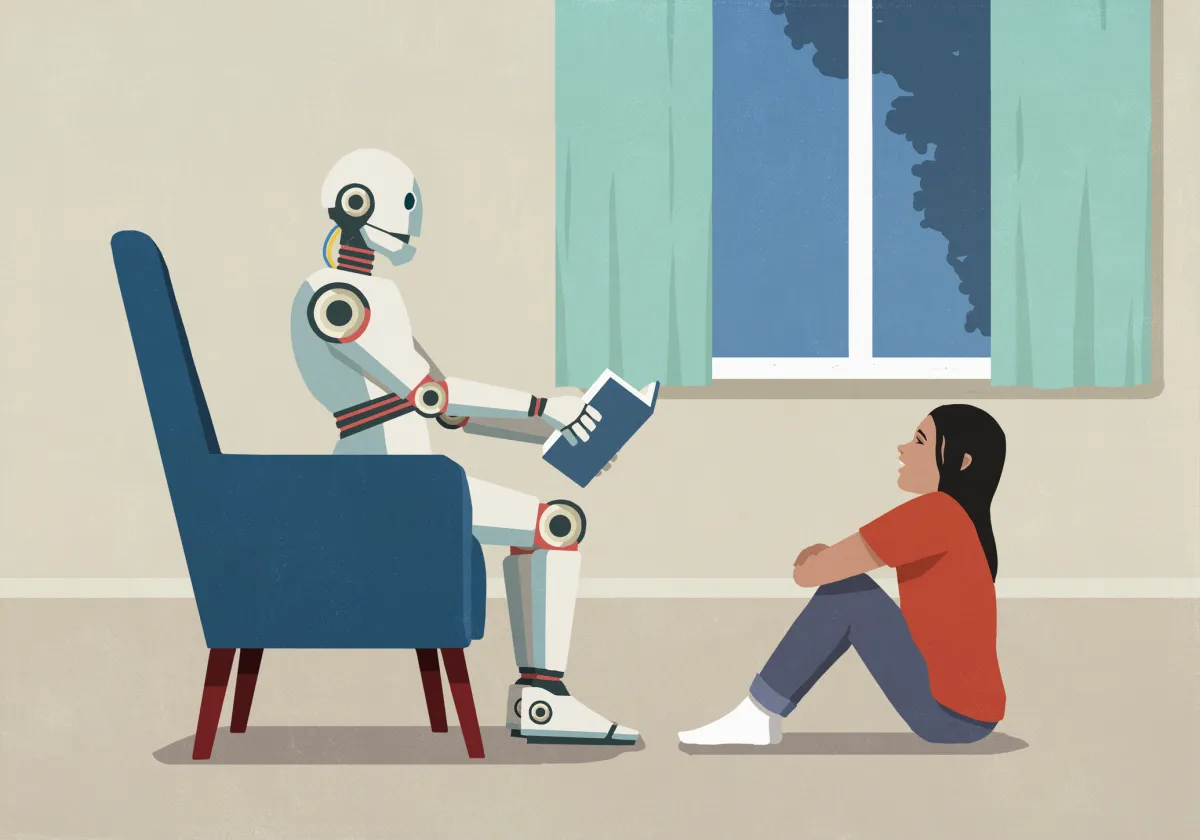
Humans have been telling each other stories for millennia. From fairytales to fables, songlines to oral histories, those stories have long served a purpose: to help make sense of the world, warn of or remember ancient upheavals, instill traditions, teach morals, share culture, create rituals – or simply, to entertain. Lately, the advance of generative AI models that can spin a story from user prompts, using online works as a guide, has revealed and then perpetuated blind spots, shortcomings, and biases in how some stories are told. Now, researchers at the University of Washington (UW) have found that AI not only perpetuates gender biases in children's stories about talking animals, where characters are highly ambiguous, but actually makes those biases worse."Some authors reportedly turn to animal characters to conjure 'universal' subjects who 'transcend' gender, race, or other identity categories, and physical characteristics," UW machine learning researcher Imani Finkley and colleagues explain in their recent conference paper, which has been shared ahead of peer review."Yet, counterintuitively, research shows that gender bias is actually morepronounced in stories about animal characters than in stories about human characters."In other words, paradoxically, human writers project human stereotypes more strongly in animal stories, making them a striking test case for large-language models." The researchers tasked six leading generative AI models with writing stories in English about talking animals whose gender was unstated. They wanted to know how the models would respond, whether AI would avoid gendering the characters, or if biases would still seep through. The findings were pretty bleak. Among 23,800 AI responses, feminine animal characters were "virtually absent", present in just 2 percent of stories. Characters were either described as male (41 percent of stories) or the model avoided assigning gender altogether (57 percent).
'Virtually Absent': AI Models Practically Erase Female Characters From Kids' Stories
Humans have been telling each other stories for millennia.
TL;DRAI
Six LLMs generated female animal characters in only 2% vs 41% male stories—19x amplification over human bias. Models' neutrality to avoid gender bias paradoxically erases non-masculine identities, raising reliability flags for AI used in research, coding, and training systems.
909 words~4 min read