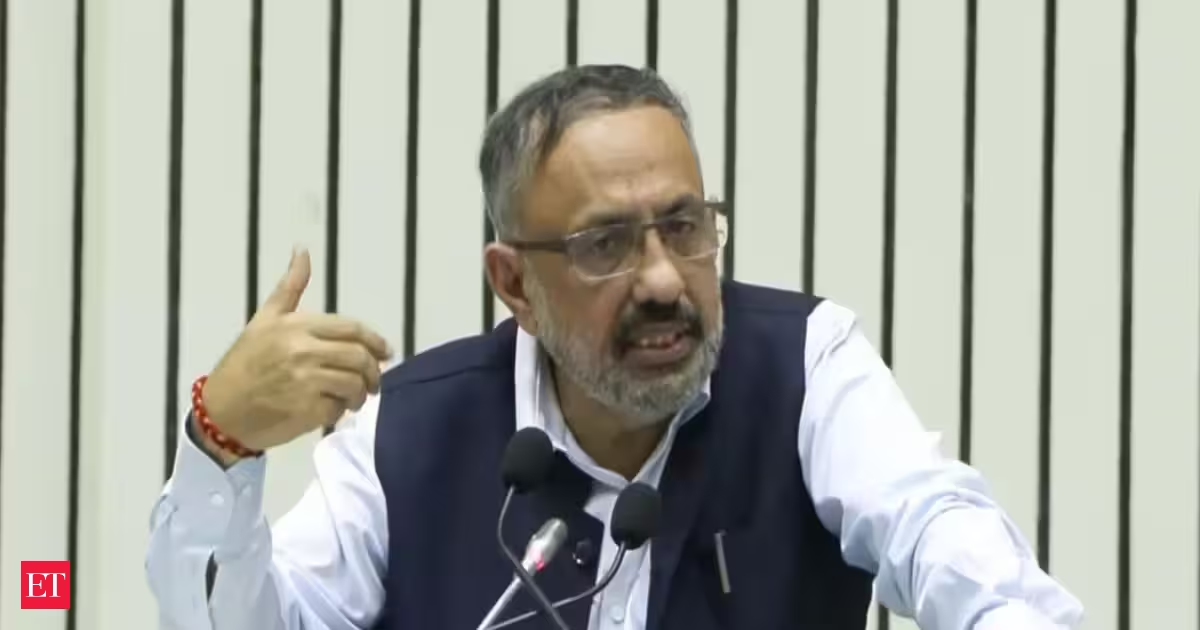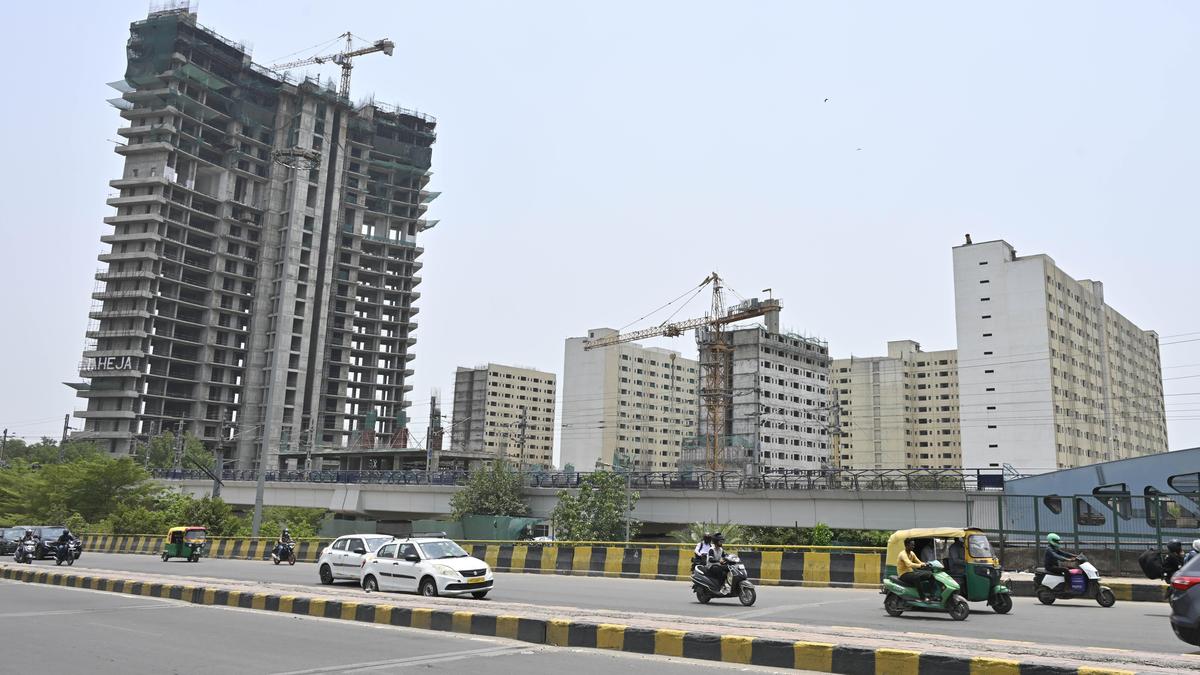
India’s urban housing shortage could be tackled by unlocking nearly 10 million vacant homes and putting excess, utilising vacant land held by public sector undertakings (PSUs) and other government agencies, former cabinet secretary and NITI Aayog member Rajeev Gauba said on Tuesday at a government event on affordable housing.HT Image“Land availability lies at the heart of the problem. Land accounts for a very high percentage—maybe 50, 60, 70% in some cases—of the total housing project cost,” Gauba said, calling for states to waive land-use change fees and exempt stamp duty for land and transactions linked to affordable housing.India’s urban population is projected to rise from 500 million currently to nearly 900 million by 2050, while the country faces a deficit of 50 to 70 million formal housing units across municipal areas, Gauba said. He said the high cost of land was making affordable housing difficult to deliver, with registration charges alone able to add 5-10% to transaction costs.He called on state and central PSUs, along with other government entities, to identify and recycle their excess, unutilised landholdings for affordable housing. Gauba cited South Korea’s dedicated zoning and Singapore’s public housing as examples of approaches that locate housing close to transit networks, job centres and social infrastructure.But Gauba said increasing home ownership alone would not address the housing needs of a growing urban workforce. “Ownership is not the only housing solution,” he said, pointing to migrant workers, industrial labourers, students and young professionals. “They often need secure and affordable rental housing located close to workplaces”.He highlighted what he called the “anomaly of vacant housing”, saying nearly 10 million urban housing units remain locked because of fear of tenants overstaying and litigation which leads to owners to keep their houses locked rather than renting them.Gauba urged states to adopt the Model Tenancy Act to address these concerns and called on MoHUA to nudge states to adopt it by linking adherence towards funding for central schemes.Delhi TOD policy reserves 65% of FAR for affordable housingDelhi’s amended transit-oriented development (TOD) policy will reserve 65% of floor area ratio (FAR) for affordable housing, while reducing parking provisions and capping ground coverage at 40% to discourage private vehicle use, Delhi Development Authority (DDA) TOD committee secretary Manjula Paul said at a separate session.“65% of FAR is actually kept mandated for creating affordable housing units which are less than 100 square meter built-up area,” Paul said.The policy allows TOD development within 500 metres on either side of metro corridors and within a 500-metre radius of regional-level connectivity nodes such as railway and RRTS stations. It is envisaged to open up around 207-210 sq km for planned development and create around 18 lakh affordable housing dwelling units, Paul said.“The basic objective of this TOD policy is to drive sustainable and livable communities and self-sufficient communities along the metro corridor,” she said.The remaining FAR includes 10% for commercial and neighbourhood facilities and 25% for office spaces, studio apartments and larger dwelling units, according to Paul. Public and semi-public facilities such as hospitals, dispensaries and schools can also avail higher FAR under the TOD provisions.The policy requires a minimum 2,000 sq metre plot along an 18-metre road, with a base FAR of 400 that can go up to 500.The reduced parking provisions and 40% ground-coverage cap are intended to shift mobility towards public transport. “Reduced parking has been adopted to disincentivise the private vehicle dependence mobility which is there in Delhi and to incentivise a shift towards modal shift towards the public transport,” Paul said.
Land reforms could boost affordable housing: NITI Aayog’s Gauba
India’s urban housing shortage could be tackled by unlocking nearly 10 million vacant homes and putting excess, utilising vacant land held by public sector undertakings (PSUs) and other government agencies, former cabinet secretary and NITI Aayog member Rajeev Gauba said on Tuesday at a government event on affordable housing | India News
585 words~3 min read