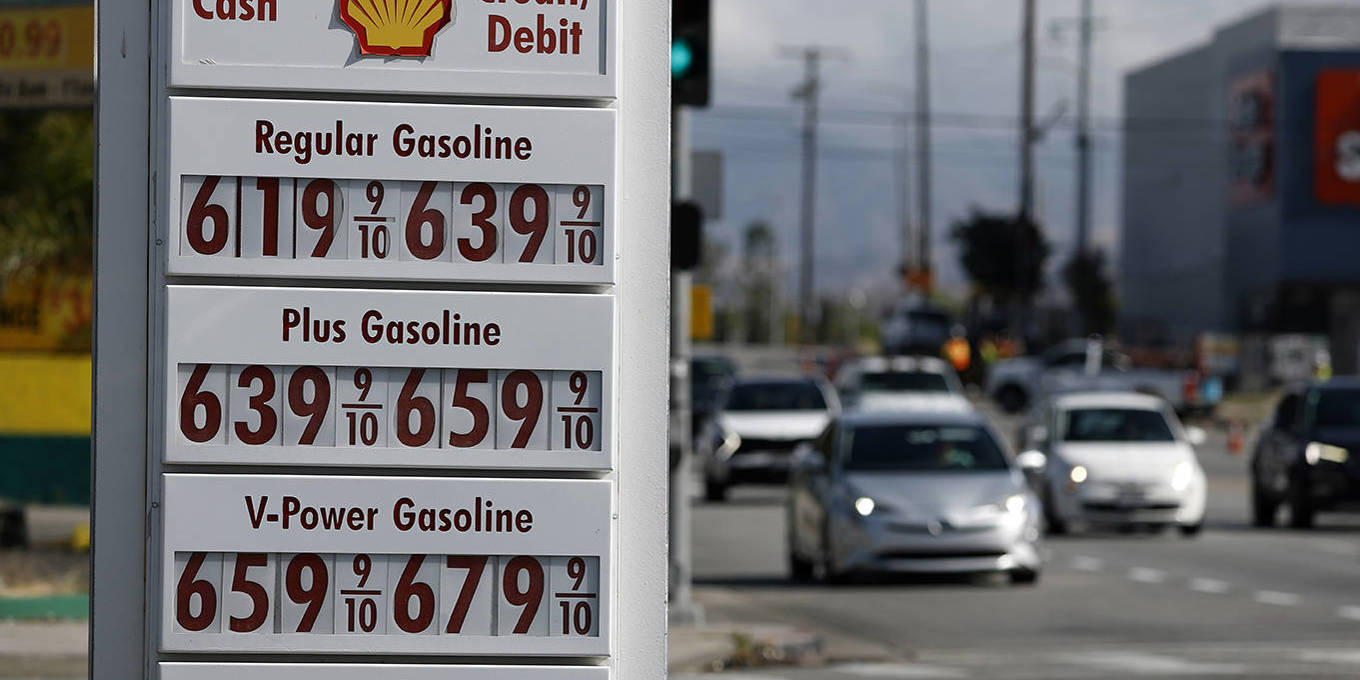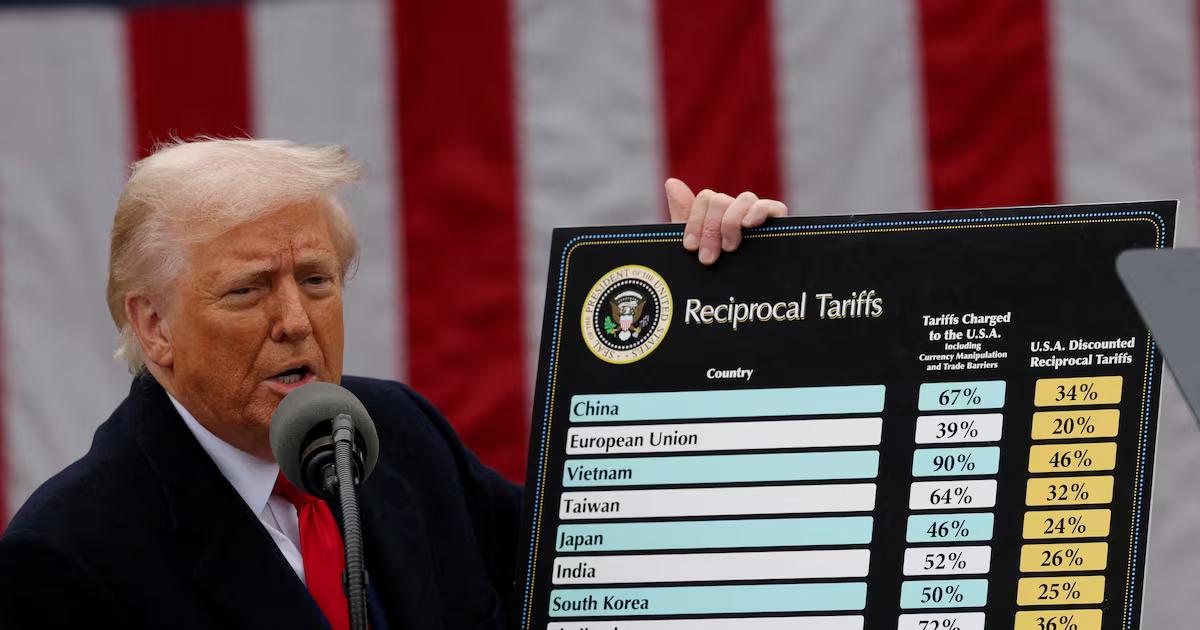
James Carville, former US president Bill Clinton’s political adviser, famously said of elections: “It’s the economy, stupid.”If Carville’s view remains correct, Donald Trump is headed for a shellacking in this November’s midterm congressional elections. That would render Trump a lame duck for the rest of his presidency. By the same token, if the Democrats allow their radical leftward shift and internal divisions to let Trump win in November, it will be a classic case of grabbing electoral defeat from the jaws of victory.After having won his second term as president on an economic platform, Trump has little to show in terms of economic achievements. Inflation is higher than the level he inherited from Joe Biden, wages have not kept pace with inflation, economic growth has been lower than under Biden, the trade deficit remains very large, and manufacturing employment has continued to decline.Meanwhile, Trump’s reckless budget policy has put the country’s public debt on a clearly unsustainable path, and his chaotic import tariff policy has caused much economic uncertainty. Little wonder then that two thirds of Americans have a negative view of Trump’s handling of the economy.The question of affordability is Trump’s key electoral vulnerability. In his presidential campaign he promised not simply to reduce inflation but to bring down the price level. Yet by the time November rolls around, the US price level will be about 7% higher than when Trump began his second term, and inflation will be running at 4%. That would be higher than the 3% inflation rate Biden left him.Worse yet for Trump, the electorate is blaming his Iran war of choice for the spike in petrol prices from below $3 a gallon (R12.81/l) when he started his second term to over $4 a gallon (R17.18/l) now. The electorate is also unhappy with high mortgage rates, as yields of long-dated US Treasury bonds have risen to their highest level since 2007. Nor are 20-million American households happy about their loss of health insurance because of Trump’s One Big Beautiful Bill Act.Another of Trump’s bold election campaign promises was to usher in a golden economic age through economic deregulation and lower taxes. Yet 18 months later the US economy has grown at barely 2% a year. That is lower than the 2.75% achieved in Biden’s last three years in office. Making this performance even more disappointing is that the US economy has been benefiting from a strong tailwind from the once-in-a-generation AI revolution. Outside the AI sector, US investment has stagnated due to much uncertainty generated by Trump’s chaotic tariff policy.An important fallout from a slowly growing US economy is that wages have not kept up with inflation. This means most of the American electorate will feel worse off now than they were when Trump began his second term. This has been reflected in a general decline in consumer confidence over the past 18 months.Another area where Trump has failed to deliver on his promises is eliminating the US trade deficit and increasing manufacturing employment. Despite having raised import tariffs to their highest level in 100 years, the US trade deficit — at an annual rate of about $700bn in the first half of this year — is little changed from when Trump started his second term. Meanwhile, far from increasing, manufacturing employment has declined by about 80,000 jobs.The disappointing US trade performance is hardly surprising given the large budget deficit the US continues to run. According to the Congressional Budget Office the US budget deficit is on track to exceed 6% of GDP as far as the eye can see. This makes it highly unlikely that Trump will make any real progress in reducing the trade deficit in the rest of his term as the budget deficit continues to drain the country’s savings.Electorally vulnerable as Trump might be to unfulfilled economic promises and a highly unpopular Middle Eastern war, all is not yet lost for him in the midterm election. By running a series of candidates from the far left and squabbling among themselves, the Democrats appear to be giving Trump an opening to portray them as a party not in sync with a mostly middle-of-the-road electorate. Yet, Trump has a big mountain to climb to maintain his party’s congressional majority considering how miserably he has failed to deliver on his economic promises.• Lachman, a former deputy director in the IMF’s policy development & review department and chief emerging market economic strategist at Salomon Smith Barney, is a senior fellow at the American Enterprise Institute.Business Day
DESMOND LACHMAN | Trump faces midterm reckoning as economic promises go unfulfilled
The US president’s economic record leaves him vulnerable ahead of November’s midterm elections
751 words~3 min read