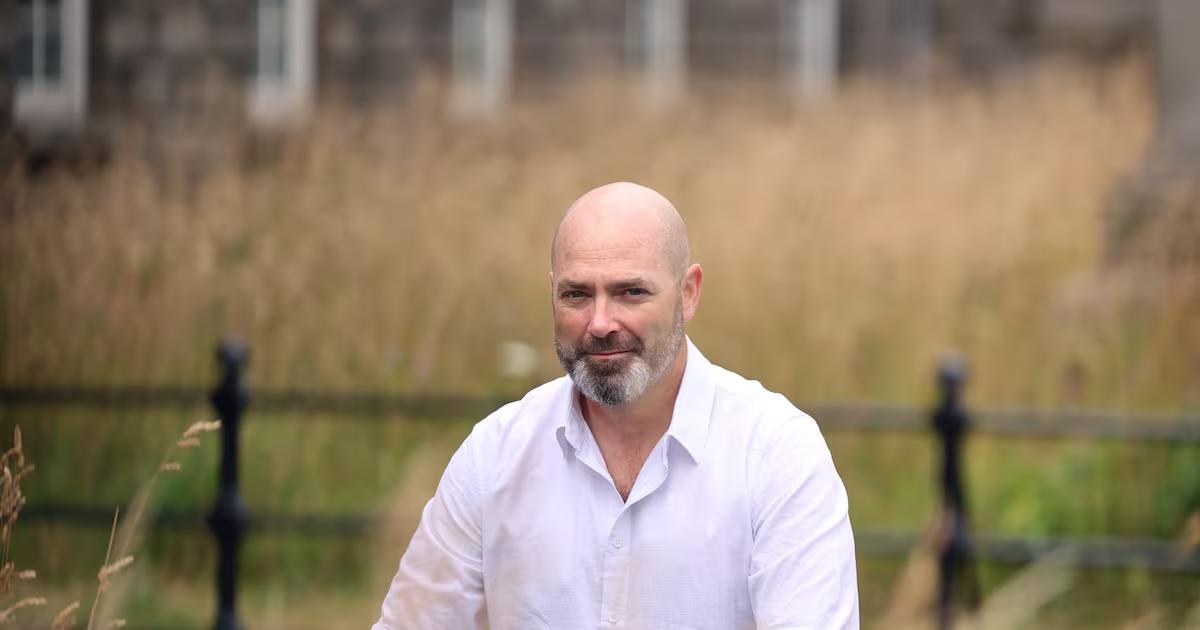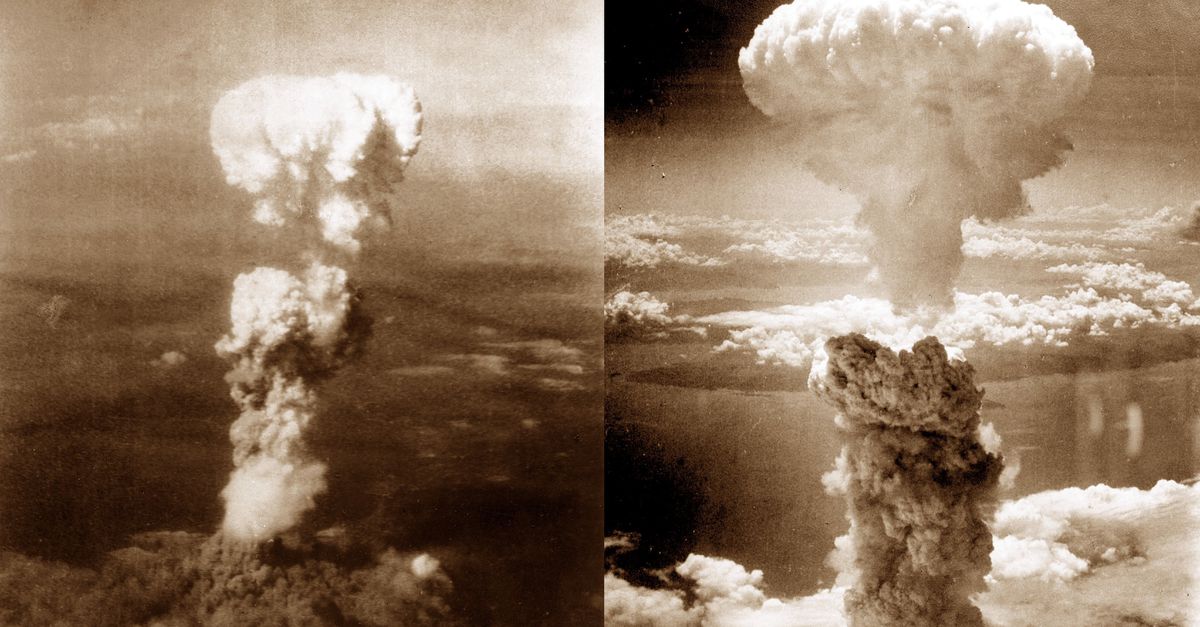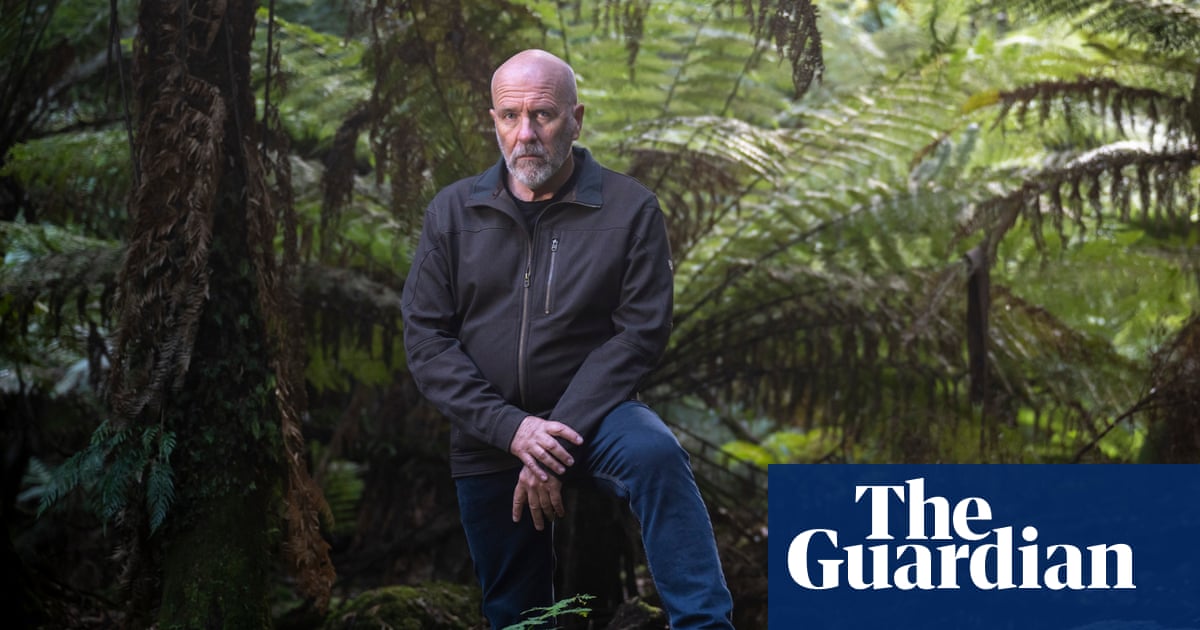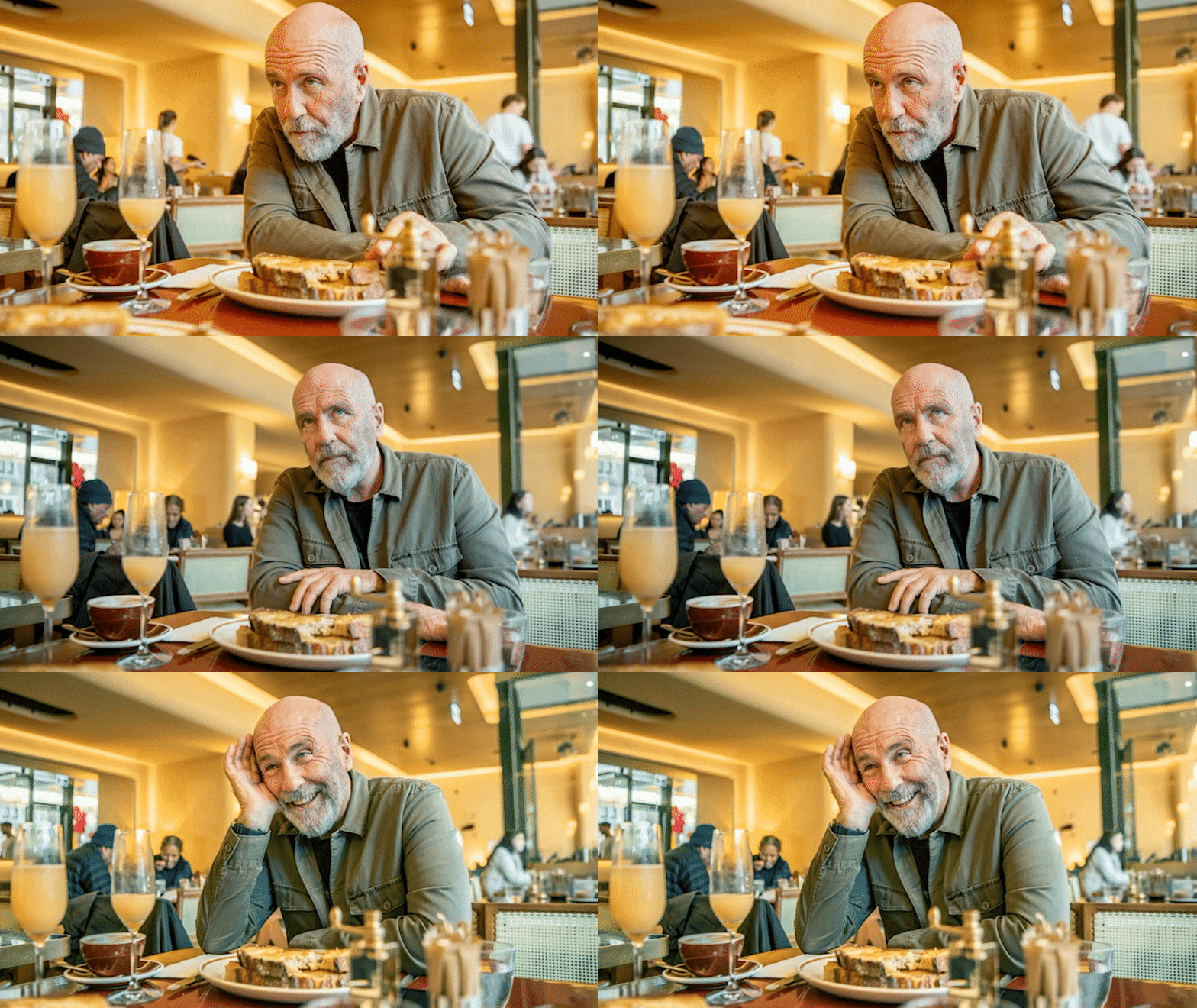
A prime corner window seat has been reserved. The surrounding tables stand empty and the staff are prepped, with extra pairs of hands put on to ensure the dishes arrive just so. There is a whiff of excitement about Richard Flanagan’s impending visit. The words “national treasure” have even been thrown around.When the Tasmanian writer chooses Bills in Surry Hills for our brunch during a trip to Sydney, naturally, I assume it’s for the ricotta hotcakes. Those great pillowy things oozing with banana and honeycomb butter, they’re the famous dish that helped the late Bill Granger export the Australian idea of brunch to the world. Oprah, no less, came back for them two days running when she was in Australia last year.Praise be the small, intimate insights this interview format affords! A sweet tooth for this great man of Australian letters. The Booker Prize-winning author of The Narrow Road to the Deep North must look forward to these $33 pancakes whenever he comes to Sydney. Perhaps they are a consolation for leaving his writing shack on the remote island of Bruny. A modest pleasure tucked into the routines of a serious literary life.Richard Flanagan usually skips breakfast, preferring to eat later in the day. Steven SiewertBut Flanagan passes over the corn fritters with roast tomato and avocado salsa, the hot smoked trout with shiso and saltbush furikake, the perilla oil labneh and caraway pickled beetroot – all the whipped this and fermented that. Each dish, he observes, is a “sort of thesis”.The pancake theory collapses almost immediately. Somewhat hesitatingly, Flanagan confesses: his usual here is toast and marmalade.“I always think I should have the pancakes,” he says. “I’ve never had them. I usually just have toast and marmalade, would you believe? You’ve got all these readers, they’ll go, ‘he had toast and marmalade?’”He generally doesn’t even eat until midday. “Once you eat, you lose your energy. A lot of writers will not eat in the morning much and then have a small lunch. Once you eat a lot, your energy drops, particularly now I’m aged.”So why Bills? When Flanagan comes to Sydney he stays at a hotel nearby, a favourite because, unusually, the windows open. He wanders into Bills for a long black, and the staff are always lovely to him. Which leaves Flanagan feeling somewhat guilty for not giving the full splendour of Bills a chance to be put on show. I match the Paddington Bear vibe and opt for the toast with strawberry jam; one must not, after all, break bread alone.We do, however, get considerable mileage out of watching our multiple Walkley Award-winning photographer Steven Siewert attempt to artfully capture a plate of toast, while kind staff offer to bring out supporting dishes so the spread looks a little less like prison rations.Iggy’s flavourful sourdough toast with marmalade and butter (and an optional dish of Oomite). Steven SiewertHe has, we agree, committed a Bills brunch heresy – narratively convenient given Heresies is the name of his new collection of essays. Can you be a national treasure – as he was, at least once, called at Bills – and a heretic at the same time?“There’s a history of burning national treasures, isn’t there?” he says, glint in those blue eyes. You become one a century later, “normally after the stake and the pyre”. He’s never heard himself called one before. His canonisers at Bills, he jokes, must have been relying on good photos.But it’s not all sourdough; there is some sweet. Quince bellinis – poached quince and prosecco – are ordered with the relish of a “f--k it, let’s go, let’s have a drink”.Breakfast bellinis in hand, Flanagan is a great conversationalist, possessed of the sort of Rhodes Scholar, Oxford-educated learnedness that makes you regret the intellectual energy you’ve devoted to the latest book world drama over whether Rachel Cusk’s new novel is really about Natalie Portman. We roam from his experiments with AI (“sliced white bread for the mind”) to the book currently in his suitcase, Emmanuel Carrère on Philip K. Dick, and Maïa Hruska’s Kafkaesque, which he recommends I read. It’s never one-sided; he asks as many questions as he answers. There are Albert Camus’ notebooks, Tolstoy’s celibacy pamphlet, Eric Vuillard on Hitler and Yuri Herrera and Latin American fiction. There’s a now very senior Australian politician ripping him on the phone after an essay he published, at least 30 minutes of top-notch literary gossip which he tactfully declares “off the record”, and the history of Oomite (another possible spread option for our toast).The last time I interviewed Flanagan was for Question 7, his 2023 book that went on to win the Baillie Gifford Prize, although he declined the $100,000 prize money because of the sponsor’s investments in fossil fuels. It was a remarkable work of non-fiction – somewhat reductively called a memoir – about how one event opens onto another until, somehow, remarkably, a life takes shape. It flowed between his father’s survival as a prisoner of war, the atomic bomb, his childhood in Tasmania and his own near-drowning on the Franklin River, showing how events separated by decades and continents came to bear on his own existence. There was a sense of finality to the book, as though Flanagan was weaving together all the threads of his life’s preoccupations into a monumental tapestry that would hang on the walls if he was no longer there.At the time, Flanagan said it was his most important book and after completing it the urge to write had, for the first time, disappeared. In its place was what he described as a “great silence”, something he had never experienced before, which left him unsure whether he would ever write another book.“Once upon a time with interviews I’d try and say what I thought I should, what I was expected to say. And then I realised that was dishonest without meaning to be, so I said the truth, which was I don’t feel like I’ll write again, which is what it was,” he says now.But what he didn’t fully explain to me then was why. Now he does.Flanagan had been given what he calls a “tragicomic diagnosis” of early-onset dementia and told he had 12 months to get his affairs in order. Question 7 was the book he felt he had to write in the time he believed he had left, and he wrote it thinking it would be his last.“I didn’t feel anger, no, I felt fear,” Flanagan explains. “I mean, you have your run around the oval and yeah, that’s that, isn’t it? I’ve had close friends die. I guess I felt a certain fear. But above all I felt ... I mean, you don’t feel one thing, you feel many things and the many things became that book that was Question 7. I just wanted to sing that world into being, that was really it. And the goodness of it, you know?“I mean we all come from unique worlds but we always assume that we come from the same world. I don’t know the world you’re from, but it would be unique and extraordinary, and so in that book I wanted to explain the world I came from which I thought was really special.”I mean, you have your run around the oval and yeah, that’s that, isn’t it?Once the manuscript was finished, Flanagan sent it to his publisher of nearly 30 years, Nikki Christer at Penguin Random House, with a question: did it show signs of cognitive collapse? Her response, after reading it, was laughter. He felt oddly reassured.He lived with the diagnosis for a year before returning for fresh MRIs where he discovered that “the radiologist’s initial report had got it wrong. So I didn’t have it. It was a misdiagnosis”.Flanagan says he doesn’t like “the personal coming into things”, which was partly why he was reluctant to discuss the experience at the time. Some of that reluctance remains. When I wonder what it must have been like to live for a year with that knowledge, he seems almost intent on keeping the theatrics of it at bay. “It’s a small thing because nothing happened, you know?”A sense of serenity and deep gratitude, he says, followed the all-clear. Plus, an appreciation for what the experience revealed. “And really that’s the point of the book, like it’s how beautiful it is to be alive and to know these things and to hold these memories,” he says.“And so once I was given the all-clear, I was just so happy to be with my friends, to be out in a day like today. To see birds, feel the wind on my face, to be with my family. That was all so exquisitely sweet for me.“I don’t share the despair of the age. For all its problems, it’s a beautiful world, and it’s still full of hope. There’s goodness and kindness everywhere you look. We have our phones, we’re filled with the worst of us and it’s all true. But it was true in 1914. It was true in 1939. But there is the other truth of our own worlds and we should honour that more.”Richard Flanagan after winning the Booker Prize in 2014.AFPThere is something of that argument in Heresies, Flanagan’s new collection of essays and speeches written across two decades. The subjects roam from Manus Island and climate change to literature and writers’ festivals, but running through them is a concern about the pressure to conform: through law, institutional caution, online outrage and, perhaps most dangerously, the fact that “the new censors are not the state or state bodies. They are us”. For Flanagan, the writer has a particular responsibility in the face of that pressure – to commit heresy. Heresy, he says, “allows a writer to write freely, allows writing to be an act of joy that arises from the same deep place where laughter lives, countering the farce of dogma with the reality of life”.“The older I’ve got, the more I’ve been struck by how conformist we are,” Flanagan says. “How in other cultures it’s not just accepted but expected that artists would think differently ... I can’t think of a country where artists are held in such low repute.“Art always rubs against the grain and art says the unsayable and so in consequence, if you’re doing your job properly, inevitably you do come to be seen to be propounding heresies.”Twenty years of essays also capture how the inquisitions change. In one, Flanagan criticises the Brisbane Writers Festival for its response to Lionel Shriver’s speech on cultural appropriation, during which she wore a sombrero, defending her right to make the argument even as the backlash grew.A decade later, his piece on the collapse of this year’s Adelaide Writers’ Week shows some reason to hope. After Palestinian-Australian writer Randa Abdel-Fattah was removed from the program, hundreds of writers withdrew and the event was cancelled.“There was a line about free speech that politicians were willing to just trample over for political expediency,” he says. “And writers who almost all have nothing but for whom that’s an important thing, they held a line and it was a really important line for us as a nation. I think it really signalled something very powerful.”Toast and Bellinis, the breakfast of champions.The same battle is now playing out in many cultural institutions. He sees the University of Queensland Press’s recent pulping of a children’s book over an online essay about the Bondi Beach shooting written by its illustrator as an example of what happens when institutions become bound by political definitions, and an artist’s personal views become inseparable from their work. The university referred to “its adopted definition of antisemitism” in explaining the decision.“I think it points to the monstrosity of adopting the IHRA [The International Holocaust Remembrance Alliance] definition of antisemitism,” Flanagan says. “I’ve read the essay, if you can call it that. It is stupid and offensive, but it has nothing to do with the illustrations he did for that book It’s a tragedy for UQP, which has been such an important force in Australian literature.”But the most effective censor, he argues, may now be inside us. “I think the worst silencing is the internal,” he says, when people absorb the boundaries until “there’s whole areas of human experience that it’s forbidden to speak of”. Writers, he argues, must “write ourselves out of the literature of silence”.After a year spent believing he might never write again, Flanagan’s own great silence has lifted. He now has three short novels under way, all “very different” from his previous works, with one set to be published in late 2027.“All I ever wanted to do was sit at the table and daydream,” he says. “I was very fortunate that I’m still allowed to do it.”Richard Flanagan’s Heresies is out now. He will appear at Sydney’s Festival of Dangerous Ideas on August 22.
Richard Flanagan on why he thought he might never write again
A shock diagnosis gave the Booker Prize winner 12 months to get his affairs in order.
2,149 words~10 min read