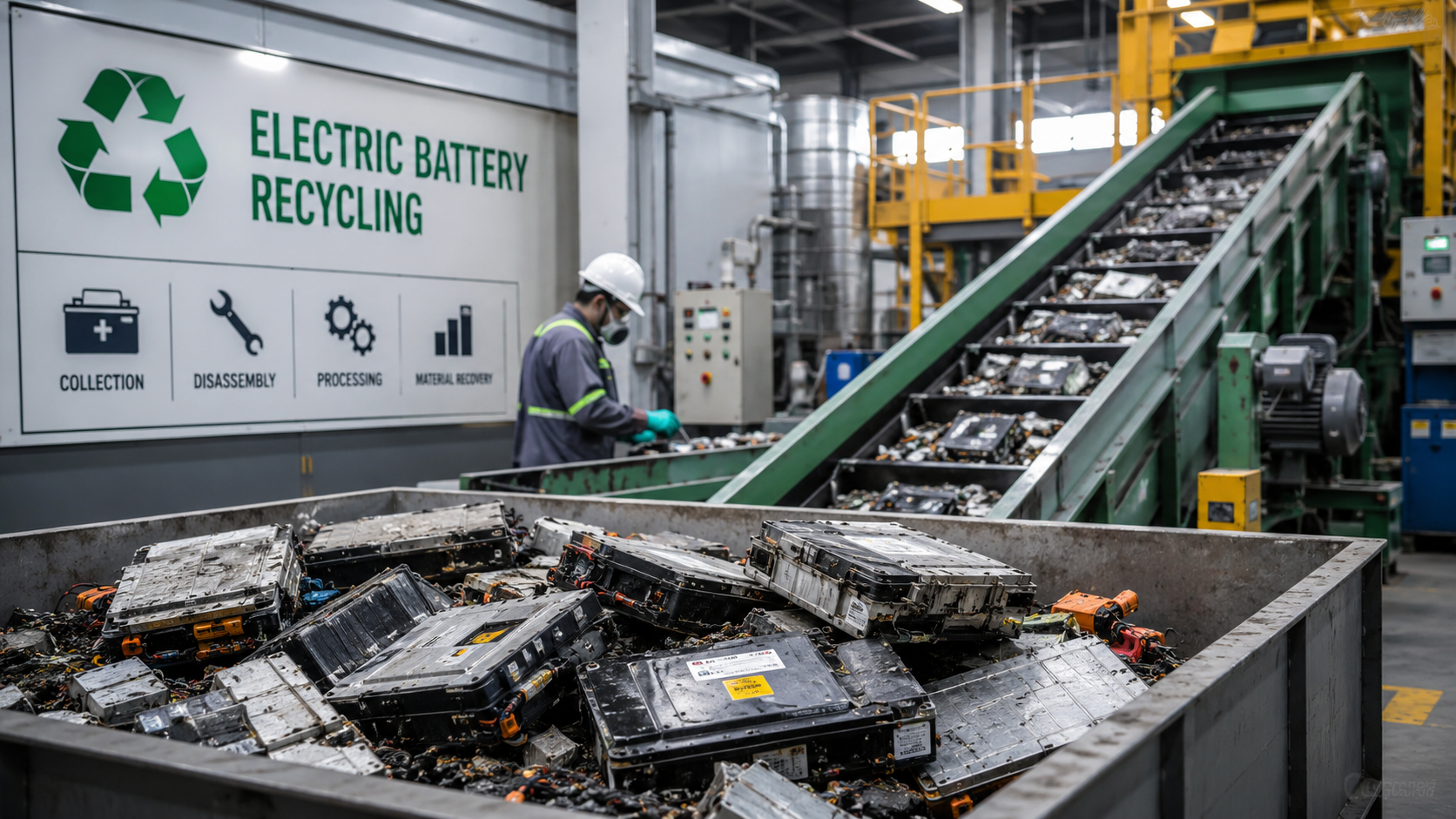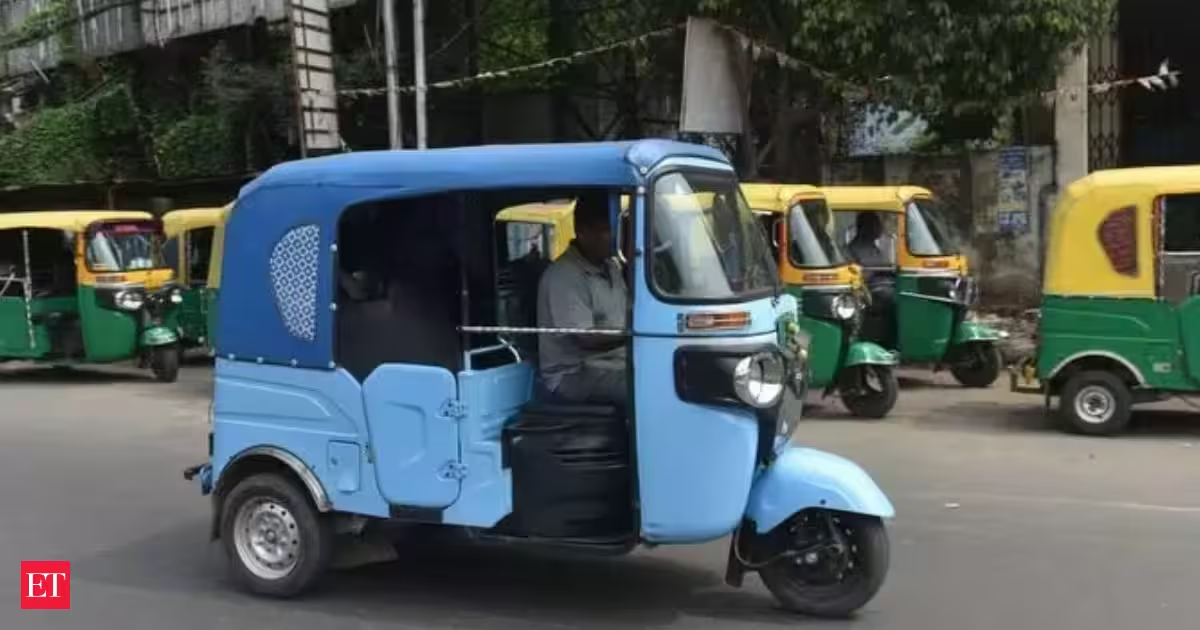
India’s electric mobility transition is gathering momentum. Electric vehicle adoption is rising, manufacturing investments are expanding, and policy support continues to strengthen. Meanwhile, circular economy principles are becoming increasingly embedded in India’s sustainability and industrial policy frameworks. Yet, circularity is not a single action — it is built on a hierarchy that prioritises reducing resource consumption, reusing existing assets, and recycling materials only when products have genuinely reached the end of their useful life.India’s policy framework has made important progress on the recycling dimension of this hierarchy. The Motor Vehicles (Registration and Functions of Vehicle Scrapping Facility) Rules, 2021, and the Environment Protection (End of Life Vehicles) Rules, 2025, have strengthened the framework for responsible vehicle recycling and material recovery. As of January 2026, 129 Registered Vehicle Scrapping Facilities were operational across 21 States and Union Territories, and 4.3 lakh vehicles had been processed through them. This represents important progress in building a formal ecosystem for vehicle recycling and resource recovery.However, circularity is not only about managing waste after it is created, but equally about preserving value before assets become waste. That’s why the principle of reuse deserves greater attention within India’s electric mobility transition.India has one of the world’s largest vehicle populations. As the country pursues transport electrification, the challenge is not only how many new electric vehicles can be sold, but also how existing vehicles can be integrated into the transition in the most resource-efficient manner. An effective scrappage policy is essential for removing vehicles that have genuinely reached the end of their useful lives. Yet, treating every ageing vehicle as a candidate for disposal risks overlooking a significant opportunity to extend asset life while simultaneously accelerating electrification.Vehicle retrofitment offers one such pathway. By replacing the internal combustion engine, fuel system, and related components of an existing vehicle with an electric powertrain, and retaining the core vehicle structure, retrofitment enables the continued use of assets that remain structurally sound. In circular economy terms, it is a practical expression of reuse. Rather than recovering value only after a vehicle becomes waste, retrofitment preserves and extends the value already embedded in the asset.The distinction is important. Recycling recovers materials. Reuse preserves functionality.The significance of retrofittingA vehicle can be old yet structurally sound. It can have a polluting engine while retaining a strong chassis, intact body, and years of potential service life remaining. In such cases, retrofitting the vehicle to electric powertrain through certified technology becomes the more circular option than scrapping. This is not a competing strategy to scrappage. It is the missing middle path that policy has not focused on yet.The environmental mathematics underscore why this distinction matters. A single two-wheeler generates approximately 90 kilograms of material for recycling and 18 kilograms of landfill waste when scrapped. Scaled across India’s vehicle fleet of approximately 30 crore vehicles, a scrap-first approach would generate 2.7 crore tonnes of recyclable material alone, in addition to generating 0.54 crore tonnes of landfill waste that strains land and environmental resources.Retrofitment mitigates this burden by extending vehicle life where safety permits, thereby reducing both material demand and waste generation. This alignment with UN Sustainable Development Goal no. 12 — responsible consumption and production — is not coincidental. Retrofitment directly supports the call for sustainable consumption patterns, better resource efficiency, and reduced waste.Scrappage contributes to circularity by recovering materials from vehicles that have genuinely reached the end of their useful lives. Retrofitment contributes to circularity by preventing vehicles with structural integrity from reaching that stage prematurely. Both are necessary; the question is which pathway each vehicle follows.A vehicle hierarchy approachPolicy should be designed to treat vehicles based on their condition rather than age alone. A useful starting point is a national vehicle hierarchy framework that distinguishes between three distinct pathways.The first pathway addresses vehicles that remain safe, compliant, and efficient. These should continue operating with routine maintenance. Not every older vehicle is problematic, and age alone should not trigger removal from service.The second pathway is retrofitment, which applies to vehicles with sound structural integrity but ageing, inefficient, or polluting powertrains. These vehicles can be transformed into electric vehicles through certified conversion processes, extending their useful lives while reducing emissions and fossil fuel dependence.In the third pathway, vehicles proceed to scrappage and recycling. It applies exclusively to vehicles with compromised safety, severe structural degradation, accident damage, significant corrosion, or conditions that render continued operation unsafe.Such a hierarchical framework would align India’s mobility transition with genuine circular economy principles. It would recognise that not all vehicles are alike and that policy must distinguish between assets that have exhausted their value and assets that retain substantial utility.The deeper questionIndia’s transport sector transition is not a competition between new EVs and older vehicles. Rather, it is a question about how India approaches resource efficiency during an energy transformation. The circular economy hierarchy exists for a reason. It prevents waste before it is created and recycles only after a product has genuinely reached the end of its useful life. The distinction avoids unnecessary scrappage.If India adopts an age-assessed transition pathway, it would signal that it genuinely understands this circularity principle. It would make scrappage more acceptable because citizens would perceive that older vehicles are not dismissed indiscriminately but assessed for their potential transformation. It would advance authentic circularity.India is emerging as a global leader in energy transition. It can equally lead in how transitions are managed. Not only through waste, but through wisdom. That is not simply sustainability. That is the principle that has made India’s economy resilient across centuries.(Jaideep Saraswat is the Associate Director of the Clean Power, Electric Mobility & Emerging Technologies vertical at Vasudha Foundation, and Ashish Dokania is the CEO of Green Tiger Mobility Private Limited. The authors declare no competing interest.)
The missing ‘reuse’ principle in India’s EV journey
As transport electrification gathers pace in India, there is a need to incorporate existing vehicles into the transition in a resource-efficient manner. Along with an effective scrappage policy, vehicle retrofitment can extend the life of structurally sound vehicles by integrating an electric powertrain
955 words~4 min read