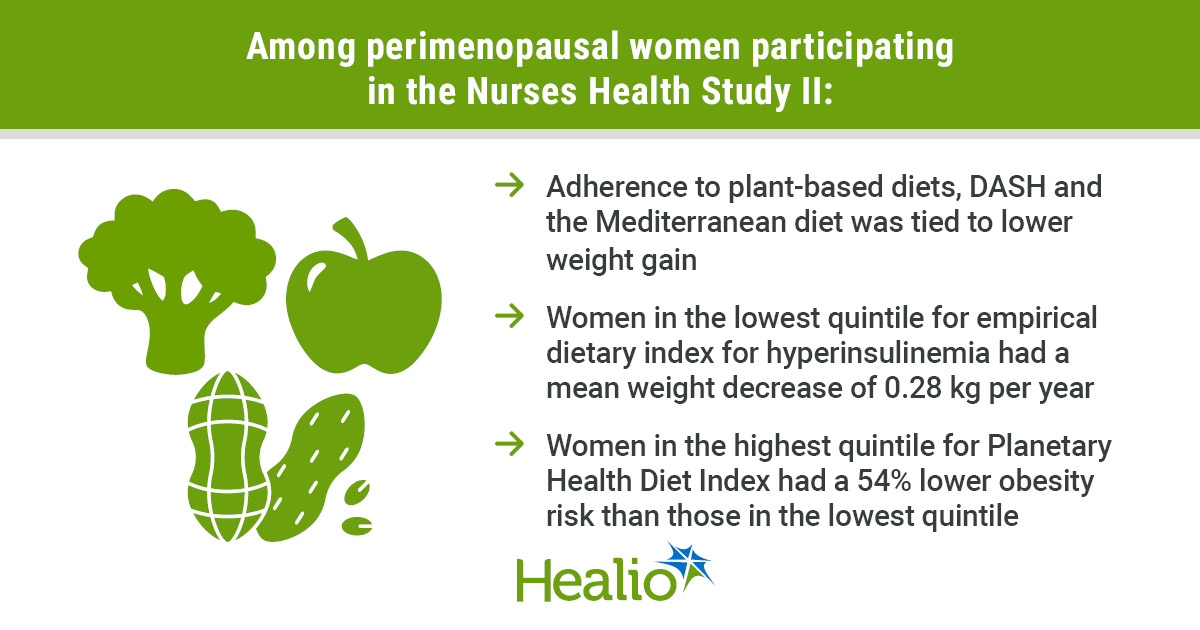
A recent study examining how 11 different diets affect weight gain and obesity during menopause found that two — the Planetary Health Diet and a diet that supports healthy insulin metabolism — are best for weight management.
The research, published in the journal JAMA Network Open, seeks to fill a gap in studies of diet and weight gain involving women around the age of menopause, during which weight gain is common. The researchers, led by Tong Xia, a postdoctoral fellow in epidemiology and nutrition at the Harvard T.H. Chan School of Public Health and the Channing Division of Network Medicine at Harvard Medical School and Brigham and Women’s Hospital, examined the diets of 38,283 women who participated in the Nurses’ Health Study II, a long-running study of the lifestyle habits of registered nurses who were between the ages of 25 and 42 in 1989. As part of the study, the nurses filled out detailed dietary questionnaires every four years. Researchers examined dietary and weight records during the six years before and after menopause.
“Weight gain during menopause is common, but until now we didn’t know which specific diet actually helps most,” Xia said. “Our study is the first to directly compare 11 major dietary patterns, plus ultra-processed food intake, in the same group of women around menopause. What we found is that not all healthy diets are equal — a low-insulinemic diet and the Planetary Health Diet stood out as most effective for managing weight during this transition, giving women and their doctors concrete, evidence-based guidance for a stage of life when few such answers have existed.”