An article from
Dive Brief
A pullback from employment by workers age 65 and older may partly allay concerns that demand for artificial intelligence will fall short of a coming surge in supply.
Published Aug. 11, 2026
Getty Images
A pullback from employment by workers age 65 and older may partly allay concerns that demand for artificial intelligence will fall short of a coming surge in supply.
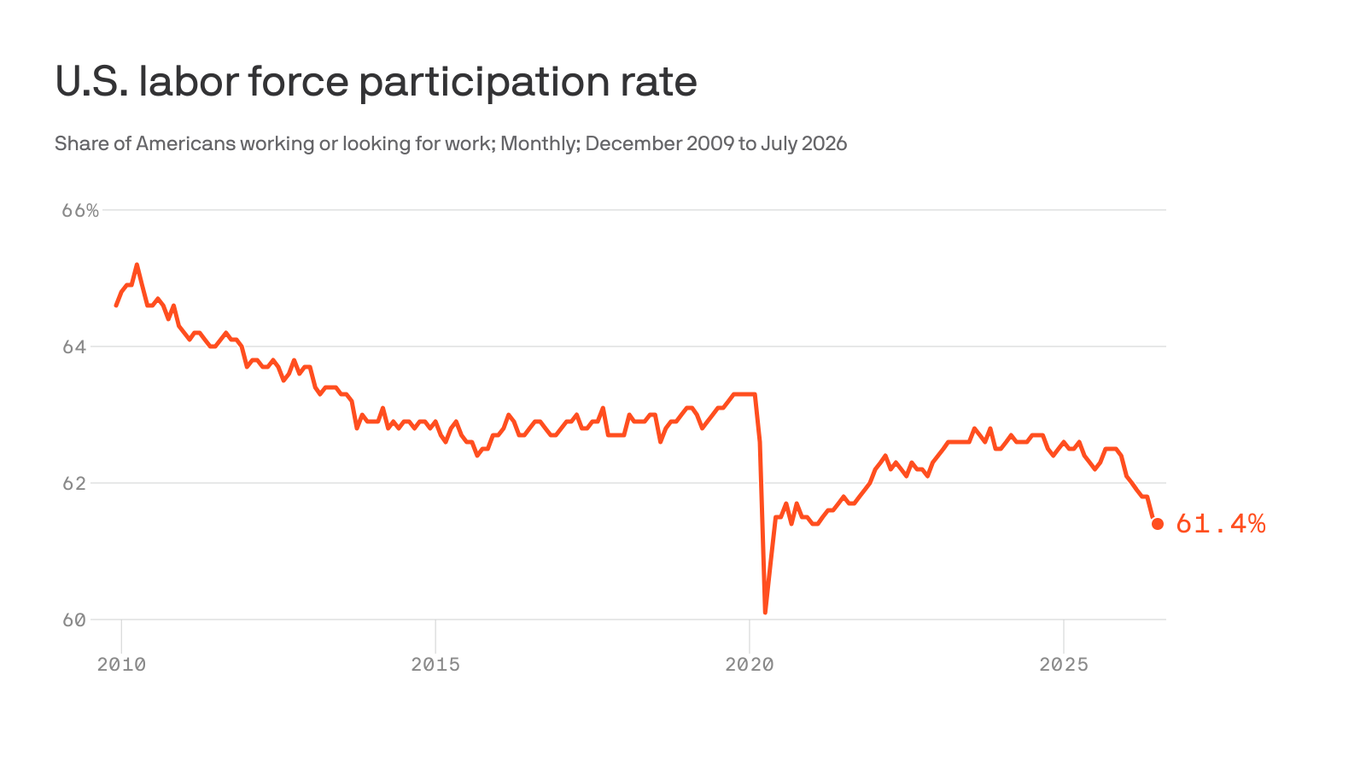
U.S. worker participation 55+ dropped to 36.9% from 38.1% year-over-year—a historic shrinkage forcing AI adoption. At $2.6 trillion in 2026, global AI spending coupled with labor scarcity ensures strong ROI and eliminates oversupply concerns for enterprises.
An article from
Dive Brief
A pullback from employment by workers age 65 and older may partly allay concerns that demand for artificial intelligence will fall short of a coming surge in supply.
Published Aug. 11, 2026
Getty Images

America's labor force will shrink by 6 million workers by 2032. If you're worried about AI taking your job, you're worrying about…

AI may either prompt some older workers to leave their jobs or help make their roles more efficient, research finds. Here's which…

A severe labor shortage is set to emerge over the next decade amid a wave of baby boomer retirements and a shrinking younger…
Artificial intelligence can make up some gaps — but not the ones needed to be bridged the most, Indeed Hiring Lab said.

Over-55s in AI-exposed jobs are exiting work more since ChatGPT, and landing in unemployment, not retirement. Programmers and…

The IT boom of the 2000s didn’t lead to any great and permanent increases in productivity that later led to greater employment