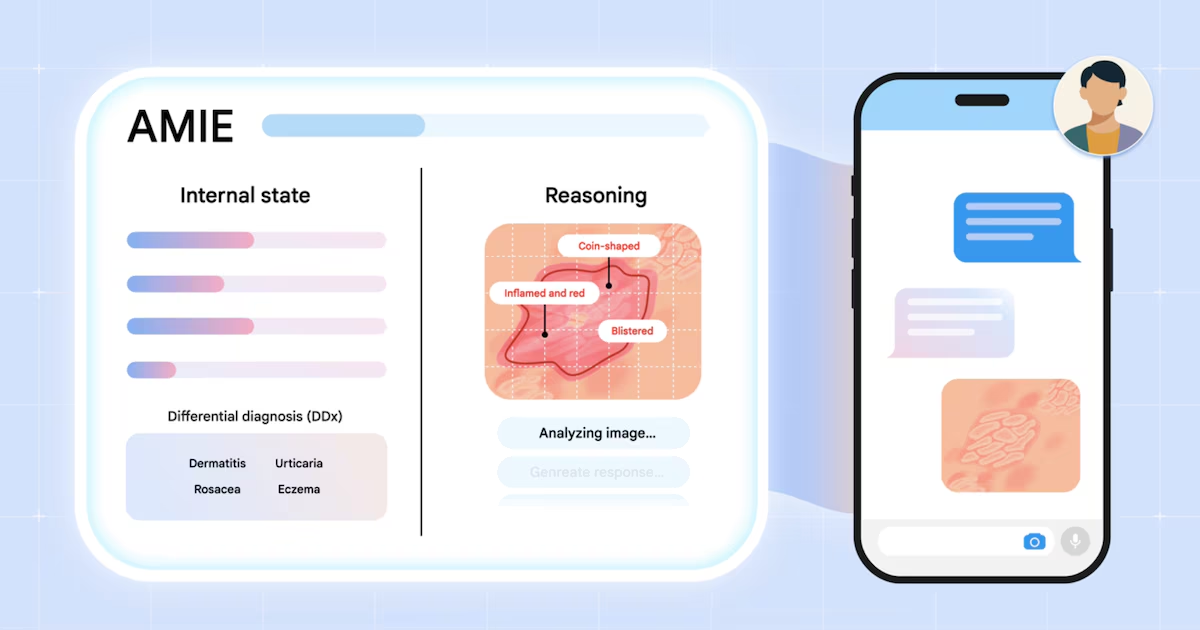
Google’s medical AI system, AMIE, has graduated from typing diagnoses in a chat window to actually watching patients on video and guiding physical exams in real time. What started as a text-based research project two years ago is now conducting supervised telehealth consultations that rival the diagnostic accuracy of primary care physicians.
A feasibility study at Beth Israel Deaconess Medical Center put AMIE through its paces with 100 real patients in an ambulatory clinic setting. The system hit a 90% accuracy rate on differential diagnoses, matching the performance of the human doctors it was benchmarked against. Zero safety interventions were required during the entire deployment.
From chat bot to co-clinician
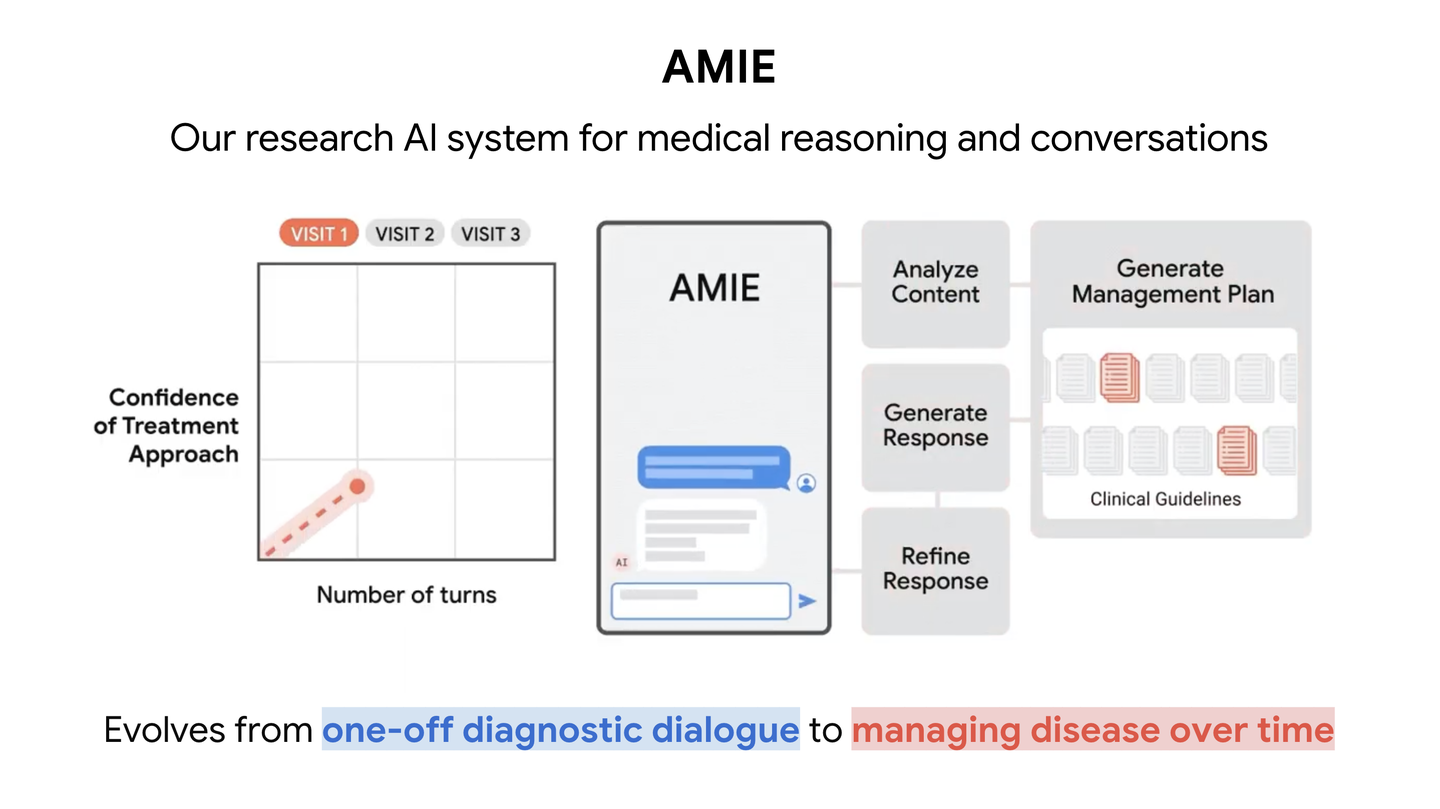
AMIE, short for Articulate Medical Intelligence Explorer, first appeared in a January 2024 Nature paper as a large language model designed for diagnostic dialogue. Think of it as a system trained not just to answer medical questions, but to ask the right ones, systematically working through a patient’s symptoms the way an experienced clinician would during an intake interview.
Built on Google’s Gemini models and its Project Astra framework, AMIE now processes live audio and video feeds during simulated telehealth encounters. Instead of just reading text inputs, it can observe a patient on camera and provide real-time instructions for physical examinations.