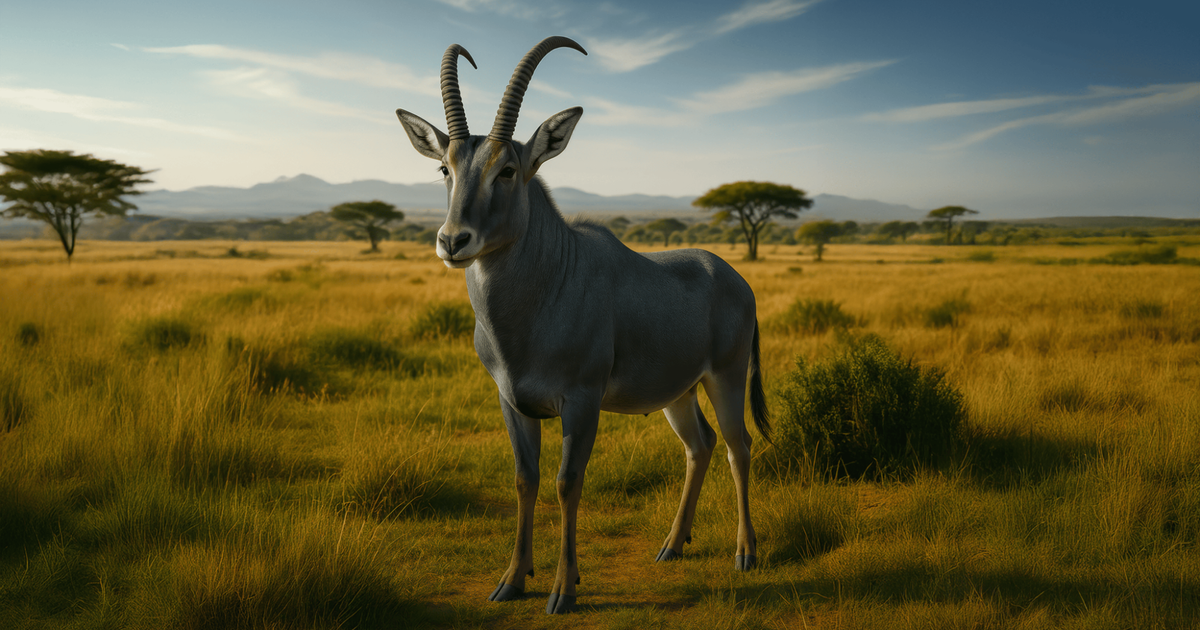
There's no photograph of a living bluebuck. No moving-image footage, no audio recording, nothing that captured how the animal moved or sounded. The last one was killed around 1800, decades before the camera existed. What survives instead is a scattering of fragments: a handful of skins and horns in European museum drawers, a few sketches by people who saw the animal alive, and some early written descriptions.
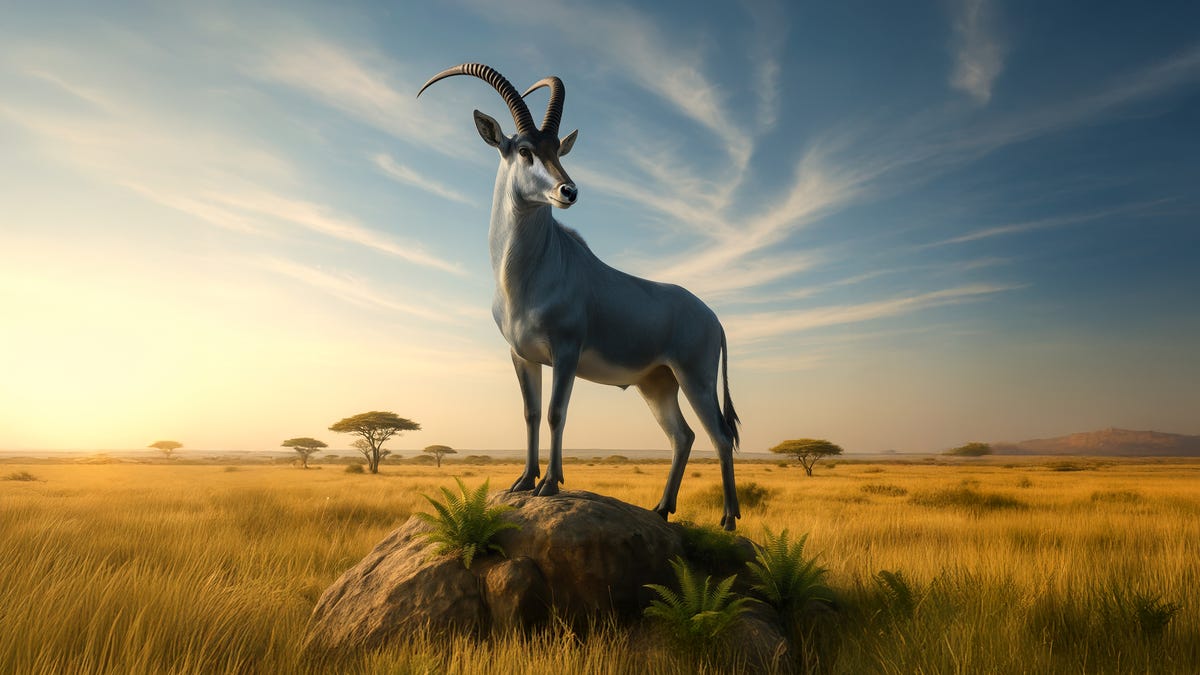
That thin record is one reason the bluebuck has stayed largely unknown, even as Colossal Biosciences names it as a de-extinction target and builds educational content around its story. It was a medium-sized grazing antelope with backward-sweeping, ringed horns and a coat that could look blue-gray in certain light. And it's an animal most people have never heard of, which its history helps explain.
The rarest antelope you've never heard of
The bluebuck was never abundant, and it was never famous. It lived quietly on the grasslands of South Africa's southern Cape for thousands of years without entering the written record at all, until a German astronomer named Peter Kolbe arrived at the Cape in 1719 and described what he called a "blue goat." By the time naturalists began paying close attention, the animal was already fading. It was scientifically named in 1766 and gone roughly 34 years later.