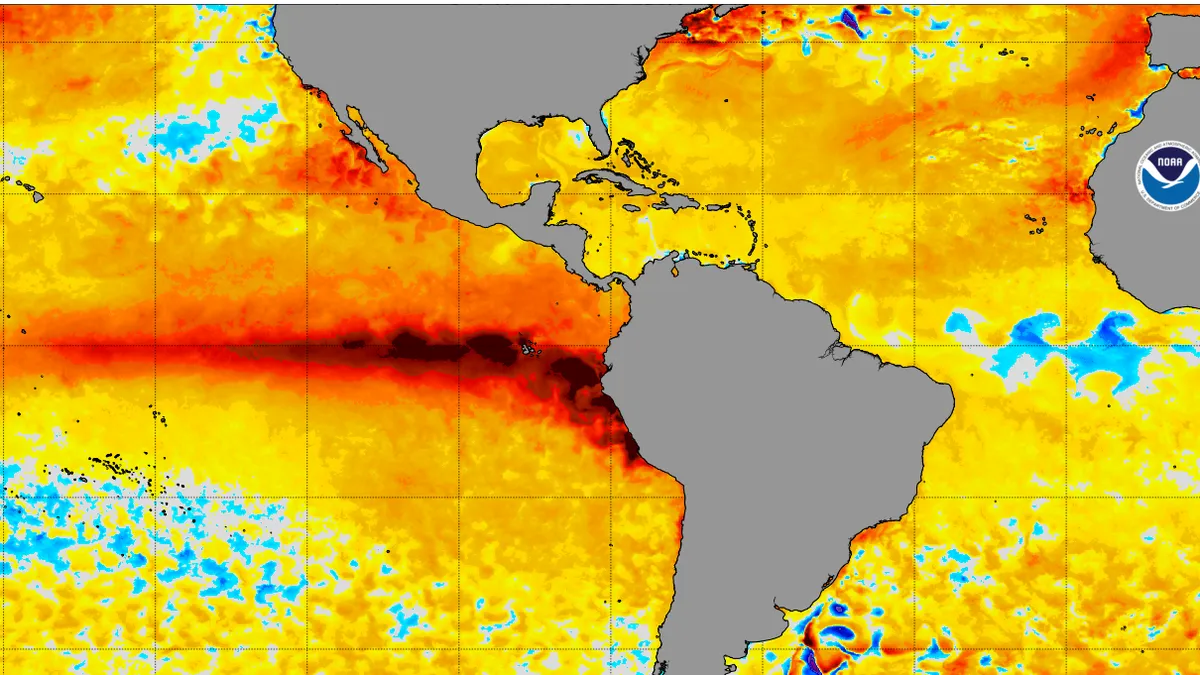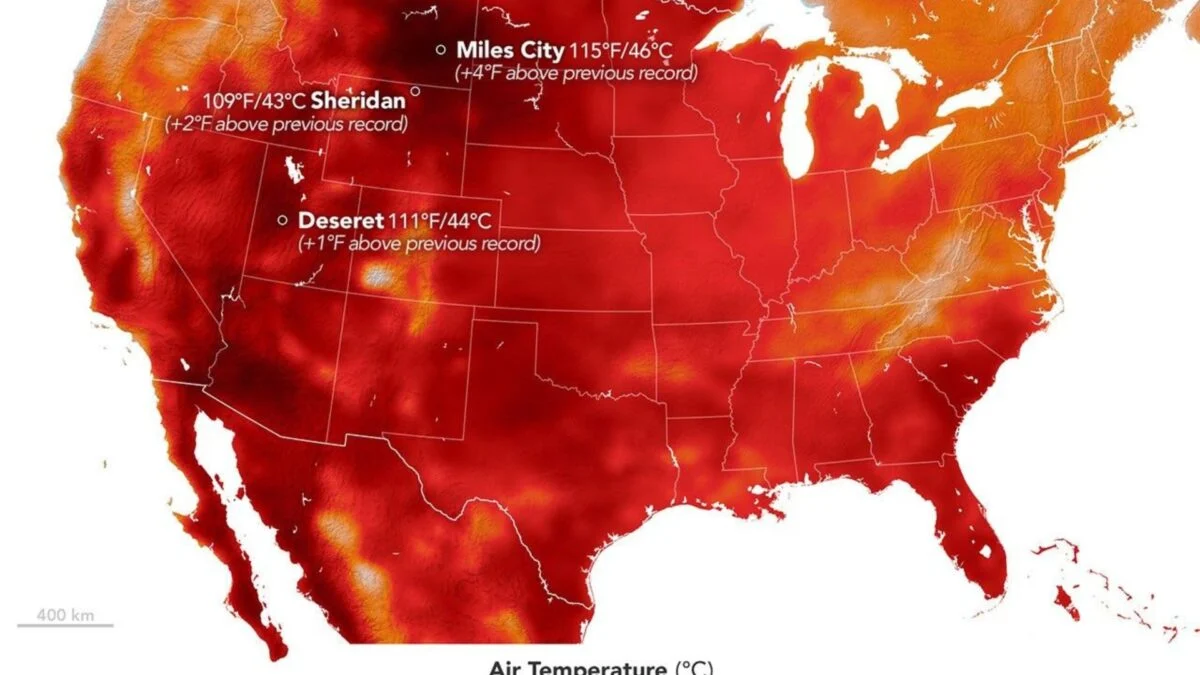
Both the contiguous United States and the world’s oceans just had their hottest July on record, according to newly released data. As carbon emissions and a “super” El Niño continue to worsen, scientists say last month was just a taste of what’s to come. July 2026 averaged 76.9 degrees Fahrenheit (24.9 degrees Celsius) across the U.S., which is 3.3 degrees F (1.8 degrees C) above the 20th-century average and the highest average July temperature in the 132-year record, the National Oceanic and Atmospheric Administration reported Monday. Copernicus, the Earth observation component of the European Union’s space program, published a separate analysis on Monday showing that the average sea surface temperature across oceans outside the polar regions was 69.73 degrees F (20.96 degrees C) in July, surpassing the previous July record of 69.6 degrees F (20.89 degrees C) set in 2023.
These historic temperatures have elicited alarm from experts, who have been warning for weeks that the combined impact of human-driven warming and El Niño could briefly make 2026 the hottest year on record before 2027 overtakes it. “It’s not good when you’re breaking records from the Dust Bowl, which we are in this case,” meteorologist Jeff Masters of Yale Climate Connections told the Associated Press. “If we’re exceeding records from The Dust Bowl, that says that we’re in deep trouble.”