Story audio is generated using AI
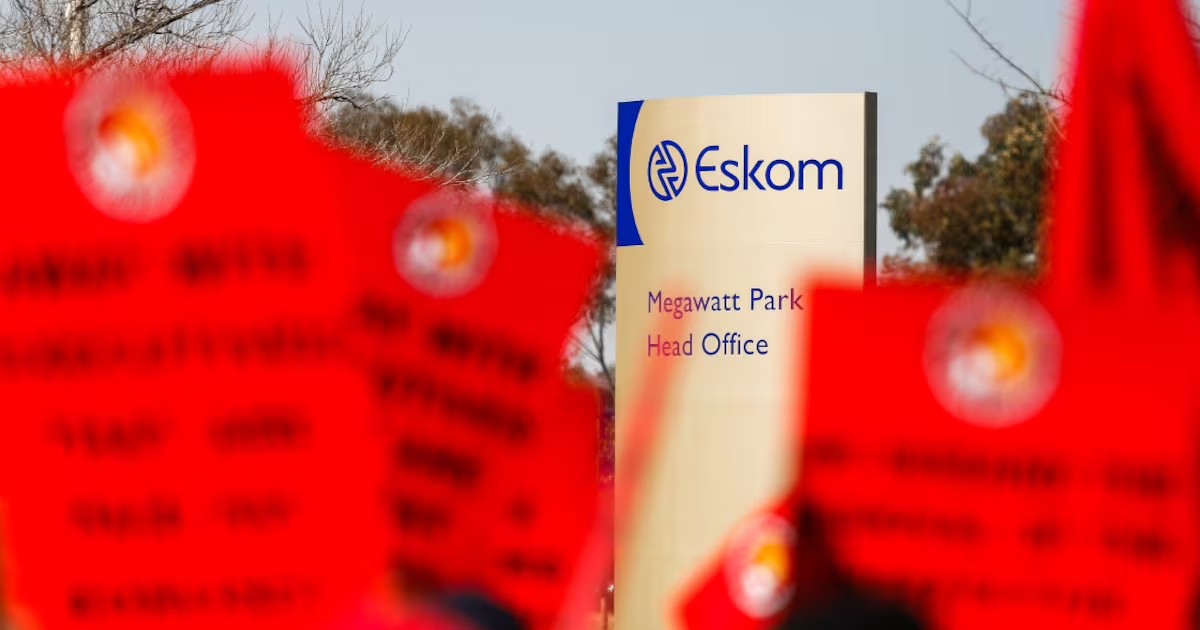
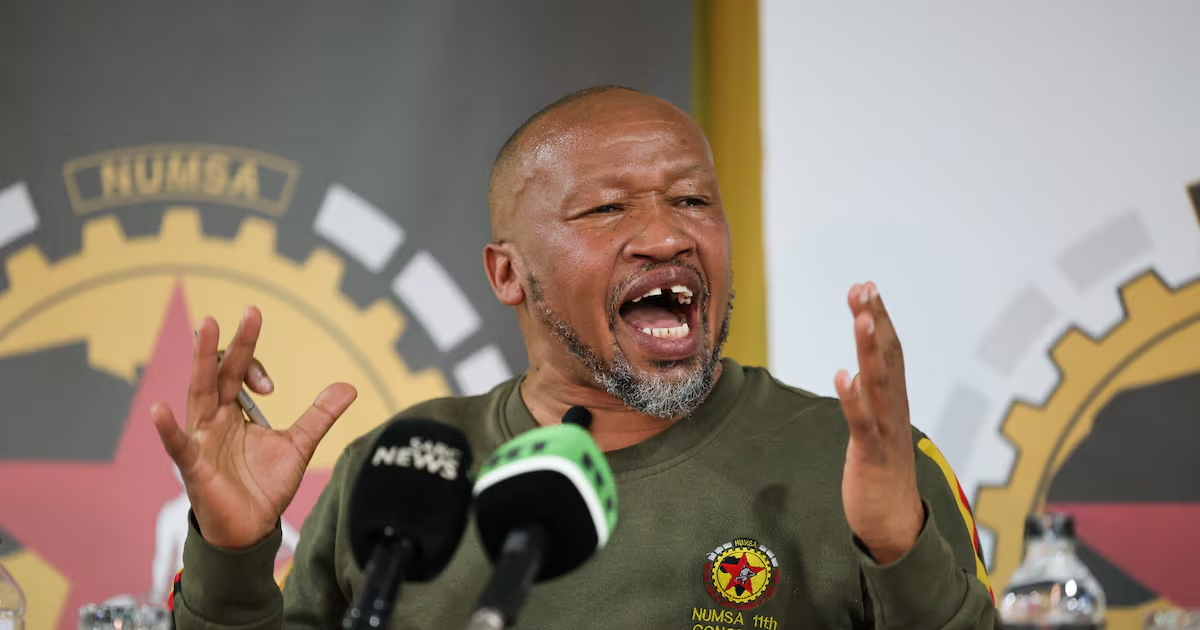
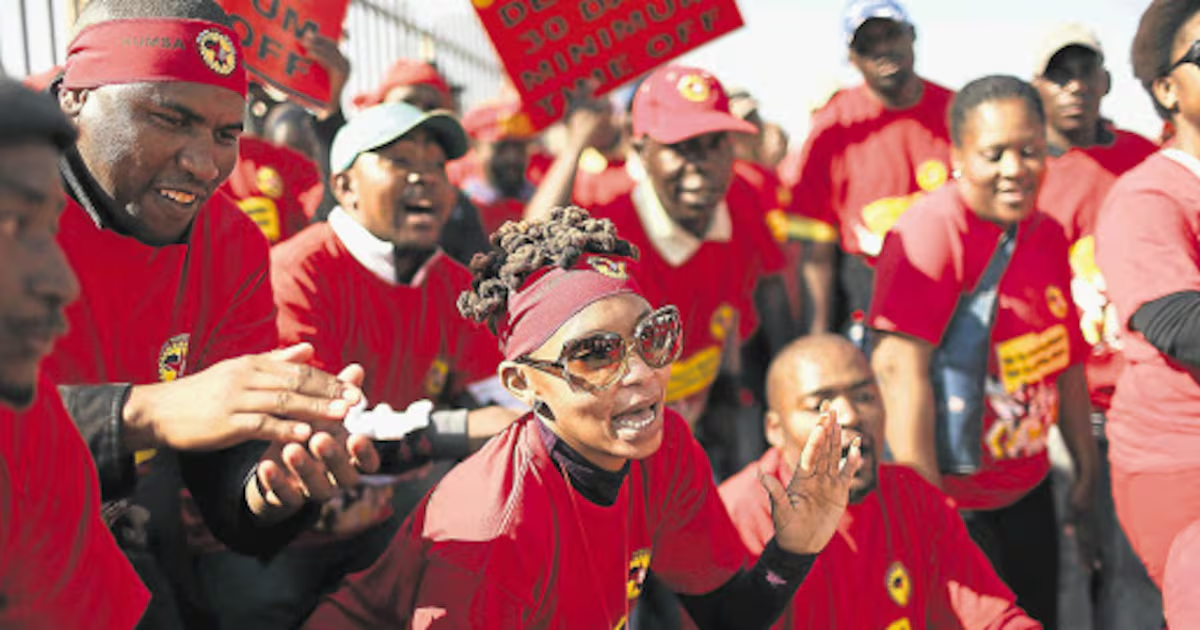
The National Union of Mineworkers (NUM) has resolved to litigate against Eskom’s restructuring and said it will take the matter as far as the Constitutional Court if necessary and embark on strike action in the mining and energy sectors where it organises. The NUM’s national executive committee, its highest decision-making body between national congresses, took the decision at a meeting in Pretoria from August 5 to 7.“The union is currently in consultation with its legal team, having held multiple sessions to prepare formal court action to challenge the decision,” NUM general secretary Mpho Phakedi said at a media briefing in Johannesburg on Tuesday. The decisions come after President Cyril Ramaphosa endorsed a report earlier this month, paving the way for Eskom’s restructuring. The NUM is staunchly opposed to the unbundling of the power utility into three entities responsible for generation, transmission and distribution, arguing that it is a step towards privatisation. The union argues that privatisation would threatens job security, drive up electricity costs and undermine South Africa’s energy sovereignty. Phakedi said that should the government continue with the reforms without consultation, the union would deploy all available constitutional and organisational measures to “defend energy sovereignty, public ownership and workers’ livelihoods”. The measures include potential rolling mass action in the mining and energy sectors, Phakedi said. “We will put everything to fight the matter. If it means going to the Constitutional Court, we will do so and fight it to the end. Regarding downing tools, that’s one of the options that will be explored, guided by our members.” Electricity is a strategic national asset, and the government must halt all steps towards market liberalisation “until a comprehensive social pact is reached with labour and key stakeholders”, he added.Business Leadership South Africa (BLSA) CEO Busi Mavuso has urged the government to move ahead with the establishment of an independent transmission system operator after Ramaphosa endorsed the first-phase report of the restructuring task team. In his state of the nation address in February, Ramaphosa announced the establishment of the task team to oversee Eskom’s restructuring and to establish a fully independent, state-owned operator. The new entity will own and manage the country’s transmission assets while operating the electricity market. The move is widely regarded as a cornerstone of South Africa’s electricity sector reforms, which are intended to establish a reliable, affordable and sustainable power supply by opening the grid to greater competition and improving the efficiency of electricity transmission. The task team comprises representatives from the presidency, the Treasury, the department of electricity & energy, Eskom and the National Transmission Company South Africa. NUM president Phillip Vilakazi said restructuring Eskom posed a threat to the economy. “This unbundling is an economic risk ... Mpumalanga without Eskom is going to be a ghost town,” he said. Vilakazi’s deputy, Olehile Kgware, said: “Eskom’s restructuring is immoral and unconstitutional; hence, we are fighting it legally. It is tantamount to giving Eskom away to hyenas,” he said. “We urge the president to stop it urgently.” In her weekly newsletter last week, Mavuso said Ramaphosa’s endorsement of the task team’s phase 1 report provides the clearest vision yet for the system operator and the foundation of a competitive electricity market. “I welcome that endorsement unreservedly … The president has now made that policy unambiguous, and there cannot be any further debate,” she said. Ramaphosa said the task team report shows how the government can ensure that the architecture of the electricity sector can change as it continues to evolve. That, he said, will create the foundation for the country’s growth. “The report reflects a clear and unified vision across government to establish an independent transmission system operator, which will be separated from Eskom. The system operator is a key enabler of a successful, competitive wholesale electricity market that is expected to deliver reliable and cost-effective electricity,” Ramaphosa said, adding that the reform will support higher rates of economic growth, investment and job creation. Presidency spokesperson Vincent Magwenya said last week that Ramaphosa had met the NUM’s leadership and the government will “continue engaging all organised labour formations in this regard”.Business Day