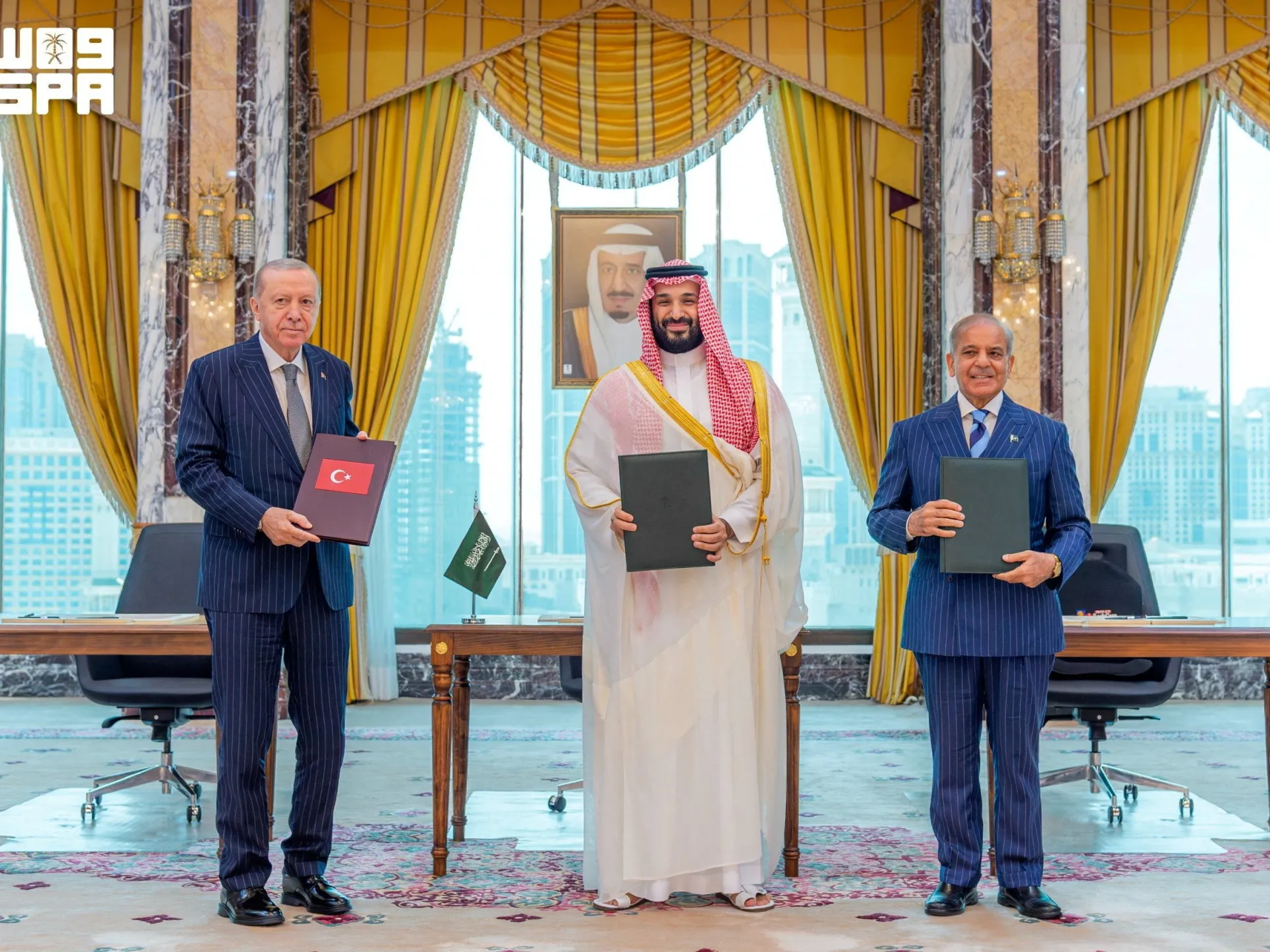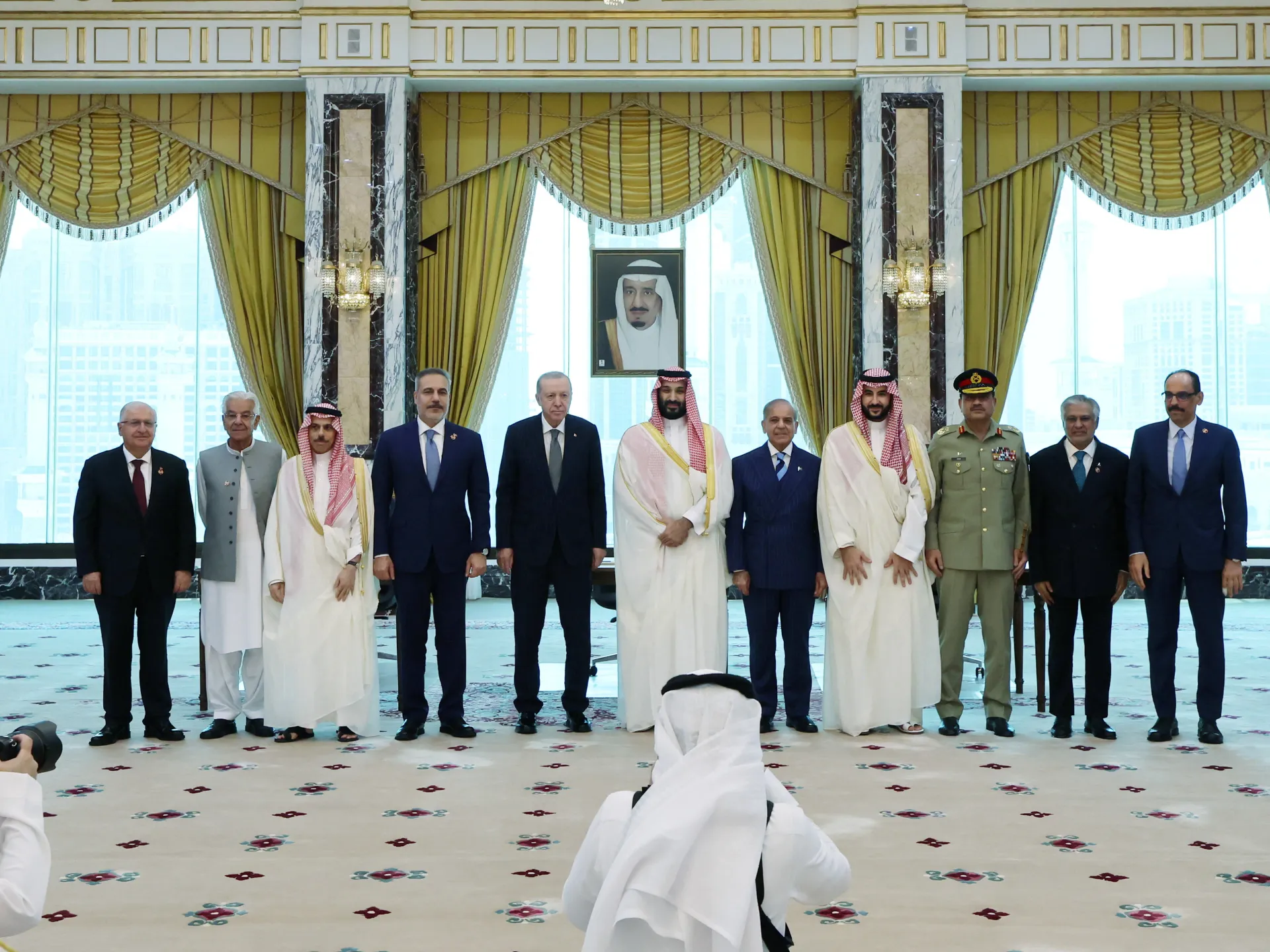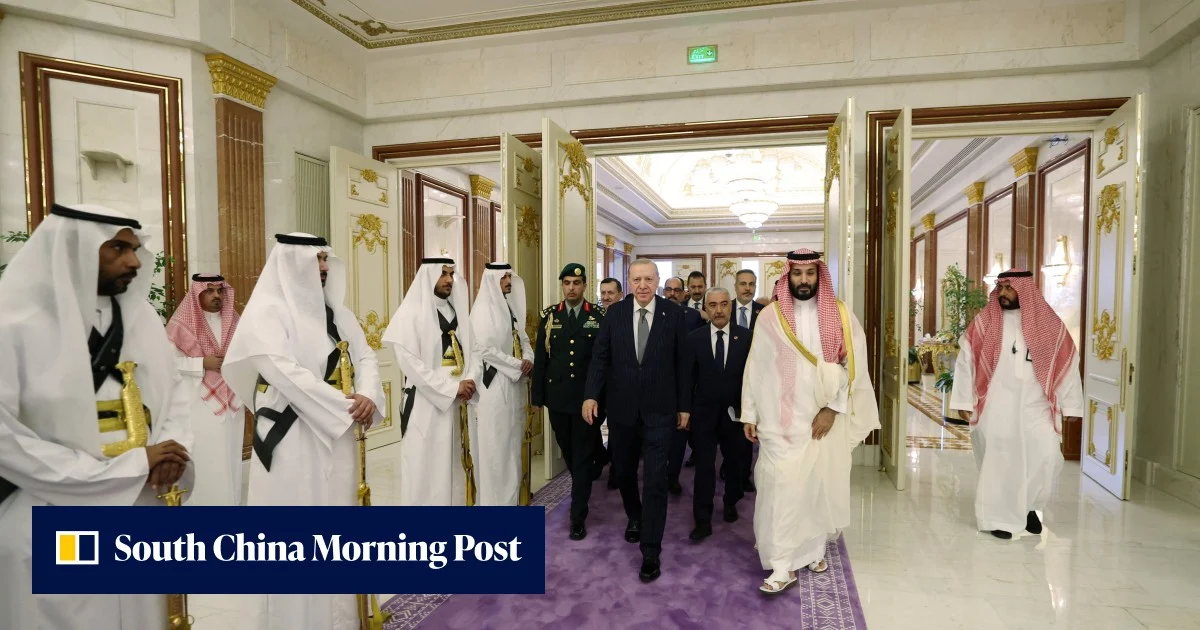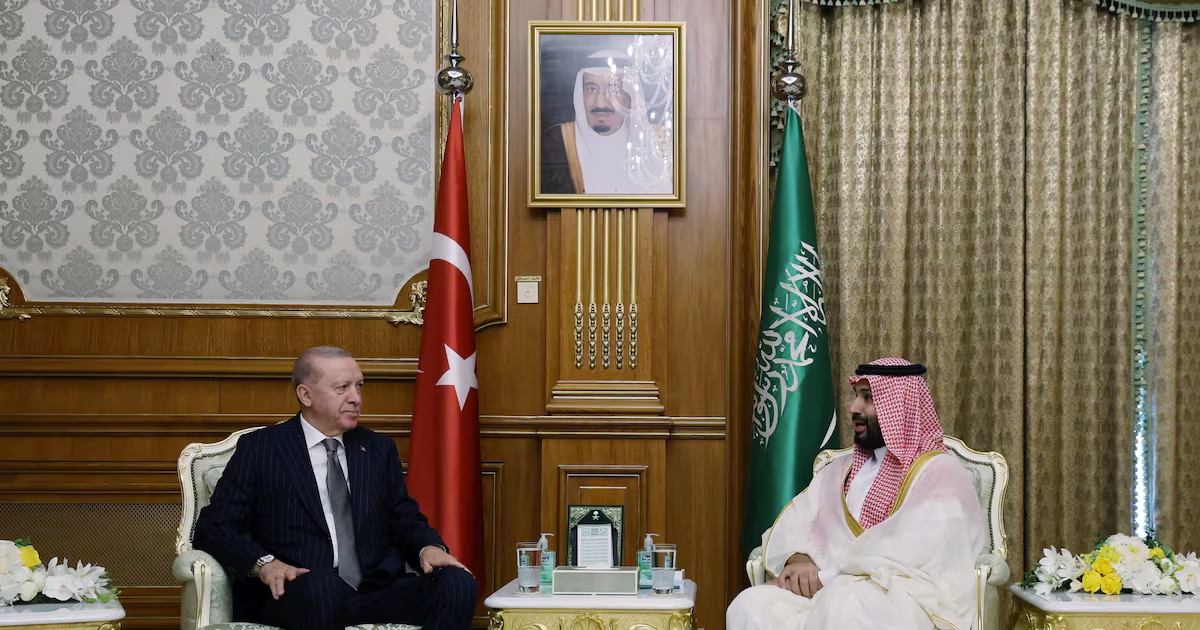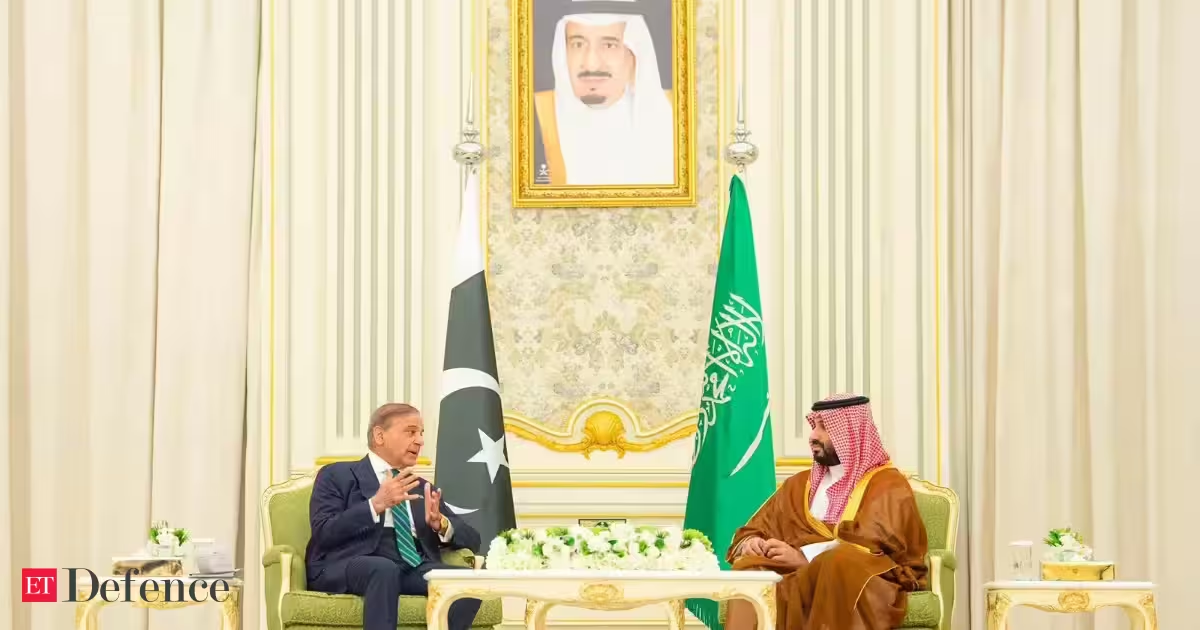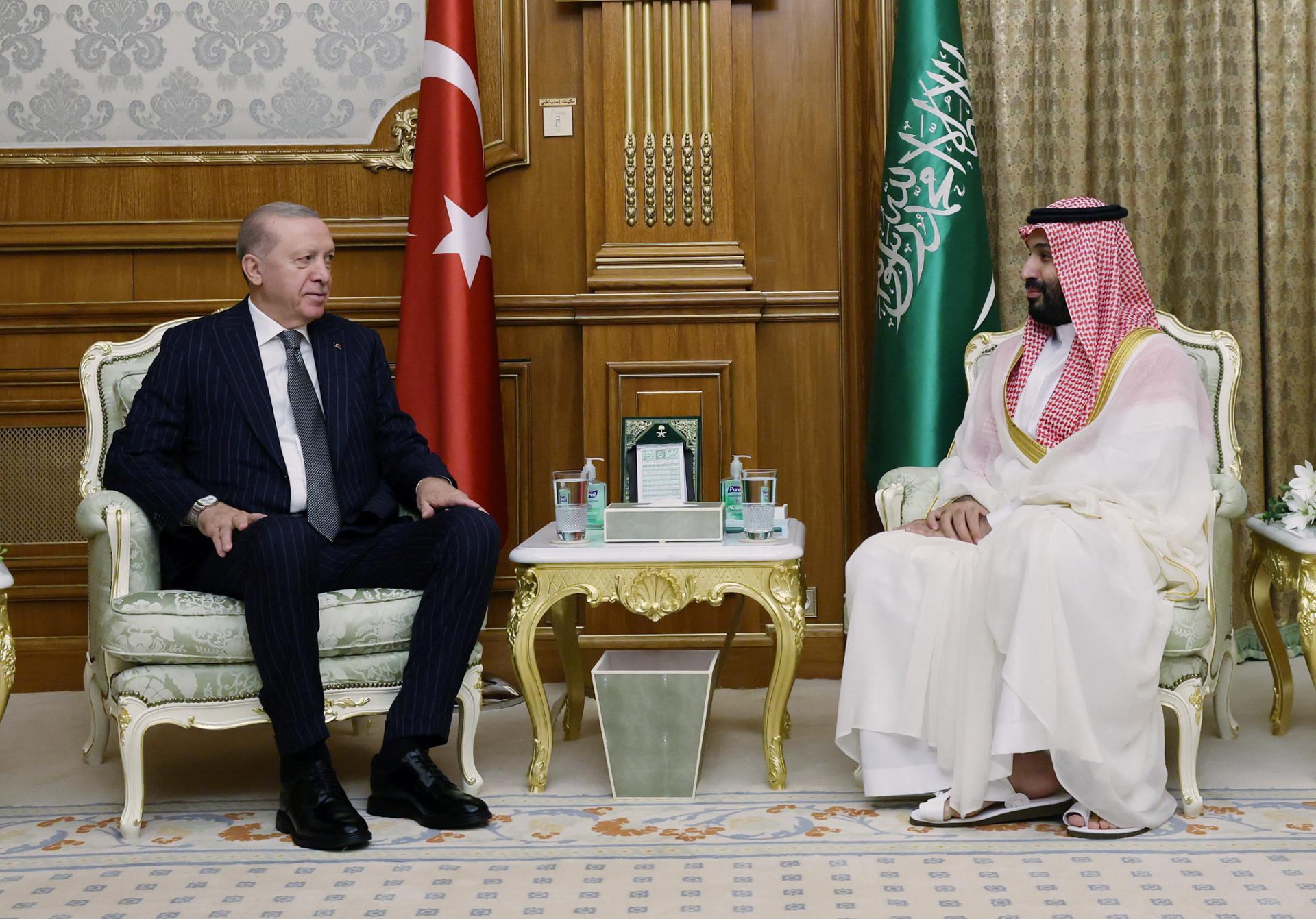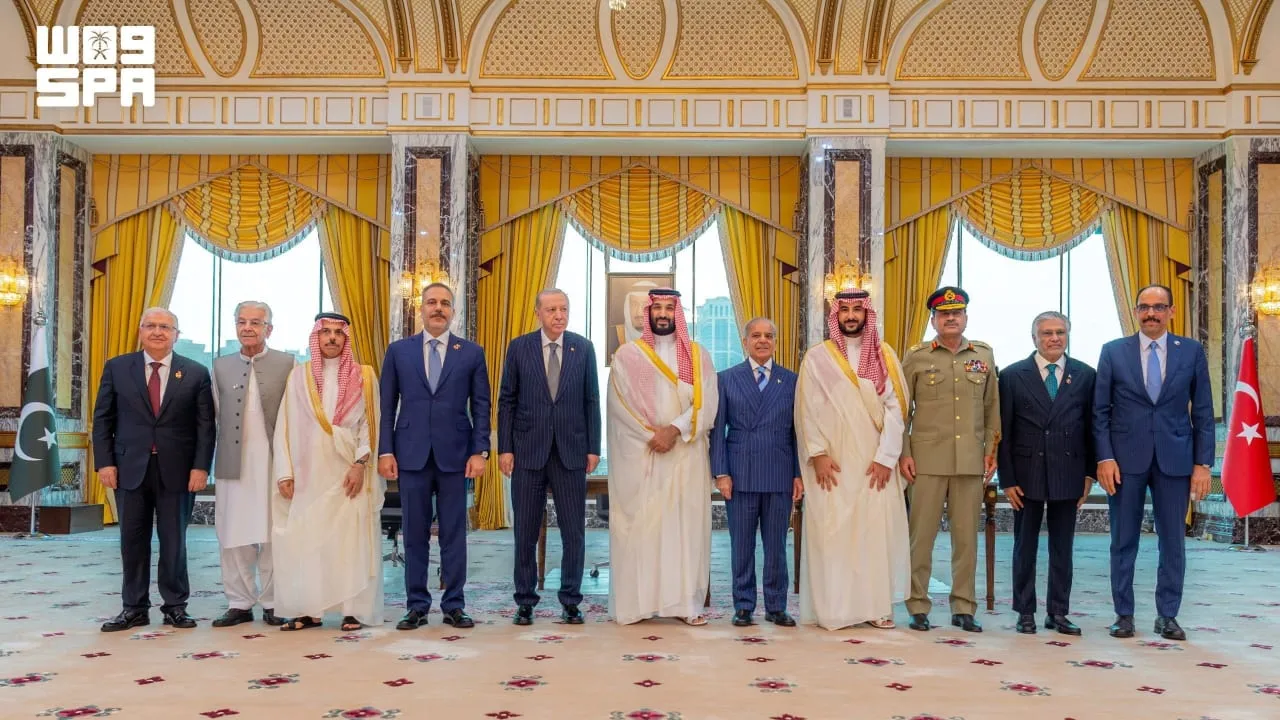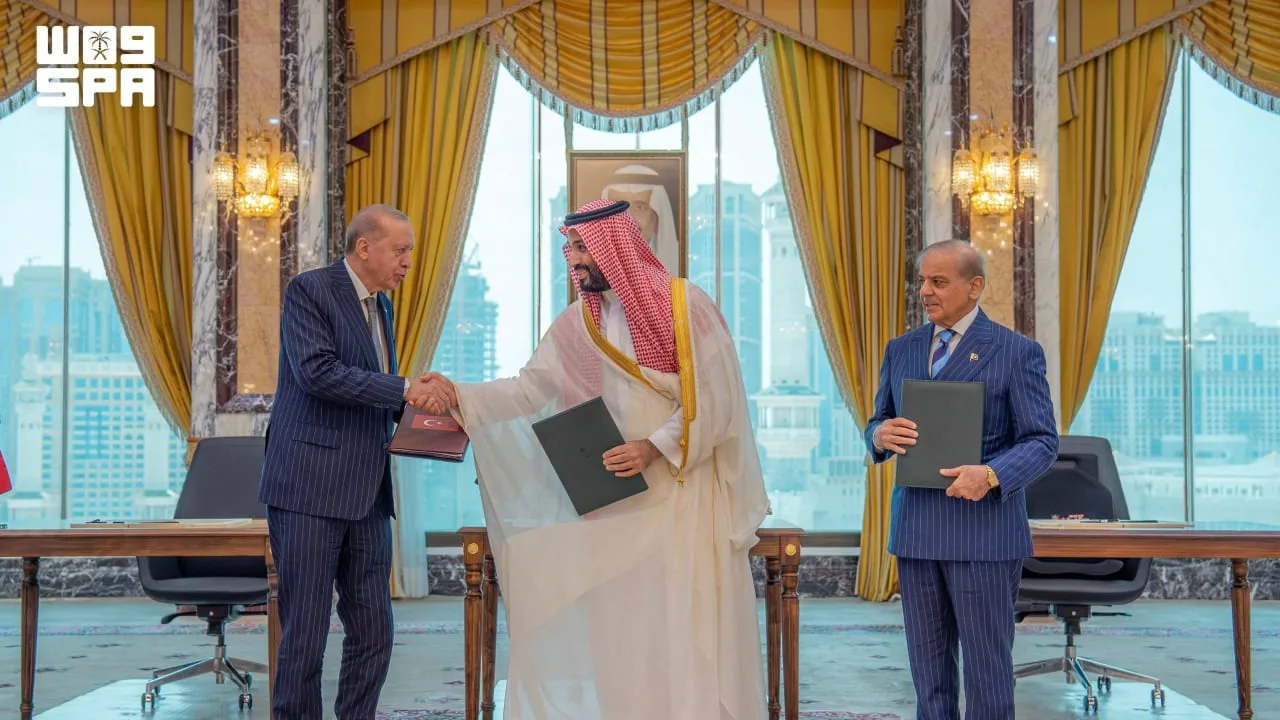
Rather than projecting confidence, the deal with Pakistan and Turkey reflects Saudi Arabia’s search for additional security guarantees in the face of Iran’s growing regional influence.Follow us on GoogleTURKISH PRESIDENT Recep Tayyip Erdogan shakes hands with Saudi Crown Prince Mohammed bin Salman, next to Pakistan’s Prime Minister Shehbaz Sharif, after signing a joint defense agreement in Mecca, on August 7, 2026.(photo credit: Saudi Press Agency/Handout via REUTERS)ByELI AVIDARAUGUST 11, 2026 18:00The headlines announcing a new defense agreement between Saudi Arabia, Pakistan, and Turkey were presented as evidence of a changing strategic order in the Middle East. Saudi commentators quickly framed the agreement as proof that Israel would no longer be able to act freely across the region.But once the interviews end and the official talking points are set aside, a different conclusion emerges. One can almost smell it: the scent of Saudi anxiety.Not anxiety about Israel. Riyadh understands that Israel poses no direct threat to the kingdom. In reality, Saudi Arabia occupies only a limited place in Israel’s strategic priorities. It attracts significant attention mainly when diplomatic engagement serves an immediate political purpose, such as before Israeli elections or during negotiations over regional normalization.Saudi Arabia’s real concern is Iran.How Riyadh's alliance is a sign of anxiety over IranThat is what makes this agreement so revealing. Rather than projecting confidence, it reflects the kingdom’s search for additional security guarantees in the face of Iran’s growing regional influence.Turkish President Tayyip Erdogan meets Saudi Crown Prince Mohammed bin Salman, ahead of the expected signing of a defence deal between Saudi Arabia, Pakistan and Turkey, in Mecca, Saudi Arabia, August 7, 2026. (credit: Murat Cetinmuhurdar/Turkish Presidential Press Office/Handout via REUTERS)The choice of partners is also telling. Pakistan and Turkey both maintain important relationships with Tehran. Neither is a natural cornerstone of an anti-Iran coalition. If anything, the agreement illustrates Riyadh’s desire to broaden its options in an increasingly uncertain regional environment.Economics also plays an important role. Pakistan continues to struggle with severe financial challenges, while Turkey has faced years of inflation and economic instability. For both governments, closer ties with Saudi Arabia offer more than strategic cooperation. They create opportunities for investment, financial assistance, and deeper economic engagement.Saudi Arabia’s partners may also be expecting significant economic benefits from this new relationship. Pakistan and Turkey, both facing persistent economic pressures, are likely hoping that closer strategic ties will translate into greater Saudi investment and financial support. Those expectations, however, may prove unrealistic. Saudi Arabia is confronting economic constraints of its own.Several of its flagship mega-projects have slowed dramatically, reflecting the growing gap between the kingdom’s ambitious vision and the financial realities it now faces. Riyadh may have the desire to project influence, but its ability to finance the ambitions of others is no longer unlimited.This agreement is better understood as an expression of Saudi anxiety and of Pakistani and Turkish hopes for greater Saudi economic support. For Riyadh, it reflects the search for additional security in the face of regional uncertainty. For Islamabad and Ankara, it carries the prospect of deeper financial and investment ties with the kingdom.Regional rivalries also shape this alignment. Saudi Arabia’s competition with Abu Dhabi provides another incentive to pursue an independent strategic course, while President Recep Tayyip Erdogan continues to position Turkey as a leading power in the Middle East, often using confrontations with Israel to reinforce that ambition.Taken together, this is less an agreement born of confidence than one driven by insecurity. At its core, it is an agreement rooted in fear. Saudi Arabia is not acting from a position of complete confidence. It is hedging against uncertainty. That is a rational policy, but it should not be mistaken for a demonstration of regional dominance.The headlines speak of power. The agreement itself suggests something different: a kingdom seeking reassurance in a volatile neighborhood.The writer is a former Israeli minister and the author of The Abyss: Bridging the Divide Between Israel and the Arab World.Follow us on Google
Saudi Arabia’s defense pact with Turkey, Pakistan reflects Iran fears | The Jerusalem Post
Rather than projecting confidence, the deal with Pakistan and Turkey reflects Saudi Arabia’s search for additional security guarantees in the face of Iran’s growing regional influence.
658 words~3 min read