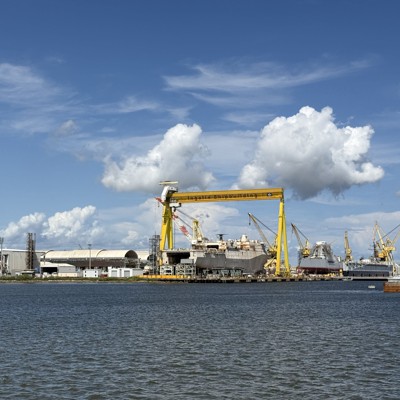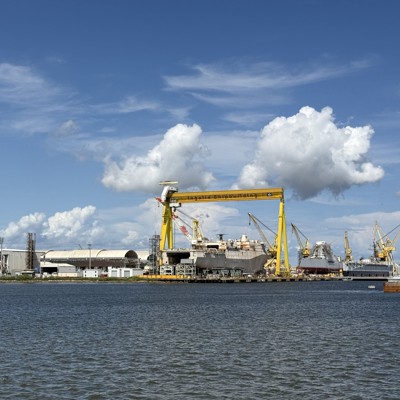
Two of the four defense-spending committees have recommended spending less than the Trump administration wants on naval shipbuilding. Here, Ingalls Shipbuilding.
Lauren C. Williams/Defense One
Senior Analyst, Forecast InternationalForecast International
The start of the 2027 fiscal year is less than two months away, and in typical fashion, the annual defense budget is in limbo. Three out of Congress' four defense committees have released markups that adhere to the Trump administration’s $1.1 trillion topline request. None has addressed the White House's proposal to spend another $350 billion through the unusual use of reconciliation funding, though discussions are underway for a smaller reconciliation package that could include money sought in a supplemental request for operations in Iran and other priorities.The administration's decision to seek funding for many of its top priorities through the reconciliation process—until last year, it had never been used for defense appropriations—creates a "terrible risk," as Sen. Susan Collins, R-Maine, put it earlier this year. Congressional resistance to the idea of using novel funding mechanisms could mean steep year-over-year funding drops for various programs.Per Forecast International's U.S. Defense Budget Spotlight dashboard, the biggest drops would be seen in defense industrial base and equipment investments contained in the Defense-Wide accounts, such as: