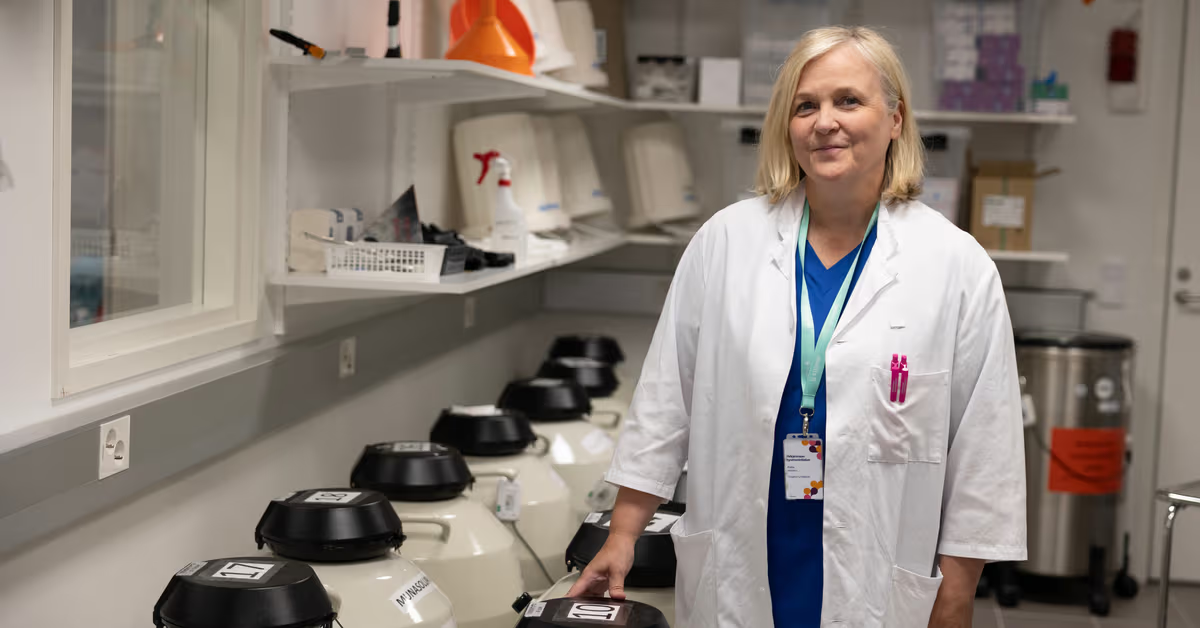
The shortage is causing long treatment queues, with doctors suggesting the rise of at-home DNA testing may be making some potential donors think twice.TAYS head physician Katja Ahinko explains what may be driving Finland’s sperm donor shortage. Image: Marko Melto / YleYle News15:59The shortage of donor sperm has persisted across Finland for several years, with some patients now facing waits of up to two years for treatment.Doctors at Tampere University Hospital (TAYS) believe the growing popularity of at-home DNA tests may be one factor discouraging some men from donating, as they could be identified by their donor-conceived offspring.Under Finland’s Fertility Treatment Act, a child conceived from donated sperm can find out the donor's identity after turning 18. The use of DNA tests could enable their offspring to track down the donors before then.Katja Ahinko, head physician at TAYS's hormone and infertility clinic, says publicised cases involving sperm donors, combined with the widespread availability of DNA testing, may have affected people’s willingness to donate.Ahinko emphasizes that donating sperm requires a lot of consideration and should be done out of a desire to help. "Donating is a big deal. You can't think of it as donating blood." Image: Marko Melto / YleFinland banned anonymous gamete donation in 2007, meaning all donors of eggs or sperm have since been registered in a national database. The change was initially feared to reduce the number of donors, and the volume of donations did fall for a time before recovering.At-home DNA tests could potentially reveal a donor's identity much earlier.“The donor is no longer protected in the same way for that specific period of time. Of course, that doesn't bother everyone, but for some it's a big issue,” Ahinko says.TAYS advised both donors and recipients not to submit their genetic information to international DNA databases. The issue is discussed as part of the counselling process.Ahinko says she cannot estimate how common it is for DNA testing to influence someone's decision to donate, but she knows that it does happen.She also strongly discourages parents from trying to identify a donor themselves.“I think it is contrary to the child's rights. It is the child's right, which is stipulated in law, and I think that should be respected,” she says.Patients facing long waitsDonor cell treatments are available at five university hospitals in Finland, but demand far exceeds the supply of suitable donors.The situation is particularly difficult in the Oulu University Hospital (OYS) area, where patients may have to wait up to two years for donor sperm.OYS says the main reasons for the long queues are a low number of sperm donors and an imbalance between supply and demand.In Helsinki, the waiting time for a first appointment at HUS is around nine to fifteen months, followed by another two to three months for sperm. Waits for donor eggs are even longer.At TAYS, Ahinko says the problem is not necessarily a lack of people interested in donating. Rather, there are simply far more people seeking donor sperm than there are suitable donors.Around 90 percent of donated sperm at TAYS currently goes to single women and female couples, while heterosexual couples account for around 10 percent of recipients.Strict screening limits the poolPotential donors must undergo health screening, with strict criteria designed to rule out hereditary diseases and other health risks.Only around 30 to 40 percent of those who want to donate ultimately pass the screening.Ahinko says determining whether someone is suitable is not always straightforward. The biggest reason for rejecting a potential donor is most often found in the semen. Image: Friso Gentsch / EPAHospitals considering higher compensationHospitals are now looking for ways to attract more donors.One possibility could be increasing the compensation paid to sperm donors. Ahinko says the current compensation is relatively modest considering the time and effort involved.University hospitals currently use only domestically sourced donor sperm. Private fertility clinics in Finland also use sperm from foreign donors.With the shortage continuing, Ahinko says using foreign donor sperm in the public healthcare system is something hospitals may need to consider.
Finland faces persistent sperm donor shortage
The shortage is causing long treatment queues, with doctors suggesting the rise of at-home DNA testing may be making some potential donors think twice.
669 words~3 min read