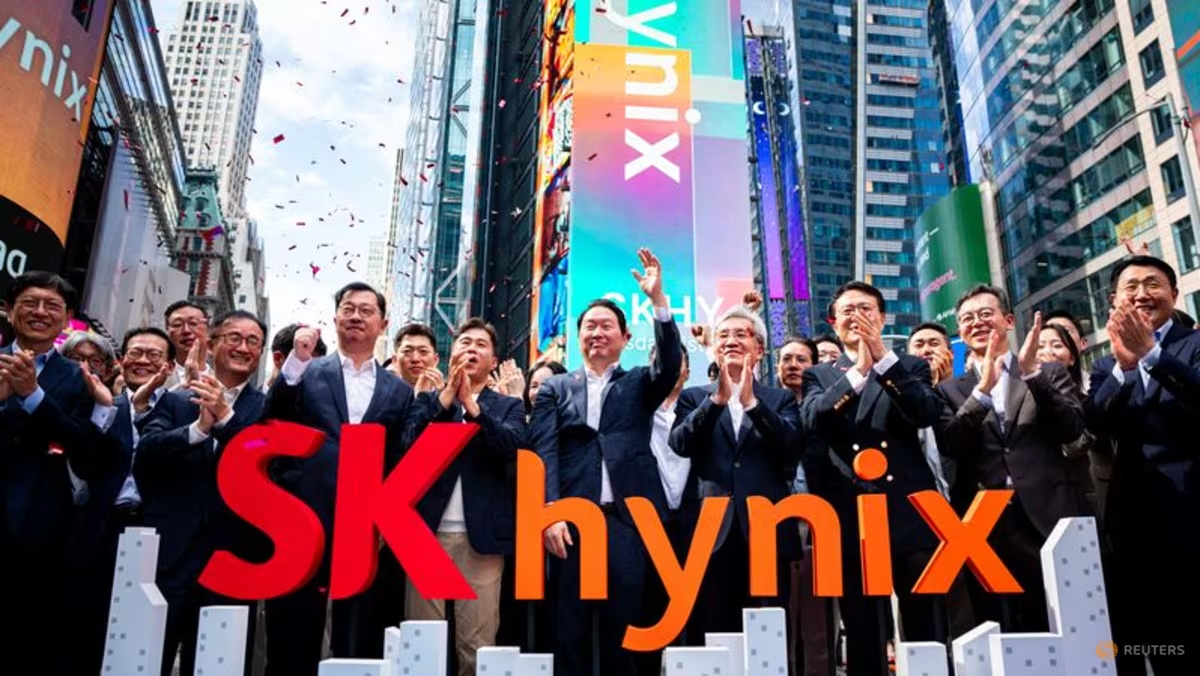
SK Hynix pulled off the largest share sale ever by a non-US company when it listed American Depositary Receipts on Nasdaq on July 10. The offering raised roughly $26.5B, was oversubscribed more than seven times, and debuted with a 13% pop. Then reality showed up.
Since that euphoric first day, shares have tumbled more than 50% from their post-listing peak, dragged down by a cocktail of memory-sector weakness, AI profit-taking, and a Q2 earnings report that technically set records but still disappointed the Street. The stock recently traded around $135 to $140, well below the $149 IPO price. And yet, a chorus of analysts insists the best is still ahead, with some price targets north of $320, implying returns above 160%.
The biggest non-US equity offering meets post-debut gravity
SK Hynix’s Nasdaq listing under the ticker SKHY was, by any measure, a landmark event. At $26.5B, it ranks as the second-largest US equity offering of any kind. The seven-times oversubscription signaled enormous appetite from institutional investors eager to get direct US-market exposure to the company that commands roughly 56% of the global high-bandwidth memory market.
On July 29, the company reported Q2 2026 results that showed record profits. Instead, shares dropped roughly 10% in a single session because those record numbers still fell short of analyst estimates. The broader memory sector didn’t help. Concerns about inventory cycles, DRAM pricing softness, and a general rotation out of AI-adjacent names created headwinds that a freshly listed stock was poorly positioned to fight. The result: a decline of more than half from the post-listing high, leaving shares below the original $149 ADR price.