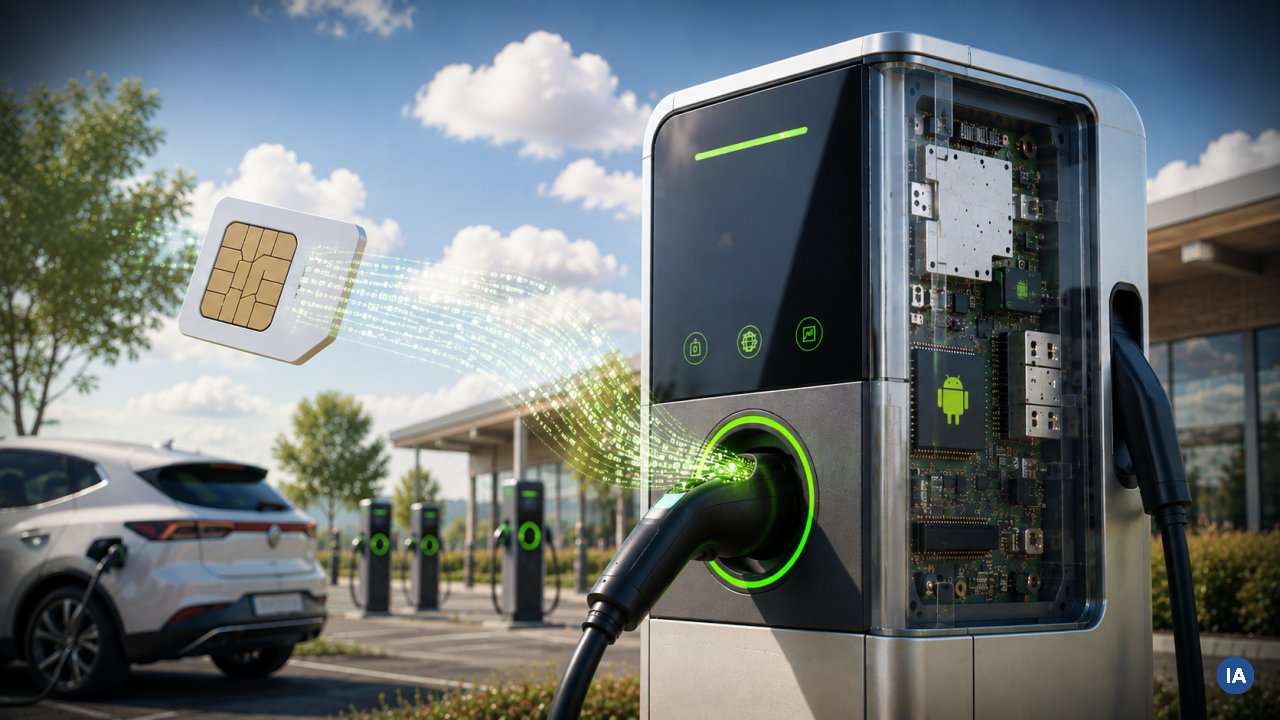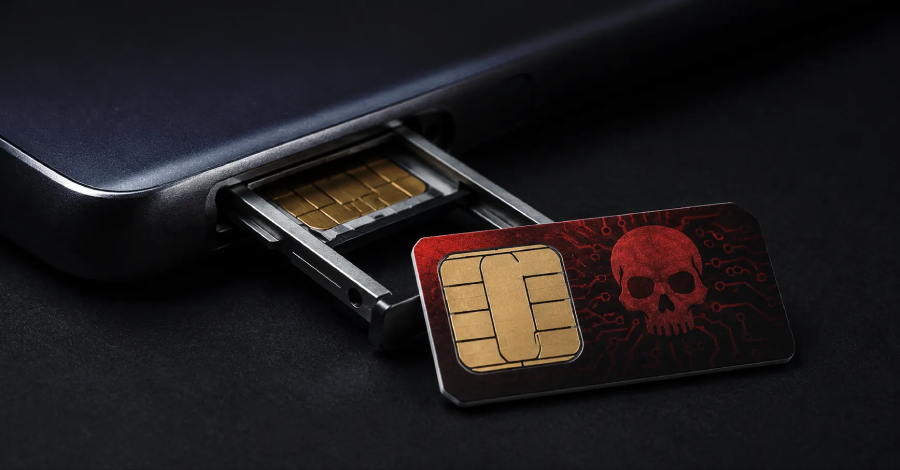
A malicious SIM card can order the device it sits in to run commands of the attacker's choosing. On the cellular modules built into electric-vehicle chargers, industrial routers, and car telematics units, that is enough to take the whole device over.
Researchers at the University of Birmingham and the security firm Fuzzware tested 26 phones and cellular modules for the capability, found it switched on in 9 of them, and used it to run their own code on a commercial EV charger.
Six of the eight cellular modules they tested accepted the command. Only 3 of 18 phones did: the OPPO Find X5, the OPPO Reno 14 F 5G, and the ASUS Zenfone 9. No iPhone or Pixel was among them.
The exposure is in machine-to-machine hardware. Five of the six were Quectel parts, three of them pulled from an EV charger, an industrial router, and a car's telematics control unit.
Knowing the victim's number is not enough: every attack starts with a hostile card already in the slot, swapped by hand, slipped in as a thin interposer, pushed out by a compromised operator, or subverted in software or on the production line. Unattended IoT gear with an accessible SIM tray and few other exposed interfaces is exactly where that trade is worth making.