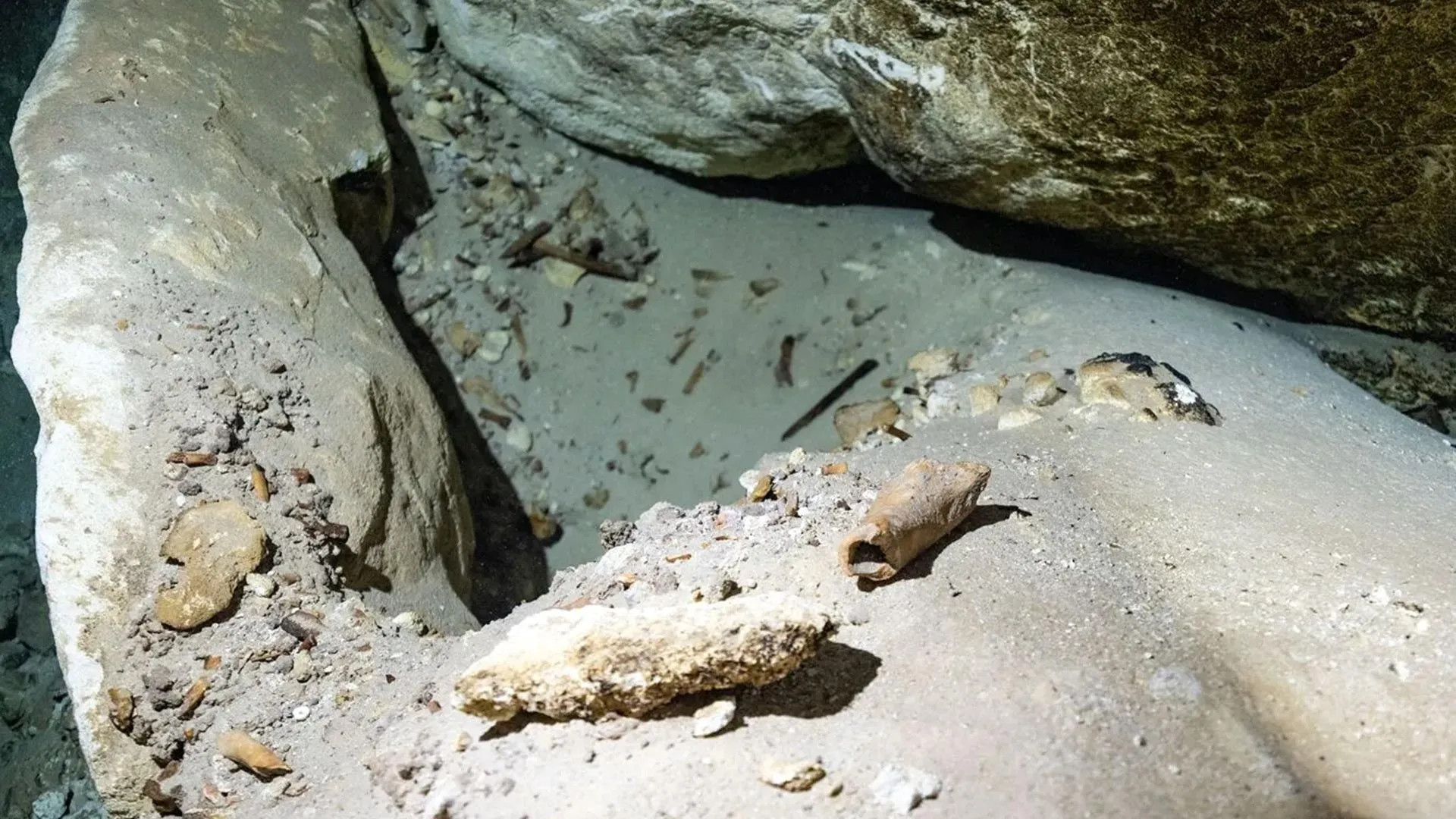
ARKHANGELSK, August 11. /TASS/. Scientists determined the age of marine mammal bones that thawed out from beneath a glacier on the Wilczek Land Island of the Franz Josef Land Archipelago. They are at least 10,000 years old, Yevgeny Yakovlev, leading the Laverov Federal Research Center for Integrated Arctic Studies' Environmental Radiology Laboratory (the Russian Academy of Sciences' Urals Branch), told TASS.
The remains were first discovered during an expedition in 2025, he added.
"We were able to visit the Wilczek Land Island during the Arctic Floating University expedition back in 2025," he said. "At that time, we collected samples of the skeletal remains and then, at the laboratory, we conducted radiocarbon dating tests. We have managed to date the remains to 11,000 years. Following the 2026 expedition, we will be verifying the age of new finds."
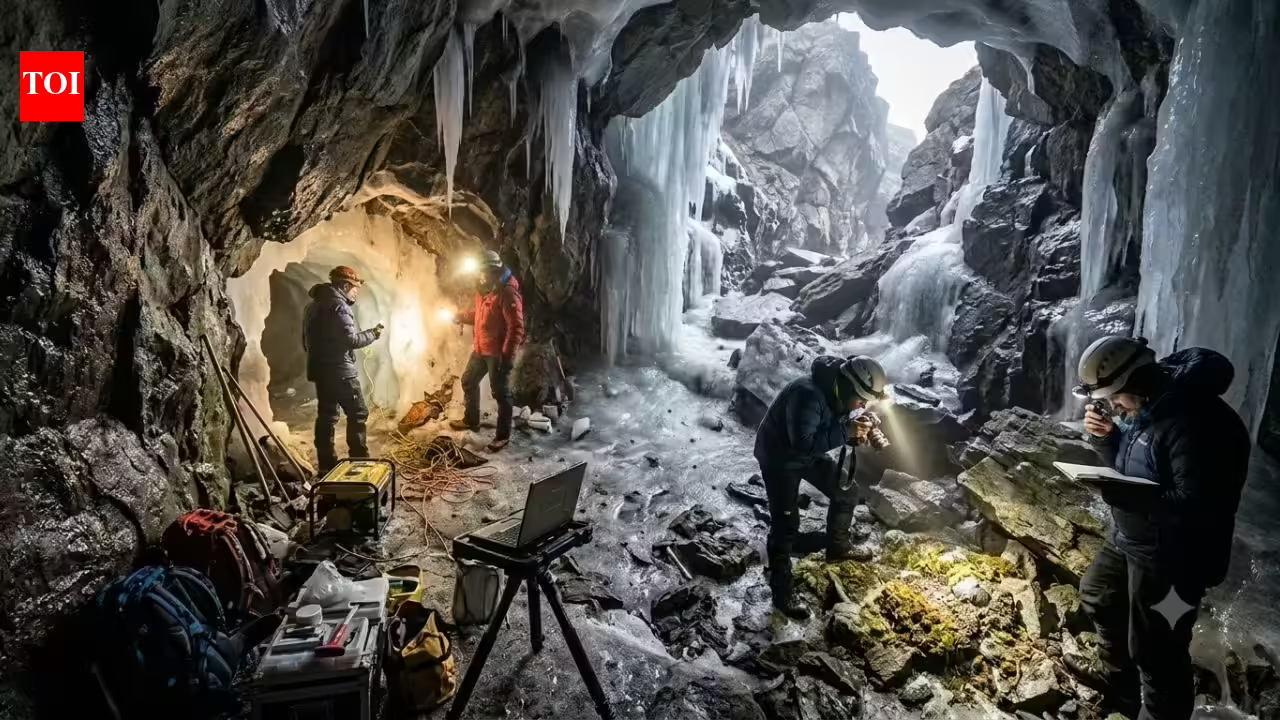
The bones of cetaceans and pinnipeds, which thawed out on the Wilczek Land Island, may be significantly older, the expert continued. During the expedition in 2026, the Arctic Floating University participants continued their study of the skeletal remains. The scientists were searching for new accumulations as they surveyed the sandy terrace that separates the island's northern and southern ice caps. They recorded thirty-nine sites containing remains of various animals, and their age also will be determined further on. The scientists took samples from the remains to study ancient DNA. The research plans also include searching for paleomicrobial genes.